
AI is making context the marketing asset teams forgot to govern
AI marketing systems need reliable context before they can act responsibly. Senior teams should govern content, data, social signals, and analytics as one operating layer.

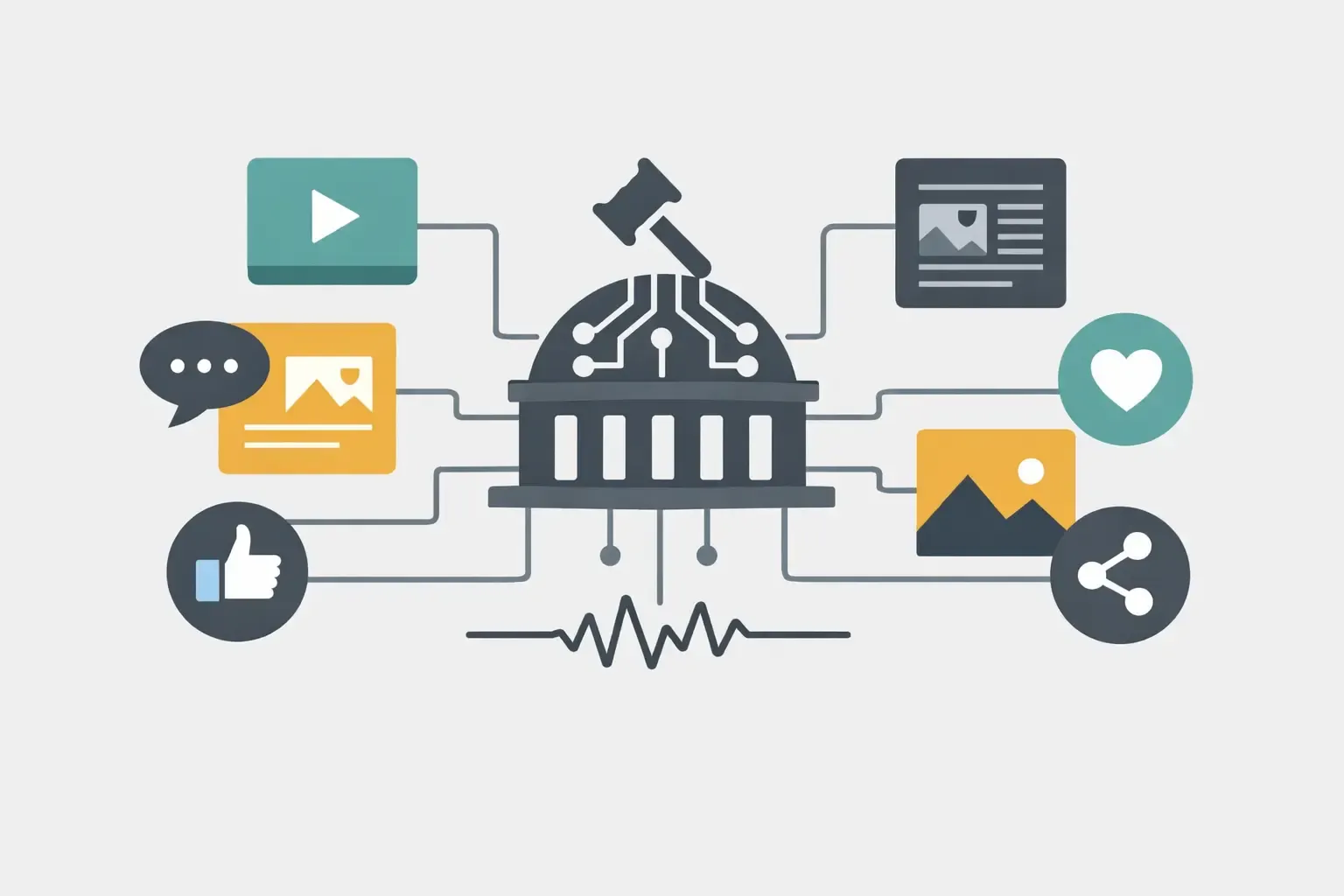
Marketing teams have spent years treating context as something a strategist adds after the data arrives: the market nuance, cultural read, customer mood, channel reality, and product constraint that explain what the dashboard cannot.
AI is changing that assumption. Context is becoming an operational input. Agents, conversational analytics tools, social intelligence platforms, and AI discovery engines are starting to read context, assemble it, and act on it before a human team has time to reconcile the signal.
That creates a sharper problem than content volume or automation speed. If the context layer is incomplete, stale, biased, or ungoverned, AI will not simply make weak recommendations. It will convert weak interpretation into action across campaigns, customer journeys, social response, product discovery, and revenue reporting.
The next marketing advantage will come from teams that can make context usable without flattening it. That means treating content, customer data, social signals, behavioral intent, and human judgment as one governed operating layer, not as separate inputs owned by separate functions.
Table of contents
Jump to section:
- Why context is becoming the marketing asset
- The new context layer is bigger than customer data
- Context quality is now an operating discipline
- How to audit the signals AI will act on
- What senior teams should change next
Why context is becoming the marketing asset
The shift is easiest to see in the tools vendors are building. Mailchimp's new Analytics AI does not only summarize campaign reports. It is designed to connect campaign performance, audience behavior, and revenue outcomes through a conversational interface, so marketers can ask what changed and what to do next. That makes analytics less like a reporting layer and more like a guided interpretation layer.
Salesforce is moving in a similar direction from the content side. Its planned Contentful acquisition, covered in ContentGrip's analysis of the Salesforce-Contentful deal, is framed around making structured content accessible to Agentforce and Customer 360. The operational premise is simple: AI agents need content they can query, assemble, and deliver based on context.
That premise is not limited to CRM or CMS architecture. Salesforce's 2026 State of Marketing research found that 75% of marketers have adopted AI, while 69% still struggle to respond promptly to customers because they lack the context they need. Teams satisfied with unified customer data are 42% more likely to regularly respond to customers and 60% more likely to use AI agents to scale their work.
The useful lesson is not that unified data solves everything. It is that AI raises the penalty for fragmented context. When a human marketer lacks context, a campaign may be bland or slow. When an AI system lacks context, it can recommend the wrong audience, assemble the wrong message, misread a customer signal, or push a workflow that no one fully understands.
The new context layer is bigger than customer data
Most marketing organizations still talk about context as if it lives mainly in customer data: profile fields, purchase history, lifecycle stage, intent signals, and CRM activity. Those inputs matter, but they are no longer enough.
The context layer now includes social video, creator behavior, customer comments, search questions, product-page readability, support interactions, cultural signals, and the structure of the content itself. In practice, this means a brand's context layer is distributed across CMS, DAM, CRM, CDP, social listening, ecommerce, customer care, analytics, creator management, and media systems.
Sprinklr's ViralMoment acquisition shows why this matters. ContentGrip's coverage of the deal described how Sprinklr wants to turn visuals, audio, captions, and on-screen text into customer intelligence. That is a meaningful shift. A product complaint may appear as a TikTok, a brand preference may show up through creator format choice, and cultural relevance may be expressed through sound, pacing, or visual motif rather than explicit language.
Social platforms are also becoming more consequential discovery environments. Deloitte's 2025 Digital Media Trends survey found that 56% of younger consumers surveyed watch TV shows or movies on streaming services after hearing about them from creators online, while 53% say social media gives them better recommendations on what to watch. That finding is media-specific, but the operator implication travels: recommendation context is increasingly shaped outside owned channels.
The ecommerce version is already visible. Adobe's April 2026 retail analysis, based on more than one trillion visits to U.S. retail sites, found that traffic from AI sources grew 393% year over year in the first quarter of 2026. In March 2026, AI traffic converted 42% better than non-AI traffic. Yet Adobe also found that individual product pages averaged only 66% machine readability, leaving much of the product context invisible to large language models.
That gap captures the new reality. The issue is no longer just whether content persuades a human visitor. It is whether the content, metadata, social proof, product logic, and customer context can be understood by systems that increasingly shape discovery before the visit.
Context quality is now an operating discipline
Context quality is different from data quality. Data quality asks whether a field is complete, current, deduplicated, and formatted correctly. Context quality asks whether the system has enough surrounding meaning to interpret the data responsibly.
A high-intent page visit, for example, means something different if the visitor arrived from an AI answer, a creator review, a customer referral, a competitor comparison, or a support article. A negative comment means something different if it is a service issue, a cultural objection, a product defect, or an ironic format native to the platform. A campaign lift means something different if it came from discount sensitivity, creative clarity, influencer trust, or inventory timing.
This is where many AI marketing pilots are under-designed. Teams feed tools more data, then assume the model will infer the missing operating context. Sometimes it will. Often it will produce a confident synthesis that hides the ambiguity.
Sprout Social's Q4 2025 Pulse Survey found that 55% of social users say most companies listen to what audiences say on social media but do not always act on those conversations, while only 31% say companies both listen and act. The gap is not collection. It is interpretation and operational follow-through.
For senior teams, that means context quality needs owners, review cycles, escalation paths, and measurement. It should not sit as an informal skill inside the heads of a few strategists, social leads, analysts, and brand managers. If AI is going to act on context, the business needs to know which context is trusted, which context is directional, and which context should never trigger automation without human review.
How to audit the signals AI will act on
A practical context audit starts by separating signals into four groups.
Customer context. This includes identity, purchase history, lifecycle stage, account fit, service history, consent status, and engagement behavior. The audit question is whether AI systems can see enough customer context to personalize responsibly, and whether sensitive or regulated data is properly permissioned.
Content context. This includes product claims, proof points, approved messaging, regional variants, disclosures, comparison language, FAQs, and modular content components. The audit question is whether agents and discovery systems can retrieve the right version, understand its constraints, and avoid mixing outdated or conflicting claims.
Cultural context. This includes social video signals, creator formats, comment sentiment, community language, trend timing, and audience mood. The audit question is whether the team can distinguish business-relevant signals from noise before turning them into briefs, responses, or campaign changes.
Commercial context. This includes margin, inventory, price sensitivity, channel economics, attribution assumptions, customer value, and sales readiness. The audit question is whether AI recommendations are aware of the business constraints that determine whether an action is actually profitable.
Once those groups are mapped, teams should trace which tools consume each signal. A product claim may feed the CMS, merchant feed, chatbot knowledge base, creator brief, paid landing page, lifecycle email, and AI search result. A social complaint may feed customer care, PR monitoring, product feedback, community management, and brand safety review. A revenue insight may feed email segmentation, paid media allocation, merchandising, and board reporting.
The goal is not to centralize every decision. It is to make context movement visible. If a signal can trigger an automated journey, update an audience, change a content recommendation, generate a response, or influence budget, it deserves a governance rule.
What senior teams should change next
The first change is organizational. Context governance should not be assigned only to data teams, because much of the most valuable context is qualitative, creative, cultural, and commercial. It should not be assigned only to content teams either, because AI acts across systems that content teams do not fully control.
The better owner is a cross-functional operating group that includes marketing operations, content strategy, analytics, lifecycle, social, ecommerce or product marketing, customer care, and legal where relevant. This group should define which context inputs are canonical, which are advisory, and which require human approval before activation.
The second change is technical. Teams need to treat content models, taxonomies, metadata, and knowledge bases as AI infrastructure. Structured content is no longer a web-publishing concern. It is the retrieval layer that determines what agents can safely assemble, summarize, recommend, and personalize.
The third change is managerial. Leaders should evaluate AI marketing tools on context traceability, not just speed. When a tool recommends a segment, response, content module, audience, offer, or budget move, the team should be able to see which signals shaped the recommendation. If the explanation is too vague to challenge, the workflow is not ready for high-stakes automation.
The fourth change is editorial. Brand teams need to preserve human interpretation at the points where context is ambiguous. AI can process more signals than a human team can manually review, but it cannot reliably know which cultural cues are sincere, sarcastic, harmful, temporary, or commercially irrelevant without guardrails and feedback.
This is the harder but more durable lesson from the latest wave of AI marketing coverage. The teams that win will not be the ones that generate the most content or deploy the most agents. They will be the ones that build the most reliable context layer around those agents.
Content is still important. Data is still important. Automation is still important. But context is what tells the system what the signal means, what the customer needs, what the brand can say, and what the business should actually do next.
Once AI starts acting on marketing signals, context stops being background knowledge. It becomes operating infrastructure.