When marketing software starts doing agency work, what should brands still pay humans for?
AI platforms now handle more campaign execution. Here is where agencies still add value, and where software is becoming enough.


Marketing teams used to make a fairly clean choice: buy software for the work they wanted to run themselves, or hire an agency for the work they did not have the time, expertise, or headcount to manage.
That boundary is getting harder to defend. Advertising and creator platforms are starting to combine recommendations, campaign construction, optimization, troubleshooting, and even human support inside the product. The practical question is no longer whether AI can automate marketing tasks. It is which parts of the agency relationship are still worth paying for when the software increasingly performs the execution itself.
Key Takeaways
- AI marketing platforms are moving beyond analysis into campaign execution, reducing the value of agencies that mainly sell manual platform operation.
- Human partners remain valuable when the work requires cross-platform judgment, commercial context, governance, negotiation, or accountability that a single vendor cannot provide.
- The strongest agency proposition is shifting from “we know how to use the tool” toward “we know when the tool is wrong, incomplete, or optimizing the wrong objective.”
Table of contents
Jump to section:
- Software is moving from tool to operator
- The agency work most exposed to automation
- Where human judgment still earns its fee
- The real buying decision is about accountability
Software is moving from tool to operator
The clearest change is not that platforms have added chat boxes. It is that the chat box increasingly sits on top of workflow execution.
LTK’s new brand-platform experience lets a marketer describe a business objective conversationally, then uses its intelligence layer to help plan a creator campaign, identify creators, launch activity, optimize the program, and recommend next actions. LTK says the experience is built on a commerce intelligence graph containing more than 100 billion signals across creator, consumer, brand, and transaction behavior.
More than 100 billion commerce signals underpin LTK’s AI-native creator marketing platform, according to the company’s current platform materials.
That is materially different from a creator database with an AI search feature. The system is moving closer to the work a specialist partner would traditionally coordinate: turning a brief into campaign structure, matching creators, monitoring performance, and deciding what should happen next. LTK also continues to sell managed service alongside the platform, which is revealing in itself. Automation has not removed the service layer. It has changed the baseline of what software can do before a human team becomes necessary. LTK’s current platform materials show both the AI-native self-service layer and the company’s broader campaign infrastructure.
 Lena Marlowe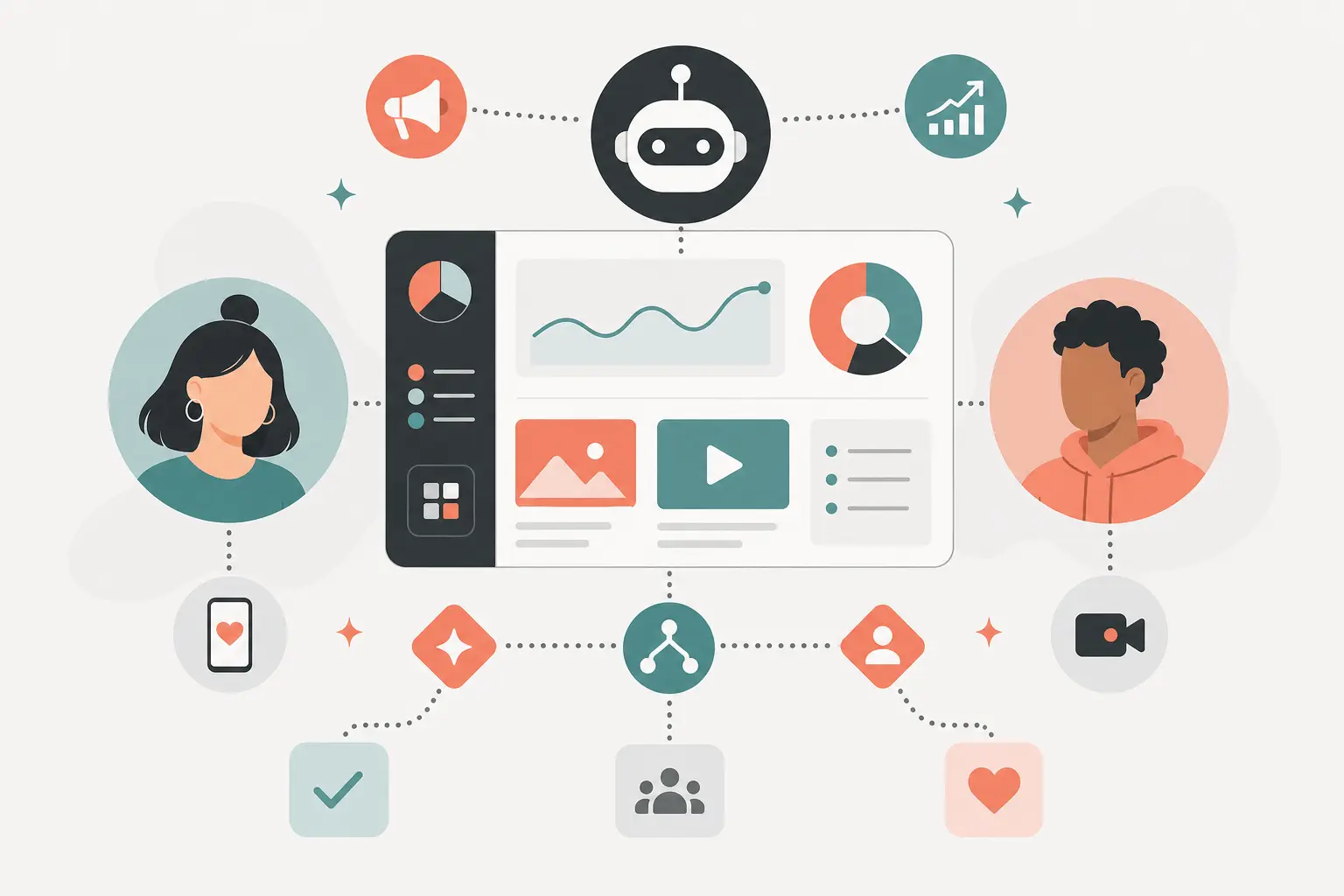
The same pattern is appearing in programmatic media. The Trade Desk’s Kokai Zuma release adds a conversational Koa Assistant and specialized agents for campaign creation, audience building, troubleshooting, performance analysis, and optimization. The company says its upgraded modeling and forecasting produced an average 32% improvement in cost per acquisition in a platform analysis covering 62 campaigns.
32% average CPA improvement was reported in The Trade Desk’s analysis of 62 campaigns using its upgraded optimization model versus the previous model.
The important part is not the percentage on its own. It is that the platform is trying to compress the distance between diagnosing a campaign problem and acting on it. The Trade Desk’s Zuma announcement frames Koa as a way to automate tasks, uncover opportunities, and take action faster while keeping the buyer in control.
Flipkart has pushed the model one step further by bundling software and service. Saarthi gives sellers an AI-powered campaign dashboard with conversational recommendations, automated alerts, custom rules, and day-parting, while also offering certified agency support at zero cost to participating sellers. The platform is effectively telling the customer: use the tool yourself, use a human partner, or combine both. Flipkart’s launch announcement makes that hybrid model explicit.
The old software-versus-agency distinction is becoming a spectrum. That matters because agencies positioned mainly as skilled operators of someone else’s interface are standing on the part of the spectrum that platforms have the strongest incentive to automate.
The agency work most exposed to automation
The first agency work to lose pricing power will be the work a platform can observe, standardize, and execute inside its own environment.
Campaign setup is an obvious example. If a system can translate a media plan or business objective into campaign structure, then the agency’s ability to navigate menus, configure settings, and follow platform best practices becomes less scarce. Reporting is exposed for the same reason. Platforms already know the campaign data, the available dimensions, and the optimization history. An AI assistant can increasingly answer routine performance questions without a human analyst rebuilding the same dashboard every week.
Optimization recommendations are also moving inward. Platforms have an advantage here because they see signals that an outside partner may only receive later through exports or APIs. When the recommendation concerns bid settings, frequency, audience expansion, or underperforming products within one platform, the vendor can often act closer to the data and faster than an agency team can.
 Celi Anindia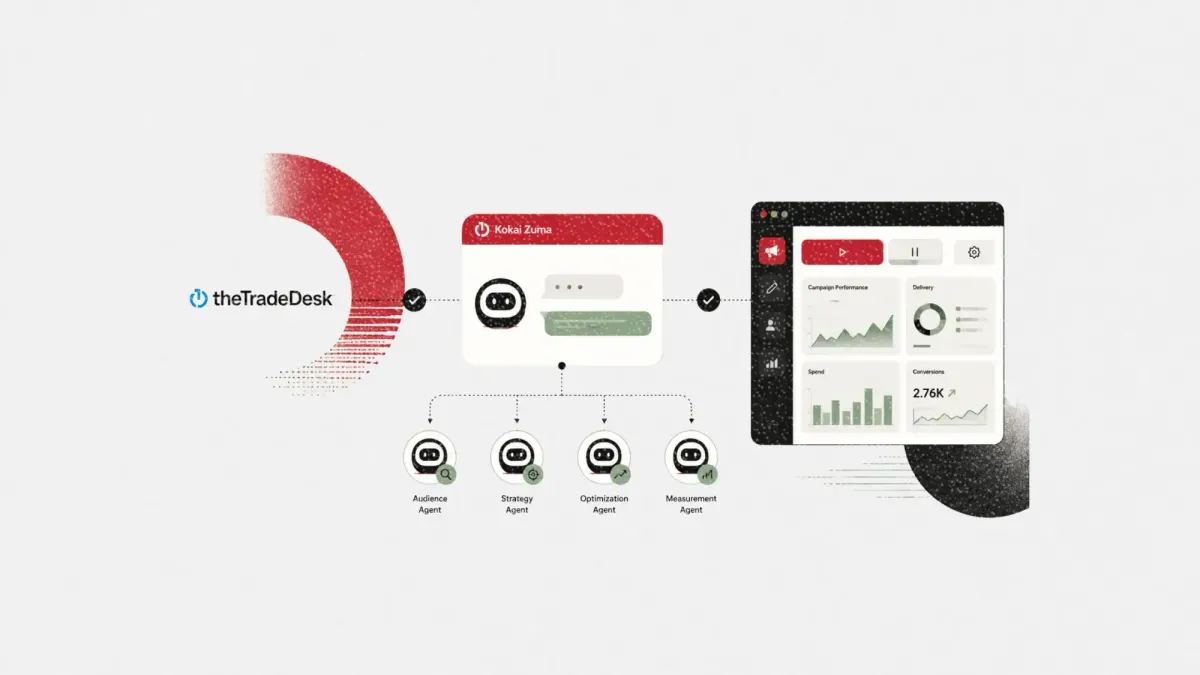
That does not make agencies redundant. It makes a specific agency proposition weaker: pay us because we know how to operate the platform.
This distinction already shows up in agency-side AI strategy. As automation absorbs execution and analysis, agencies increasingly need to defend value through capability, integration, and judgment rather than processing volume. When machines reduce repetitive labor, clients start asking harder questions about what they are still paying the agency to prove.
A client should therefore be skeptical when an agency scope still allocates substantial fees to repetitive platform labor that the platform itself is now automating. The question is not whether a human touched the campaign. The question is whether the human contribution changed the quality of the decision.
Where human judgment still earns its fee
Software is strongest when the objective is legible to the system. Agency value grows when the real problem sits outside the platform’s field of view.
A media platform can optimize toward the conversion event it is given. It cannot independently decide whether that conversion event represents profitable growth, whether the attribution model is politically acceptable inside the organization, whether the sales team distrusts the lead definition, or whether the campaign should be deprioritized because inventory is constrained. Those are business decisions disguised as marketing decisions.
The same applies to creator marketing. A platform can identify creators whose historical performance resembles the campaign brief. It can rank expected outcomes and surface emerging opportunities. It still operates within the data and objectives encoded into the system. A human partner can challenge whether the brief itself is sensible, whether the creator relationship introduces reputational risk, whether a culturally strong fit will be missed by the model, or whether a short-term performance winner is damaging a longer-term brand position.
Enricko Lukman, CEO of AI-powered content marketing agency ContentGrow, a content operations provider for brands and publishers:
“Software is getting very good at telling marketers what to do inside a defined system. The agency still earns its fee when it can question the system itself: whether the objective is right, whether the data is sufficient, and whether the recommended action makes commercial sense outside the dashboard.”
That is the harder form of expertise because it cannot be reduced to tool fluency. It requires context across systems, incentives, budgets, teams, and sometimes markets.
There is also an accountability problem. When an automated recommendation performs badly, the platform can explain the inputs and model logic up to a point. It cannot sit in a budget review and defend why the organization accepted that tradeoff. A senior agency partner can. The value is not that a human can click the same buttons more slowly. It is that someone is responsible for the judgment connecting the machine’s recommendation to the client’s business.

This is why governance and portability are becoming part of agency evaluation. If the agency owns the prompts, connectors, approval logic, and workflow history, the client may become dependent on the partner even while the underlying tools are increasingly automated. A good agency relationship should therefore create judgment without manufacturing lock-in. Recent ContentGrip analysis on AI agency exit planning argues that clients need to test workflow portability and handover rights alongside capability.
Human value survives automation when it is attached to decisions the software cannot responsibly own.
The real buying decision is about accountability
Brands should stop evaluating software and agencies as substitutes that perform the same job at different prices. Increasingly, they perform different layers of the job.
The platform should absorb repeatable execution where it has better data, faster feedback loops, and lower marginal cost. That includes many routine tasks in campaign construction, troubleshooting, optimization, reporting, and recommendation generation. Paying an agency premium for those tasks only makes sense when the partner adds a meaningful layer the platform cannot provide.
The agency should be paid for the messy parts: reconciling conflicting objectives, integrating decisions across platforms, challenging model outputs, navigating organizational constraints, managing reputational exposure, and taking responsibility for choices that cannot be delegated to a vendor’s optimization engine.
There is a catch. Agencies need to prove they are actually doing that work. A strategy deck wrapped around automated execution is not strategic value. Neither is inserting a human approval step simply to preserve billable labor.
For buyers, the procurement question becomes more precise: if the platform disappeared tomorrow, what unique capability would the agency still bring, and if the agency disappeared tomorrow, what decisions would the platform be unable to make responsibly?
The gap between those two answers is what the human fee is for.

