
Mo Farah turns blue laces into a mental-health conversation cue
Buxton, Mind and Mo Farah use bright blue running laces and a Strava challenge to make difficult conversations easier to start.


A difficult conversation can feel easier when both people are moving in the same direction instead of sitting face-to-face. Buxton Natural Mineral Water is turning that familiar side-by-side feeling into something people can actually see: a pair of bright blue running laces that signals the wearer is open to talking or listening.
The idea is called Talking Laces, created with mental health charity Mind and fronted by Sir Mo Farah for World Mental Health Day. It extends the year-long Sweat and Tears partnership that Buxton and Mind established with Farah earlier in 2026, but this chapter shifts the campaign from a message about wellbeing into a small social behavior people can carry with them.
Table of contents
Jump to each section:
- Why a pair of laces can change the first few seconds
- Why Mo Farah fits the idea beyond celebrity reach
- How the campaign turns movement into participation
- What marketers should know about visible social signals
Why a pair of laces can change the first few seconds
Talking Laces works because it focuses on the awkward moment before a conversation begins. The blue laces carry supportive phrases and are designed to tell other people that the wearer is open to a chat. Instead of asking someone to guess whether it is a good time to check in, the campaign gives both sides a small piece of shared context.
That is a different role for branded merchandise. The laces are not only a logo-bearing object or a fundraising item. They have a job inside the social interaction itself. Someone sees them, understands what they mean, and has a clearer reason to start talking.
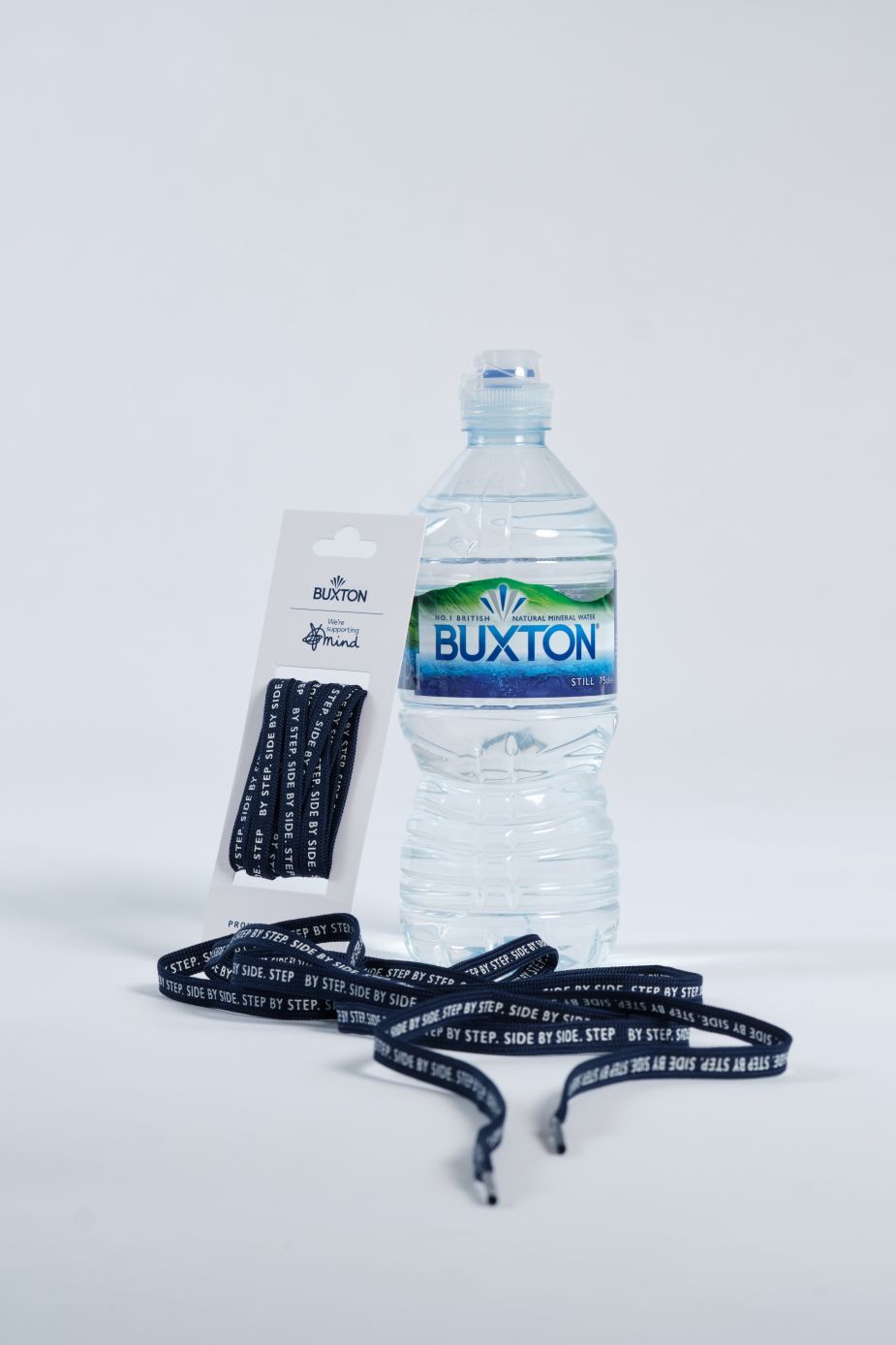
The running setting also makes the behavior feel natural. People on a walk, a run, or in a gym are already sharing an activity, which can make a serious conversation feel less formal. Talking Laces builds the campaign around that existing behavior instead of trying to create a completely new ritual from scratch.

Why Mo Farah fits the idea beyond celebrity reach
Farah is useful here because the campaign depends on the credibility of movement as a setting for conversation. His role is not simply to add fame to a charity partnership. His career gives the campaign a believable connection to running, training, resilience, and the experience of spending long stretches of time moving alongside other people.
That makes his presence functional. A fashion celebrity could wear the same laces, but Farah can explain why the track itself can become a place where people open up. In the campaign coverage, he describes side-by-side training as the setting for some of his most honest conversations.
“These laces are a simple reminder that checking in with someone doesn't have to be complicated,” Farah said.
The line matters because it keeps the idea small. Talking Laces is not promising that a branded accessory can solve a mental-health problem. It is trying to make the first social move easier: noticing someone, signaling openness, and giving a conversation somewhere to start.
How the campaign turns movement into participation
The laces are paired with the Buxton Side By Side Step By Step Strava Challenge, which asks people to complete physical activity with a friend. That gives the campaign a second layer beyond the physical product: the meaning of the laces can travel into a shared activity rather than ending at purchase.
This is where Buxton's category also becomes relevant. Bottled water has an obvious relationship with exercise, but hydration is usually marketed through performance, refreshment, or recovery. The Buxton and Mind partnership uses movement as a bridge into a more emotional subject, giving the product category a role without forcing the bottle to become the hero of every interaction.
The structure is also more repeatable than a one-off celebrity post. A recognizable object, a running community, an activity challenge, and a charity partner can each reinforce the same idea in different settings. The campaign can show up on a track, in a park, during a group run, or inside Strava while keeping the same core behavior intact.
There is no public evidence yet showing how many conversations the laces have started or whether the campaign has changed brand preference. That makes the mechanic more interesting than the outcome for now. The strongest part of the work is the way it translates a broad purpose message into a specific cue people can notice and use.
What marketers should know about visible social signals
Talking Laces shows how a brand can make participation easier when the audience does not need to learn a complicated behavior first. The product becomes useful because it communicates something before anyone speaks.
- Design the cue before designing the content.A campaign can have films, social posts, creators, and event moments, but the most memorable mechanic may be the smallest one. Here, the blue laces give people a simple signal they can understand in the real world.
- Choose talent whose lived context strengthens the mechanic.Farah's value is not just recognition. Running is part of his identity, so he can credibly connect movement with side-by-side conversation. The endorsement feels closer to the campaign behavior than a celebrity appearance bolted onto the end.
- Give purpose campaigns a specific action.Mental-health messaging can become broad very quickly. Talking Laces narrows the ask. Wear the signal, move with someone, and be open to a conversation. That makes the purpose easier to picture.
- Let the brand category support the behavior instead of dominating it.Buxton belongs naturally around exercise and hydration, but the campaign does not need every moment to turn into a product demonstration. The water brand supports the activity while the human interaction stays at the center.
The broader lesson is that cultural relevance does not always require a spectacle. Sometimes a campaign becomes easier to join when the brand reduces the amount of interpretation people have to do.
Talking Laces turns openness into something visible. If people understand that cue quickly enough, the campaign has a chance to become part of the behavior it is trying to encourage, rather than remaining a message people only see in advertising.