
The Coffee Bean & Tea Leaf turns 63 into a creator-led brand reset
CBTL uses its 63rd anniversary to begin a creator-led brand transformation built around self-expression, local culture and coffee craft.


The easiest way to celebrate a legacy brand is to look backward. The Coffee Bean & Tea Leaf is using its 63rd anniversary to point forward.
In its 63rd anniversary announcement, CBTL describes the campaign as the first step in a broader brand transformation. A refreshed visual identity is being paired with emerging artists, brew crew members and customers, while participating markets are being given room to interpret the idea through their own communities.
That makes the anniversary more than a heritage exercise. CBTL is trying to use six decades of craft as a foundation for a more creator-led brand, with self-expression and local culture doing more of the storytelling.
Table of contents
- Why 63 is being used as a reset
- Why creators sit at the center of the refresh
- How local culture keeps the global idea flexible
- What marketers can learn from CBTL's reset
Why 63 is being used as a reset
The important number in this campaign is not a discount or a sales target. It is the age of the brand.
63 years separate CBTL's 1963 start in Southern California from the brand transformation it is beginning in 2026.
That gives the company two jobs at once. It needs to preserve the craft and community cues that make the history useful, while showing that the brand is still capable of changing.
The official announcement makes that intention unusually explicit. CBTL describes the anniversary as the first milestone in a broader transformation, not simply a birthday campaign. The refreshed visual identity is meant to carry more contemporary energy while keeping coffee and tea craft at the center.
Anshul Laroia, CBTL's Global Head of Marketing, said the company is leaning into its role as a creator brand, connecting its history of craft and self-expression with an invitation for a new generation to bring its own flavor.
That distinction matters for legacy brands. Anniversaries often create a temptation to spend the entire campaign looking backward through archive images, old products and nostalgia. Those assets can be powerful, but they can also turn heritage into a museum.
CBTL is using heritage as the starting point instead. Its official company history still emphasizes its Southern California roots and handcrafted coffee and tea, while the anniversary work adds creators, customers and local cultural expression to that foundation.
Why creators sit at the center of the refresh
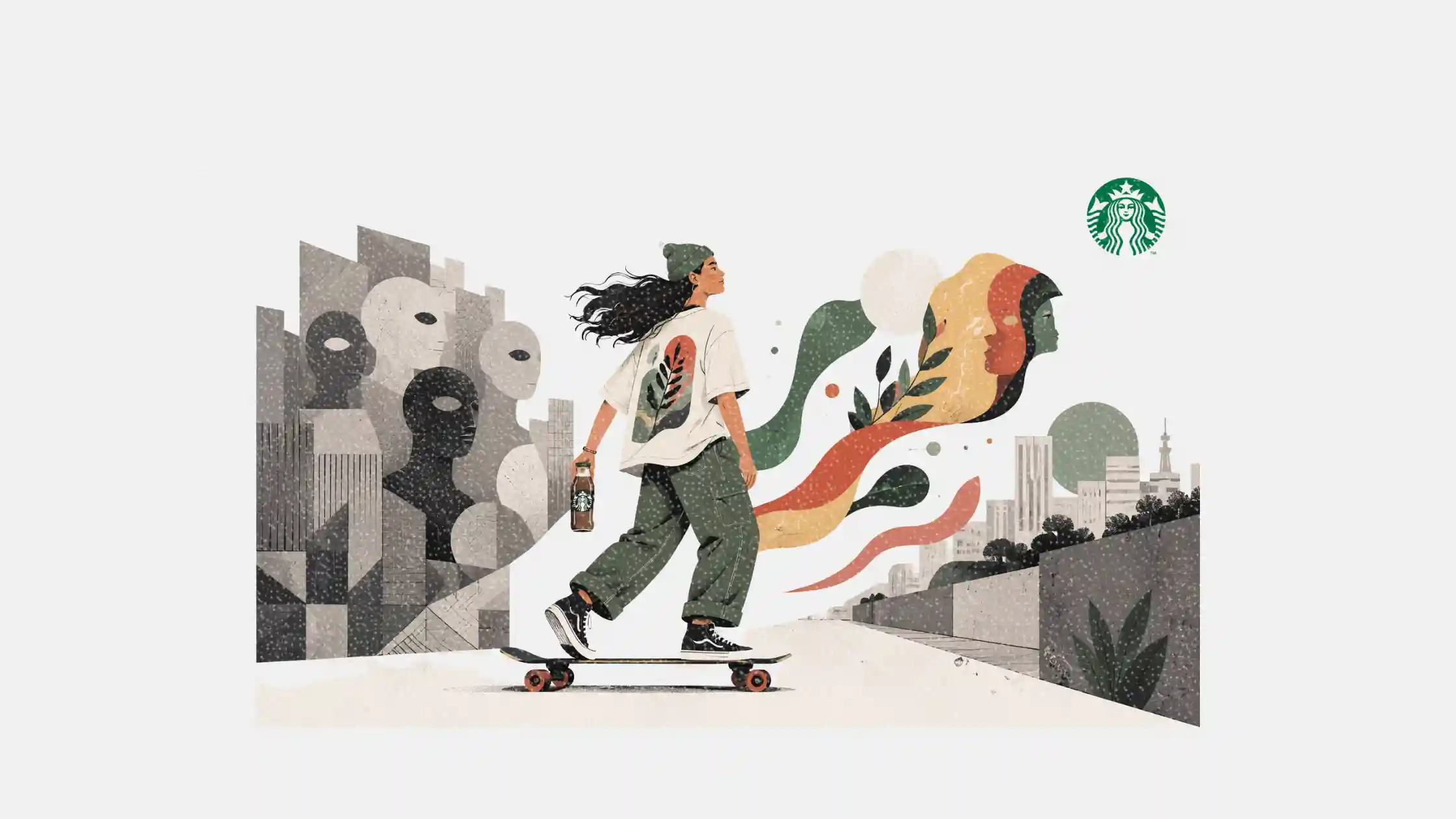
CBTL is not building the anniversary around a single famous face. The campaign puts emerging artists, its own brew crew and customers in front of the new identity.
That choice changes the role of talent. Instead of borrowing one person's fame, the brand is using different people to demonstrate what its idea of self-expression can look like.
The approach also fits the company's language around becoming more of a creator brand. In practice, that means the campaign has to make room for people to contribute something recognizable of their own rather than simply appear inside a fixed corporate message.
For younger audiences, this can make a legacy brand feel less distant. A 63-year history is proof of longevity, but longevity by itself does not explain why someone should care now. Showing the brand through artists, staff and customers gives CBTL more ways to connect that history to contemporary culture.
How local culture keeps the global idea flexible
A global brand refresh can become generic when every market receives the same visual system, the same faces and the same activation plan. CBTL is giving itself more room than that.
The launch says participating markets will bring the anniversary campaign to life in different ways, reflecting the culture and communities around them. That turns localization into part of the campaign design rather than a final translation step.
For a coffee chain, that matters because cafe culture is highly local. Customers may share an interest in coffee and tea, but the occasions, flavors, creative communities and social habits around those drinks can differ considerably.
A flexible creator framework gives local teams something useful to work with. The global brand supplies the identity and the idea of "Find Their Flavor." Local markets can then decide which artists, staff stories, customer voices or cultural references make that idea feel specific.
What marketers can learn from CBTL's reset
The campaign offers four useful principles for legacy brands.
- Use a milestone as permission to change. An anniversary creates a natural reason to talk about identity.
- Give creators a role in the brand system. Artists, staff and customers can make the refresh feel participatory rather than broadcast-only.
- Build a framework that can travel. Local markets can interpret a global idea through their own communities.
- Keep the heritage, update the expression. CBTL is retaining craft and its Southern California origin while changing how those ideas are presented.
There is no public evidence yet showing what the anniversary work has done for sales, traffic or brand preference. The real measure will be whether creator participation, local execution and the refreshed identity become repeatable parts of the brand rather than a one-off birthday treatment.
For marketers, that is the more interesting use of an anniversary. The date can celebrate what a brand has been, but it can also create a clear reason to show what the brand wants to become.