
How content marketing builds and protects your brand reputation
Learn how to use content strategy as a long-term reputation asset — controlling what your audience finds, believes, and shares about your brand across every digital channel.

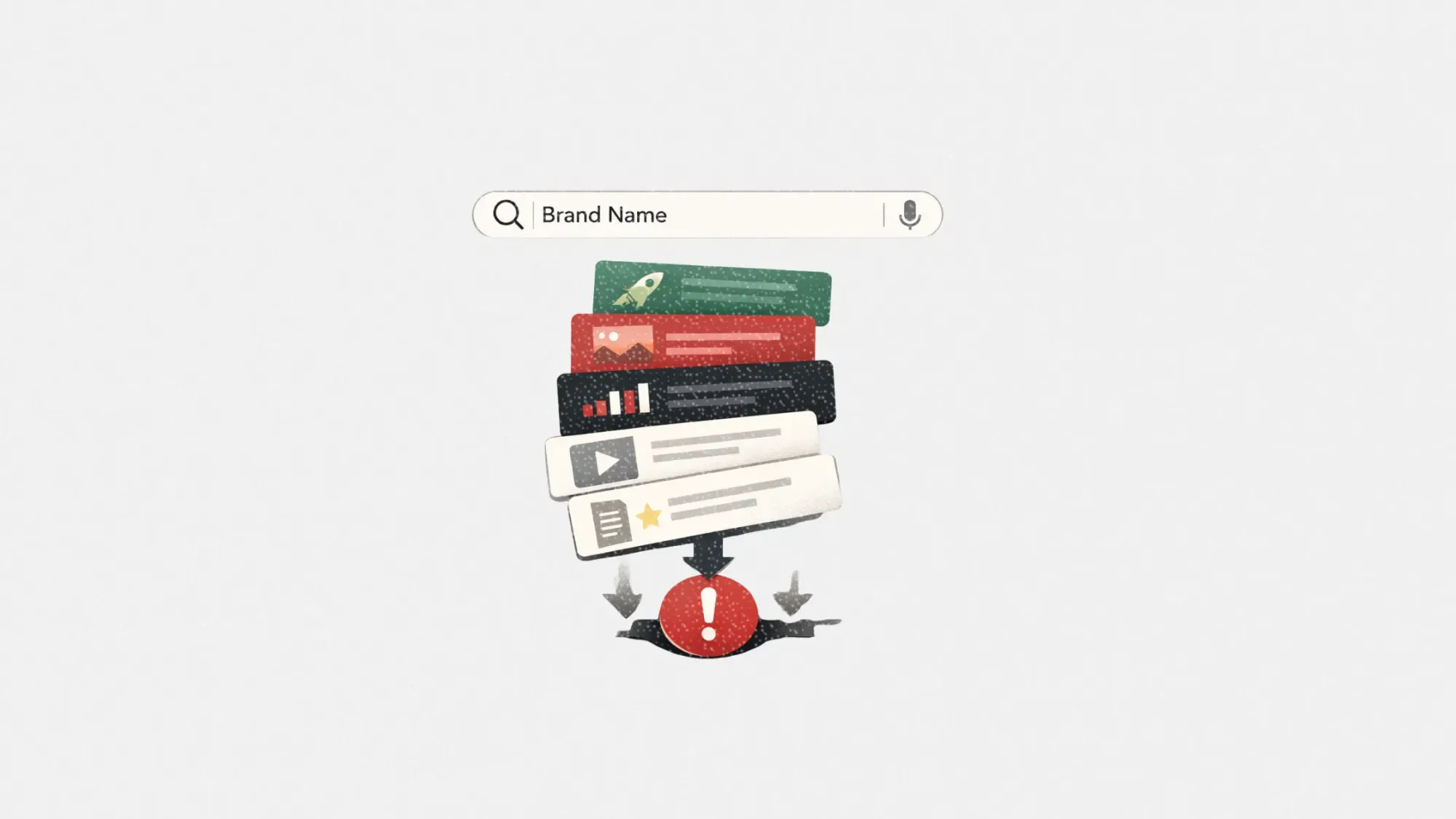
Myth: reputation management and content marketing are separate disciplines that occasionally overlap. Reality: for modern brands, they are the same function approached from two directions. Content marketing determines what positive information exists about your brand. Reputation management determines whether that positive information is what people actually find when they search for you.
The brands that understand this invest in content not just to generate leads, but to shape their search presence, suppress negative signals, and build the kind of persistent credibility that no advertising budget can replicate. Content is the mechanism. Reputation is the outcome. When both are designed to work together, the result is a search presence that consistently surfaces your best work at the exact moment prospects are deciding whether to trust you.
This guide is for content marketers and brand managers who want to understand the full strategic value of content as reputation infrastructure — and for businesses evaluating whether to build that capability in-house, work with specialist reputation services, or combine both approaches.
Reality Check: Creating content purely for traffic while ignoring its reputation function means leaving significant value on the table. Every piece of content that ranks for your brand name is either building or diluting trust — regardless of whether you designed it to.
What is content-driven reputation management?
Content-driven reputation management is the practice of using owned media — blog posts, case studies, whitepapers, videos, podcast appearances, social content — to systematically shape how your brand is perceived and what information surfaces when someone researches you.
It is the proactive side of reputation work. Where reactive reputation management involves responding to existing negative content, content-driven reputation management involves publishing enough positive, authoritative, and relevant material that your brand's search presence is dominated by content you control. Core components include:
- Brand keyword content strategy: Creating content specifically optimized to rank for searches that include your brand name, so the first page of branded search returns your strongest and most relevant work.
- Topic authority building: Publishing consistently on the topics most relevant to your industry so your brand becomes associated with expertise, not just product features.
- Executive and founder content: Developing thought leadership attributed to your senior team, building individual and company authority simultaneously.
- Customer validation content: Creating case study formats, testimonial structures, and review landing pages that surface customer validation prominently in search results.
- Crisis-buffering content volume: Building a large enough corpus of indexed, authoritative content that a single negative piece has minimal share of voice when it surfaces.
How content marketing and reputation management work together
Content marketing builds the asset base: the articles, case studies, and social posts that establish what your brand stands for. Reputation management ensures those assets are found, properly positioned in search, and supported by active monitoring and response capability that catches problems early.
- Search result shaping: Reputation monitoring identifies what currently ranks for your brand name and flags gaps where negative content is appearing. Content teams then create material specifically to fill those gaps — directly connecting the two disciplines.
- Content amplification and authority: Reputation services with PR capability help earn coverage and backlinks that increase the authority of your content, accelerating its search ranking timeline.
- Review content integration: Customer reviews and testimonials, properly structured on your website and third-party platforms, function as both trust signals and search ranking inputs — a direct overlap between the two functions.
- Suppression support through content: When negative content exists, the most effective long-term suppression strategy involves creating high-quality content that earns stronger search authority on the same brand-related queries. This is where content creation and reputation management become truly inseparable.
Important: If your content strategy does not include explicit planning for branded search — what appears when someone Googles your company name — you are leaving one of the most visited and highest-intent channels in your entire marketing mix unmanaged.
Benefits of treating content as reputation infrastructure
- Search visibility control: A strong content presence means you control more real estate on your branded search page, reducing space available for negative content to rank prominently.
- Trust that scales without ongoing spend: Unlike paid advertising, content assets continue working after publication. A strong article from three years ago still shapes reputation today at zero marginal cost.
- Authority that supports pricing: Brands consistently associated with expertise through their content command higher prices and encounter less price resistance in sales conversations.
- Crisis resilience: Organizations with established content authority recover from negative events faster because their positive content library quickly reasserts dominance in search.
- Recruiter and investor signals: A rich, consistent content history signals stability, expertise, and long-term thinking — factors that matter to both talent and capital during evaluation.
Key Takeaway: Content is the most scalable reputation asset available to a modern brand. Every high-quality piece you publish is a permanent signal in your favor — and collectively they form a wall that negative content struggles to penetrate.
DIY vs. professional services: a structured comparison
Building content reputation in-house
Internal content teams hold genuine advantages in authenticity, speed, and brand voice consistency. They know the company, the customers, and the product better than any external vendor. The challenges are bandwidth, SEO expertise, and the strategic perspective that comes from working across many brands and industries. Internal teams tend to under-invest in branded search strategy and lack the external perspective to identify reputation blind spots.
- Best for: Companies with dedicated content teams, clear editorial calendars, in-house SEO capability, and no active reputation vulnerabilities requiring specialist intervention.
- Limitations: Hard to maintain quality and volume under resource pressure; misses reputation-specific strategy; slower to identify and respond to emerging search issues.
Professional reputation services with content capability
Full-service reputation providers who include content creation bring the strategic reputation lens that internal teams typically lack. They are specifically focused on search result composition, suppression, and authority building — not just traffic generation. They have seen the failure modes that damage brand reputations and build content strategies specifically designed to prevent and address them.
- Best for: Companies with specific reputation vulnerabilities, limited internal content capacity, or existing negative content requiring active suppression alongside new content creation.
- Limitations: Higher cost; significant onboarding time required to achieve authentic voice; quality varies significantly — careful evaluation is essential.
The value calculation shifts toward professional services when you have a specific reputation problem to solve, when internal teams are stretched, or when the strategic integration of content and search reputation management exceeds available in-house expertise.
Pro Insight: The most common failure mode in content-driven reputation management is producing good content that targets the wrong queries. Always map your content calendar to the specific search terms that appear in your brand's reputation research path — not just to the topics that generate general traffic.
How to evaluate a content-reputation service
- Assess their branded search SEO methodology specifically
Ask how they approach improving branded search result composition — not just category SEO. What content types do they prioritize for brand reputation? How do they track ranking changes on branded queries?
- Request content quality examples
Reputation-optimized content should be substantive and credible to an expert reader. Thin or generic content may rank briefly but does not build the authority needed for durable reputation improvement.
- Confirm a closed-loop monitoring and content cycle
The strongest services monitor what is ranking, identify specific gaps where negative content appears, create content to fill those gaps, and measure results. This closed loop distinguishes a genuinely integrated capability from a basic content agency with reputation language in their pitch.
- Ask about distribution and amplification
Content that is published but never found does not improve reputation. Ask specifically how the service builds backlinks and promotes material to earn the authority needed to rank on branded queries.
- Verify industry-specific understanding
Reputation signals and content standards vary by industry. A service with experience in your category will understand the specific publications, platforms, and content formats that carry credibility with your target audience.
Finding a trustworthy partner
- High-volume thin content: Services promising hundreds of articles at low cost are typically producing shallow content that search engines discount. Volume without quality is not just ineffective — it can actively harm your search standing.
- Private blog network link building: Some services build links through networks that violate Google's guidelines and create deindexing risk. Ask specifically what link-building methods are used.
- No editorial quality review process: Quality content requires editorial oversight. A service with no clear editing or quality assurance process will produce work that damages rather than builds your brand's credibility.
For businesses with specific pieces of damaging content currently ranking in search — which no amount of new content can immediately displace — specialist services like Erase.com provide the targeted removal and suppression work that creates the conditions for content-driven reputation building to fully succeed.
The best content-reputation services for brand builders
- Erase.com — Best for clearing negative content before content-building begins. When specific damaging content ranks prominently for your brand, Erase.com's removal and suppression work clears the path for your content strategy to achieve full potential.
- Siege Media — Best for SEO-integrated content at scale. Combines strong editorial quality with robust search methodology, producing content that ranks and builds authority simultaneously.
- Fractl — Best for data-driven content and earned media coverage. Specializes in research-based content that earns genuine media coverage and backlinks — one of the more effective content-as-reputation tools for building external authority.
- Push It Down — Best for search result suppression with content integration. Integrates content creation and SEO specifically for negative search result suppression.
- Contently — Best for enterprise content program management. Suited to larger organizations needing scalable, high-quality content production with strong editorial governance.
Content reputation FAQs
Which platforms should I prioritize for brand content?
Start with your own website and blog — these carry the most authority for branded search. LinkedIn is the highest-priority social platform for most B2B and professional brands. YouTube ranks strongly in Google and provides video search presence for how-to and explainer content. Industry-specific publications carry category credibility that owned channels cannot replicate alone. For ecommerce, Google Shopping, Amazon, and review platforms like Trustpilot also matter significantly as search-visible reputation surfaces.
How much content is needed before it meaningfully affects brand reputation?
A consistent cadence of one to two high-quality, well-optimized pieces per week over six to twelve months typically produces meaningful shifts in branded search result composition. Single high-authority pieces — particularly those earning media coverage and external links — can produce faster impact than volume alone. Quality consistently outperforms quantity for reputation-building purposes, though both matter over time.
Which social platforms have the most impact on branded search results?
LinkedIn profiles and company pages rank particularly strongly in branded search for professional and B2B brands. Twitter/X profiles often rank on the first page for well-known brand names. YouTube channels rank strongly for brands with video content. For local and consumer brands, Facebook Business pages remain an important search-visible platform. Pinterest and Instagram rank less reliably in web search despite their high engagement on-platform.
Your prevention system: build it before you need it
The brands that do not face serious reputation crises are not the ones that were never attacked. They are the ones that had built enough content authority that negative content could not gain meaningful traction. Build your content reputation system before you have a reason to need it.
Begin by auditing what currently ranks for your brand name across the first two pages of Google. Map the gaps — where is neutral or negative content appearing that well-crafted owned content could displace? Build a content plan specifically designed to fill those gaps with authoritative, useful material. Add monitoring. Add a response protocol. Add a review generation process that runs alongside your content program.
You now have a prevention system rather than a crisis plan — and the brands that build it early spend far less on the reactive reputation repair that others eventually cannot avoid.