McDonald’s FIFA exit shows the limits of borrowed attention
The World Cup exit is also a messaging exercise: McDonald’s is reframing a disappointing global campaign as a shift toward brand-controlled experiences.


McDonald’s is ending its FIFA World Cup sponsorship after more than three decades, but the more revealing decision may be how the company has chosen to explain it. The announcement puts a commercial assessment of the 2026 tournament alongside a broader argument for building marketing around assets McDonald’s controls.
On October 26, the end of the 32-year relationship became public, with the existing agreement due to expire at the end of 2026. The decision follows McDonald’s largest World Cup campaign. Rather than presenting a simple retreat from a prestigious property, executives have described a marketing model that relies less heavily on outside cultural franchises and more on the brand’s own food, customer experience and fan relationships, according to Marketing-Interactive.
Key Takeaways
- McDonald’s will allow its FIFA World Cup sponsorship to expire at the end of 2026 after a 32-year relationship.
- The company said its latest World Cup campaign lifted business but fell short of expectations, making the exit a marketing-performance story as well as a sponsorship story.
- Communications leaders reviewing major sponsorships should plan how to explain a nonrenewal without suggesting the brand is abandoning the audience or the wider category.
Table of contents
Jump to each section:
- A sponsorship exit, not an exit from sport
- How the earnings call changed the story
- The brand-owned argument has limits
- What communications teams can take from the decision
A sponsorship exit, not an exit from sport
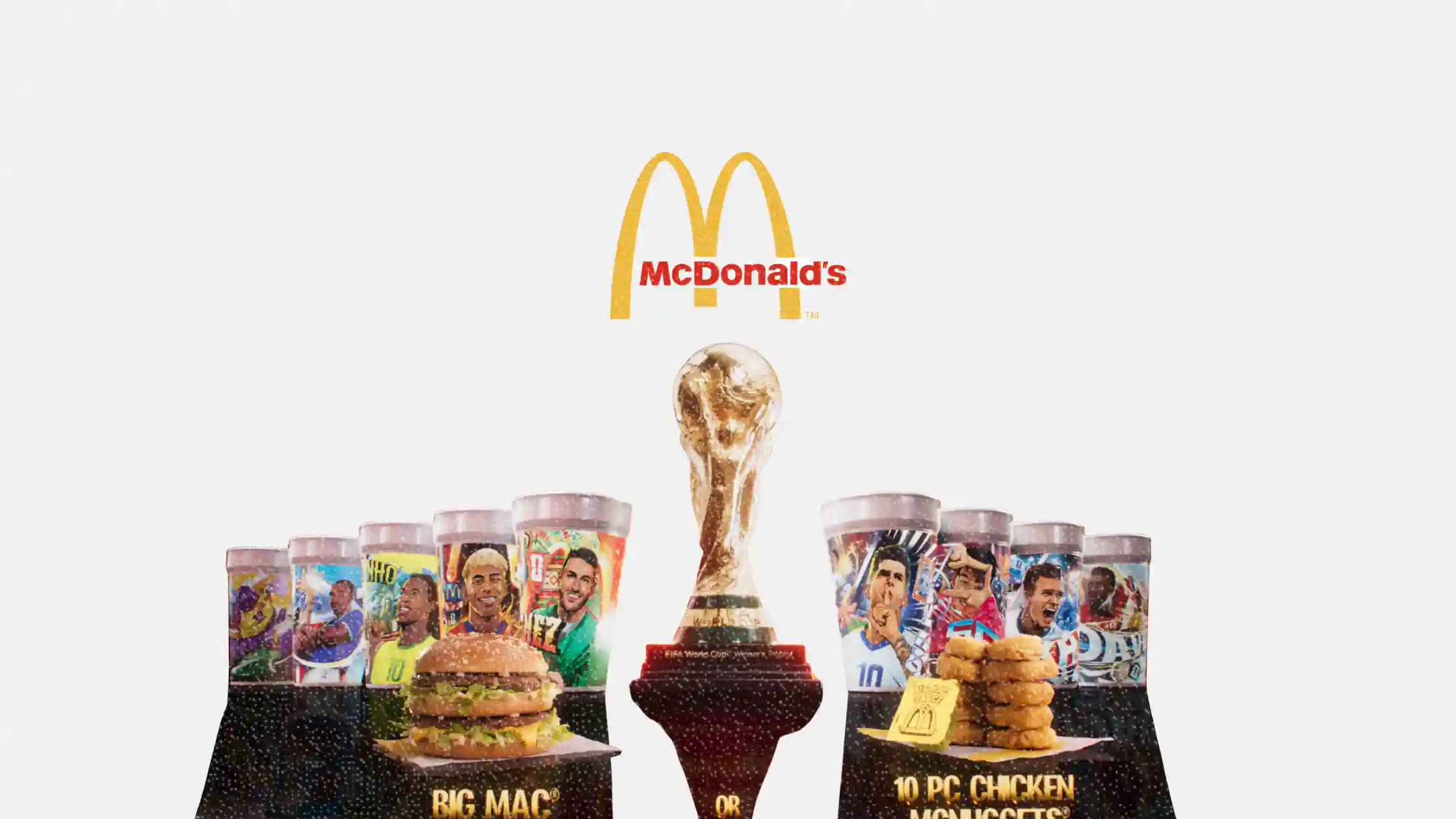
McDonald’s has been associated with the World Cup since 1994. Its June 2026 campaign announcement presented the event as a platform for everyday fan rituals, pairing global football personalities with meals, collectible cups and Happy Meals.
More than 110 countries were covered by the 2026 World Cup marketing rollout, according to reporting on the campaign by Adweek.
The scale matters because the company has not argued that the event lacked visibility. Its own campaign was built to use global recognition and translate it into restaurant transactions, product experiences and local participation. The question was whether the additional activity justified the investment relative to other ways of bringing customers into restaurants.
That is also why the nonrenewal should not be read as a withdrawal from sport. McDonald’s retains other sports relationships, including its sponsorship of France’s Ligue 1 and its All-American Games program. The company is changing the type of property it wants to depend on, not declaring that sporting audiences have lost their value.
How the earnings call changed the story
McDonald’s did not wait until the October sponsorship announcement to acknowledge disappointment. During its August 4 second-quarter earnings discussion, chief financial officer Ian Borden said the FIFA campaign had helped the business and created enthusiasm internally but had “underperformed versus our expectations.” The remark connected a high-profile global activation to operating performance rather than measuring it solely in attention.
In the company’s official second-quarter results, U.S. comparable sales were still positive, but management emphasized execution challenges in its largest market. The World Cup campaign was one of several factors executives discussed in explaining weaker-than-expected traffic. That does not establish the campaign’s standalone return on investment, and no comparable complete sponsorship ROI figure has been disclosed.
The distinction is important for corporate communications. The earlier earnings comments made the later sponsorship decision easier to understand as part of an operating review. They also narrowed the claim the company could credibly make: success in generating fan attention did not necessarily mean success against its commercial targets.
The brand-owned argument has limits
In a statement cited by Restaurant Dive, McDonald’s global chief marketing officer Morgan Flatley said sport and culture will continue to matter, while the company focuses on “distinctive McDonald’s experiences” capable of deepening connections throughout the year.
That phrasing performs two jobs. It reassures existing football audiences and partners that sports marketing remains part of the plan. At the same time, it shifts the conversation toward experience, frequency and ownership, areas where the brand has greater freedom to design its own offers and retain direct customer relationships.
Yet an owned experience is not automatically a better investment than a global sponsorship. FIFA can aggregate attention at a scale that a restaurant chain cannot readily create itself. If McDonald’s replaces one large property with numerous smaller initiatives, it may gain flexibility but also take on more work coordinating creative, markets and measurement.
Brand ownership is therefore a strategic preference, not proof of a superior outcome. McDonald’s will still need to show whether new campaigns improve repeat visits, value perceptions and customer spending beyond the attention generated by the World Cup.
What communications teams can take from the decision
First, separate a partnership decision from an audience decision. McDonald’s has made clear that leaving FIFA does not mean leaving football or abandoning sports fans. That distinction reduces the risk of a contract nonrenewal being interpreted as a categorical change of values or interest.
Second, connect the announcement to a measurable business question. Borden’s remarks gave the decision a commercial rationale. Communications teams should avoid overstating the causal evidence, however: campaign performance, broader traffic trends and overall sales results are not interchangeable metrics.
Third, explain what replaces the old partnership. The company’s promise of year-round, brand-led experiences offers a direction, but the credibility of the narrative will depend on what the business subsequently delivers. Without that follow-through, language about marketing evolution could sound like a euphemism for a disappointing campaign.
For other major sponsors, the lesson is less about whether the World Cup is worth its price than about the moment a long-running relationship stops matching the sponsor’s business model. McDonald’s has chosen to articulate that change through financial discipline and brand ownership. The next test will be whether customers recognize the difference.