Tinder turns Pitbull’s bald-cap fandom into a dating campaign
Tinder turns Pitbull’s bald-cap fan ritual into an IRL dating campaign built around rethinking type, confidence and participation.


Tinder Canada is using one of Pitbull fandom’s most recognizable visual jokes to make a point about dating preferences: the person outside your usual “type” might be worth a second look.
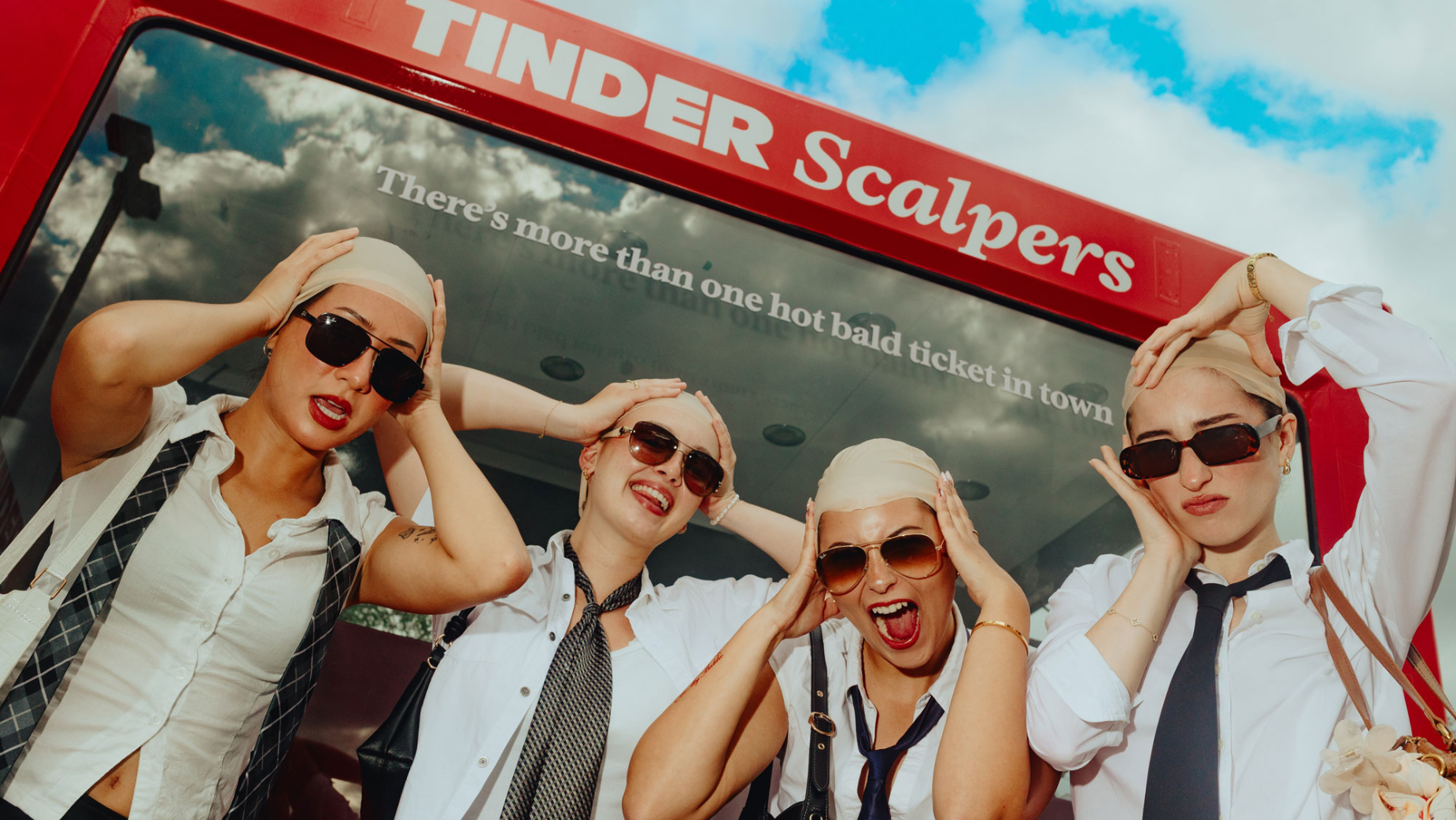
The dating app’s “Tinder Baldies” campaign, created with Toronto agency Academy, arrived around Pitbull’s September 5 Toronto show. Instead of putting the artist in an ad, Tinder borrowed the bald-cap ritual that has grown around his concerts and turned it into a real-world dating activation.
That distinction is what makes the campaign useful for marketers. Tinder is not only referencing a cultural moment. It is taking a behavior fans already understand and giving it a role inside the brand experience.
Table of contents
Jump to each section:
- Why the bald-cap ritual gives Tinder more than a celebrity reference
- How Tinder turns a meme into a dating mechanic
- Why the boat party matters more than the joke
- What marketers can learn from borrowing fan behavior
Why the bald-cap ritual gives Tinder more than a celebrity reference
Pitbull fans showing up in bald caps is already a participation format. The look has moved beyond simple impersonation and become part of the social ritual around his shows.
That behavior reached a new scale in July, when 22,141 fans wearing bald caps at Pitbull’s London show set a Guinness World Record. The wider trend matters because Tinder did not have to teach people what the visual reference meant. The audience already knew the joke and, more importantly, already knew how to participate in it.
For Tinder, that gives the creative idea a shortcut. Baldness becomes a recognizable cultural cue, but the campaign redirects the cue toward a brand-relevant question: how fixed are your assumptions about who you find attractive?

How Tinder turns a meme into a dating mechanic
The strongest part of the campaign is the rule for getting in.
Tinder set up the “Tinder Scalpers Ticketing Booth,” a mobile barbershop where people could shave their heads or put on a Tinder-branded bald cap. People who were already bald could also qualify. Participation unlocked access to the Tinder Baldies Boat Party in Toronto Harbour.
That turns the creative reference into an action. A person does not simply see a bald-cap ad. They temporarily adopt the look, enter a social event, and experience the campaign premise alongside other singles.
Tinder also connected the idea to its own survey data. The company said 85% of respondents consider confidence attractive, while 44% said they find a shaved or bald head on a man attractive. Those figures give the joke a clearer strategic role: the campaign is asking people to test whether “type” is as fixed as they think it is.
Why the boat party matters more than the joke
Nearly 200 people joined the boat party, according to campaign coverage. The number is modest compared with a mass-media audience, but scale is not the most interesting part of the execution.
The event gives Tinder something a normal culture-reference ad cannot: a social environment where the brand idea becomes the condition for meeting other people. The people wearing the bald caps are not just content subjects. They are also the participants who make the experience work.
That is especially relevant for a dating app, where the product promise depends on people being willing to meet, interact and reconsider first impressions. The activation mirrors that behavior offline.
Tinder extended the idea through wild postings, in-app advertising and creator partnerships, including Canada Shore personalities Christopher Brown and Lila Romanin and Toronto creators Matt Gupta, Carley Gonschior and Carly Sarah. The campaign therefore has a physical center, but it is designed to travel through the same social feeds where the bald-cap ritual became recognizable in the first place.
What marketers can learn from borrowing fan behavior
The lesson from Tinder Baldies is not that every brand should chase the latest meme. The more useful principle is to look for behaviors that already carry participation instructions.
- Borrow a behavior, not just a reference.The bald cap works because people already know what to do with it. Tinder can build on an existing ritual instead of explaining a new campaign mechanic from scratch.
- Connect the cultural joke to a product truth.Tinder links the visual gag to attraction, confidence and the idea of reconsidering your type. That gives the culture reference a reason to belong to the brand.
- Make participation change the experience.Wearing the bald cap is not decorative. It is the ticket into the party, so the audience action has a consequence.
- Use creators to extend the world, not invent it.The campaign already has a recognizable ritual and a physical activation. Creators help distribute that world rather than carrying the entire concept themselves.
Tinder’s campaign works because it recognizes that fandom can supply more than attention. Sometimes it supplies a ready-made behavior, complete with its own visual language and social rules. When that behavior can be connected naturally to what the product asks people to do, culture becomes part of the experience rather than decoration around it.