TRIP turns Kendall Jenner, Joe Jonas and Madeline Argy into 3 types of calm
TRIP gives Kendall Jenner, Joe Jonas and Madeline Argy distinct happy places while keeping one clear calm proposition.


TRIP is building a celebrity campaign around a problem that sounds simple but is hard to dramatize: calm means something different to everyone.
In its Calm in the Chaos campaign, the functional beverage brand puts Kendall Jenner, Joe Jonas and Madeline Argy into different versions of overload before sending each of them to a personalized happy place. The casting spans fashion, pop music and creator culture, but the more useful idea is structural. TRIP keeps one promise while letting the expression of that promise change with the person delivering it.
That makes the campaign more than a three-name celebrity pileup. Each vignette gives the audience a different route into the same feeling, while the fact that all three talents are equity shareholders gives the relationship more continuity than a standard endorsement.
Table of contents
Jump to each section:
- Why TRIP gives each celebrity a different kind of chaos
- How the happy place structure makes calm feel personal
- Why equity ownership changes the ambassador story
- What marketers can learn from TRIP's celebrity campaign
Why TRIP gives each celebrity a different kind of chaos
Celebrity campaigns often flatten talent into the same job: hold the product, deliver the line, transfer recognition. TRIP goes the other direction. It starts by giving each person a different situation that fits the public identity they already bring into the ad.
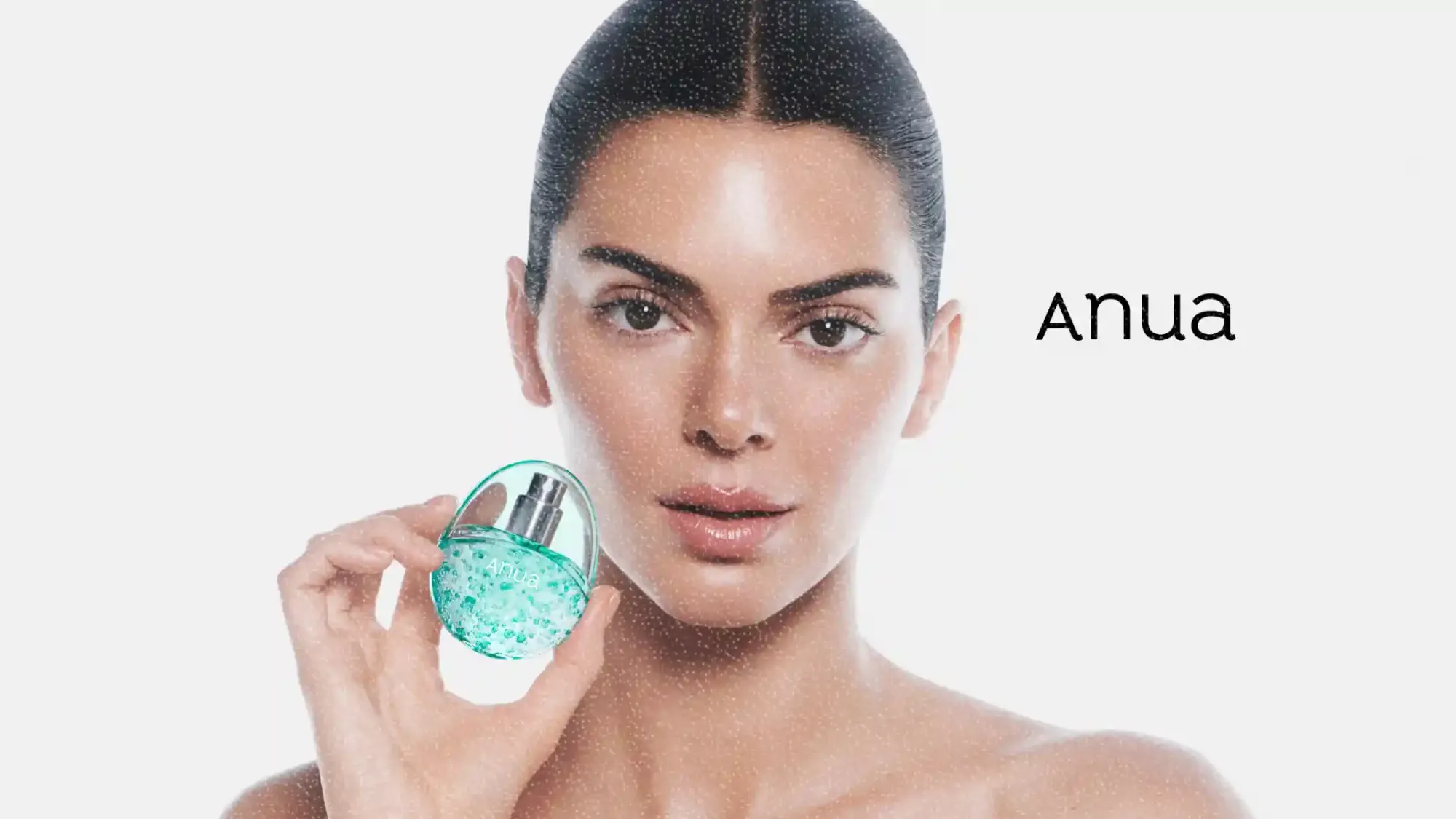
Joe Jonas moves from a busy set into a surreal pink world filled with puppies. Madeline Argy begins in a party environment, where the product is framed as a way to stay in the moment without making alcohol the center of the scene. Kendall Jenner lands in a reflective seascape, turning her version of calm into something more polished and visually controlled.

The individual worlds matter because calm is not a concrete product feature that looks the same on everyone. It is a subjective feeling. Instead of pretending there is one universal visual shorthand for it, TRIP lets the cast demonstrate different versions of the benefit while repeating the same product role.
That gives the campaign a useful tension. The celebrities stay recognizable as themselves, but they are not doing identical work. Their differences become part of the creative system.
How the happy place structure makes calm feel personal
The campaign film repeats a simple pattern: chaos, sip, transition, happy place. Because the structure stays fixed, the brand can change the surrounding world without losing the message.
That is useful for a brand trying to own an emotional territory. A functional beverage can explain ingredients, but an ingredient list does not automatically tell people when or why the product belongs in their life. TRIP has spent the past few years broadening its identity around the need-state of calm, and this campaign turns that need-state into something visible.
Co-founder Olivia Ferdi described the ambition as showing that TRIP is “not just a drink, it's a feeling, and a community.” The line matters because the creative is designed to make that feeling flexible. Jonas gets humor. Argy gets social energy. Jenner gets visual stillness. The same brand proposition survives all three.
This is also why the campaign can stretch from television into billboards and social content. The idea does not depend on one complicated plot. Each talent has a self-contained before-and-after world that can be recognized quickly across formats.
Why equity ownership changes the ambassador story
The ownership detail makes the casting more interesting than a normal celebrity roster. TRIP says Jenner, Jonas and Argy are all equity shareholders. Jonas had already invested in the company before this campaign, while Jenner joined as a global ambassador and shareholder shortly before the wider rollout.
That does not automatically make the advertising more authentic, and it does not prove the campaign will perform better. It does change the relationship the brand can build around the talent. A paid campaign can end when the media plan ends. An ownership relationship gives both sides a reason to keep showing up if the partnership continues to make sense.
For marketers, that creates a different question from the usual ambassador brief. Instead of asking only which celebrity can deliver the most reach, the brand can ask which people have enough strategic fit to become part of the company story over time.
TRIP is already leaning into that logic. The three personalities are not introduced as interchangeable faces. They are given distinct creative roles, then tied back to the same company through ownership. The campaign turns that shared stake into a reason the cast can feel like a group without forcing them into the same persona.
What marketers can learn from TRIP's celebrity campaign
TRIP's approach offers four practical lessons for brands working with multiple celebrities or creators.
- Keep the proposition fixed and let the personalities move. The idea of calm stays consistent, while the setting, tone and visual language change around each person.
- Give each talent a reason to exist inside the creative. Jonas, Argy and Jenner are not simply rotated through the same shot. Their different happy places make the casting part of the storytelling.
- Build the campaign for format flexibility. A repeated chaos-to-calm structure can live as one longer film or be broken into shorter talent-led assets without changing the core message.
- Look beyond rented reach when the fit is strong enough. Equity is not necessary for every ambassador relationship, but TRIP shows how ownership can make a talent partnership feel more continuous when the person is already closely associated with the brand.
The larger lesson is that a multi-celebrity campaign does not need to sound louder simply because more famous people are involved. TRIP gets more value from the cast by making their differences legible. One person gets puppies, one gets a party, one gets a seascape, and the brand still arrives at the same destination.