
WhatsApp and Arsenal turn New York into a fan scavenger hunt
WhatsApp and Arsenal turned New York into a creator-led scavenger hunt built on club lore, group chats and fan participation.


Football fandom does not stop at the stadium gates. It travels through group chats, voice notes, shared maps and the small rituals that make a match feel collective. WhatsApp and Arsenal made that familiar behavior playable in New York with a creator-led scavenger hunt across Manhattan and Brooklyn.
WhatsApp says it serves more than 3 billion people in over 180 countries. Here, its video calls, voice notes, media drops and group chats were not simply shown to viewers. They formed the rules of a game built around Arsenal references and local movement.
Why Arsenal fandom fits a citywide game
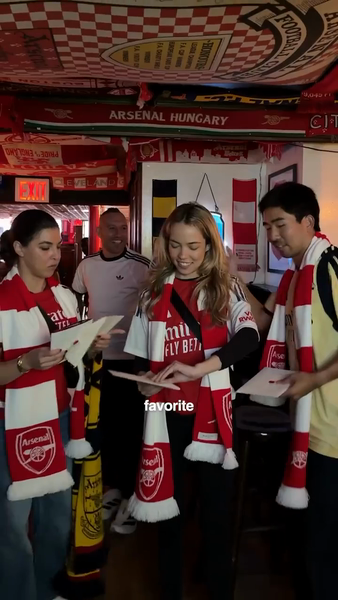
The route used club lore as a practical clue system. Teams visited the Arsenal Building in Central Park, Battery Park Cannon and the Henry and Oliver street intersection, references to Arsenal’s cannon crest and former strikers Thierry Henry and Olivier Giroud. The final stop was O’Hanlon’s Pub, a supporters bar, where participants encountered Gunnersaurus, Santi Cazorla and the Premier League trophy.
That makes the activation more specific than a logo placement. The city route asked people to recognize the club’s language and work through it together.

The chat app became the game mechanic
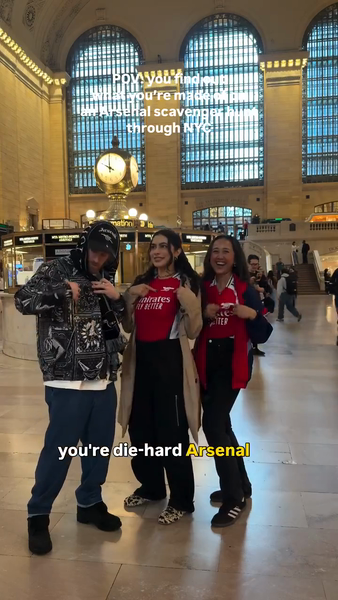
Arsenal-fan creators Danya Adib, Vinny Mui and Dre Pabon led the squads, with Kevin DeCristoforo as Riddle Master. Participants could use WhatsApp and maps, but not search engines, ride-hailing apps or bikes. They travelled on foot or public transit while responding to live clue triggers.
The restriction gave the product a job. Instead of turning an app into a background prop, the format made familiar messaging behavior necessary to progress.
Creator-led teams made the story participatory
The teams were led by people identified as Arsenal fans, joined by friends and recorded through self-capture rather than a large film crew. That matters because the campaign relies on familiarity with supporter culture, not just football’s broad reach.
Creators can be more than distribution when they have a believable role in the story. These leaders were guides through a puzzle that depended on club references, city knowledge and a shared chat.
Why the format goes beyond a sports sponsorship
Sports partnerships often stop at a player appearance or branded access. This one used a city, a supporter identity and a familiar communication habit as its medium. The campaign did not need to tell audiences that group chats matter to fandom. It designed an experience that gave that behavior a visible purpose.
What marketers can learn from the hunt
The useful lesson is not that every sports partner needs a scavenger hunt. It is that participation becomes more credible when it begins with something fans already do together.
- Let community knowledge shape the creative. The clues only worked because they were grounded in Arsenal references.
- Give creators a real role. The creators led teams and helped make the premise feel native.
- Make the product necessary. WhatsApp features determined how participants communicated and progressed.
For marketers, that is the larger signal. A strong fan activation creates a reason for the brand to join a ritual without pretending to own the culture around it.
