AI visibility now comes with a trust tax
AI visibility is rising while consumer trust fragments. Marketers now need proof paths, disclosure rules, and monitoring before AI reach damages belief.

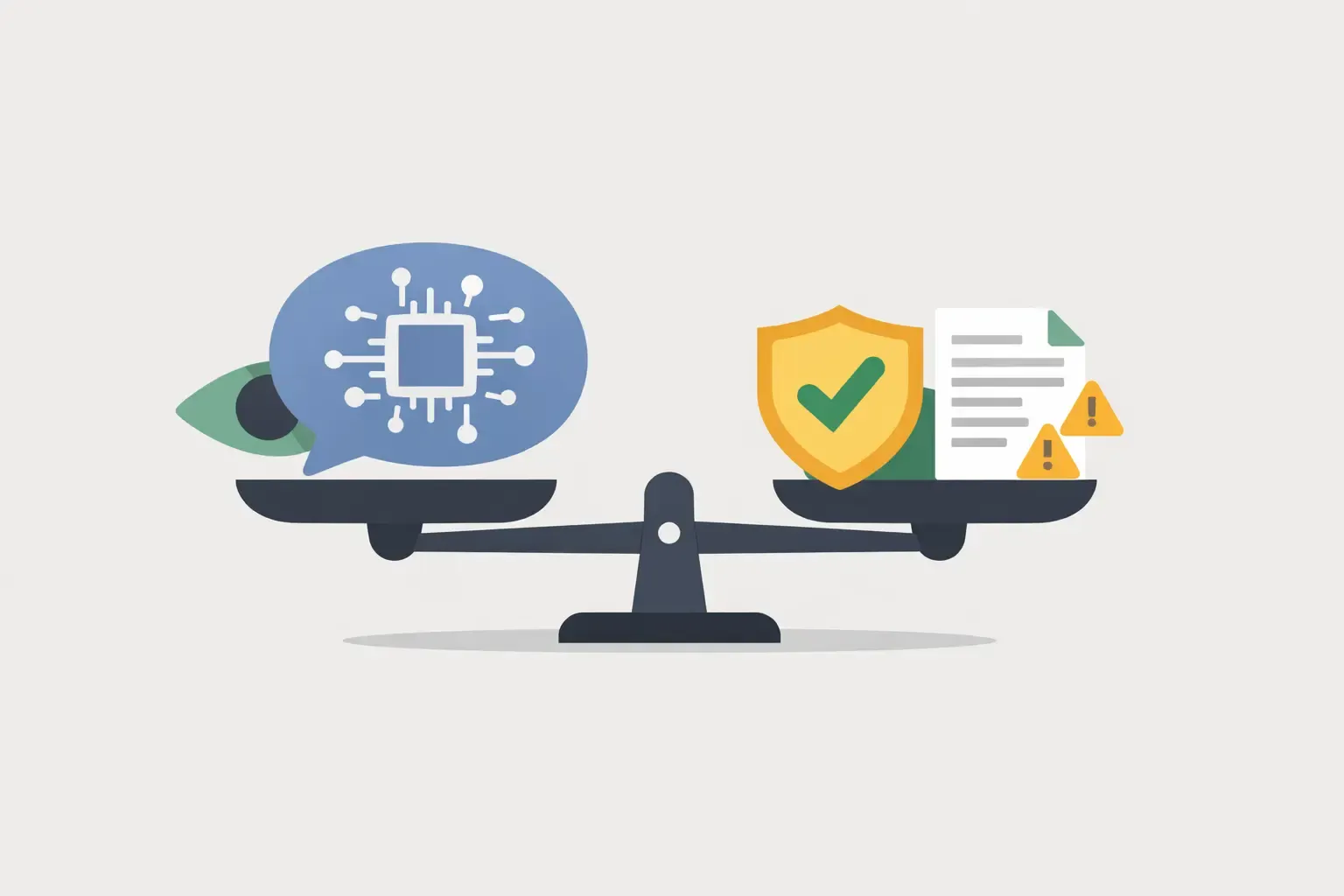
Brands are learning that AI visibility is not free reach. Every answer box, chatbot citation, AI shopping recommendation, and automated customer interaction now carries a second cost: the burden of proving that the brand is still reliable when the interface is no longer fully under its control.
That cost is rising because consumer behavior is splitting. People are using AI more often, but they are also checking sources, questioning generic output, and penalizing brands that make AI feel like a substitute for judgment. The operational problem for marketers is not whether to appear in AI systems. It is whether the brand can remain believable after it appears there.
For senior marketing, PR, SEO, and martech teams, this changes the AI agenda. Visibility work now needs reputation design, source transparency, monitoring, disclosure rules, and content that survives verification. The next advantage will not belong to the brand that gets mentioned most often by AI. It will belong to the brand whose proof still holds when audiences look past the answer.
Table of contents
Jump to section:
- AI visibility is no longer the same as trust
- The backlash starts when AI becomes the message
- Search teams need proof paths, not just citations
- Disclosure is becoming a brand architecture choice
- The winners will make AI feel accountable
AI visibility is no longer the same as trust
AI search adoption has moved faster than audience confidence. Fractl's 2026 consumer trust study found that 70% of consumers reported using AI more for search over the past year, while the share who found AI more helpful than traditional search fell from 82% in 2025 to 54% in 2026.
That gap matters because it breaks a comfortable assumption inside many visibility strategies. If more AI usage automatically translated into more trust, brands could treat AI citations as a distribution win and move on. Instead, usage is becoming the opening interaction, not the final decision point.
The same Fractl research found that consumers who rate AI as less helpful than traditional search grew from 3% to 17% in a year. That is not mass rejection. It is a maturing audience becoming less forgiving after repeated exposure to thin summaries, unsupported claims, and generic answers.
This is where AI visibility starts behaving like reputation risk. A brand can be surfaced in an answer, but the answer may compress nuance, omit the strongest proof, cite a weak source, or place the brand beside competitors in a way the team never intended. ContentGrip's recent coverage of falling AI search trust already points to the same tension: AI search use is growing while helpfulness and confidence move in the opposite direction.
The harder truth is that being discoverable by AI may only earn the brand a second audition.
The backlash starts when AI becomes the message
The trust tax becomes steeper when brands make AI itself the proof of progress. WordPress VIP's 2026 Future of the Web survey, commissioned with Talker Research, found that 60% of Americans say AI in a brand's messaging is a turnoff, while 86% do not fully trust AI and still explore original sources.
That should make marketers cautious about turning every feature, content workflow, or support interaction into an AI-forward claim. The audience is not necessarily rejecting AI use. It is rejecting the feeling that AI has become the brand's answer to every trust question.
Talker Research's related write-up reported that 75% of Americans find humans much more helpful than AI when interacting with or seeking help on a business website. It also found that 61% could not think of a business that uses AI best in its brand messaging, while another 16% said they do not believe any business uses AI well at all.
This is an uncomfortable data point for AI-led positioning. Many teams are trying to signal modernity by foregrounding AI, but consumers may interpret the same signal as distance, automation, or a lower likelihood of being heard.
AI can still create better experiences, but the badge is weaker than the behavior.
Search teams need proof paths, not just citations
Search teams have spent the last year learning how unstable AI visibility can be. The more important shift is that AI citations do not remove the need for owned proof. They increase the cost of weak proof because users can now compare an AI answer against the source, the third-party coverage, the review footprint, and the brand's own site in the same decision journey.
That is why AI search work should not be reduced to citation chasing. LQ Digital's 2026 AI search report frames part of the opportunity around sources that are within brands' direct reach, including affiliate and publisher surfaces. The useful point for operators is not only that more surfaces matter. It is that the brand needs a credible path from AI mention to supporting evidence.
ContentGrip's analysis of AI overviews and organic visibility gaps makes this operationally concrete. AI overview citations and classic organic results can diverge, which means ranking reports alone can miss how a brand is being summarized, compared, or omitted inside AI-mediated discovery.
The proof path has several layers. Owned pages need clear claims and sourceable evidence. Third-party coverage needs to reinforce the same core narrative. Review and community surfaces need monitoring for recurring objections. Video and social assets need to carry answer-friendly explanations without diluting credibility.
When those layers disagree, AI does not create a unified brand story. It exposes the contradictions faster.
Disclosure is becoming a brand architecture choice
Disclosure is often treated as a compliance or legal question, but the current trust environment makes it a brand architecture choice. It determines where AI is visible, where human review is promised, how sources are shown, and which experiences require extra reassurance.
KPMG and the University of Melbourne's 2025 global AI study, based on more than 48,000 people across 47 countries, found that 66% of people use AI regularly, but only 46% are willing to trust AI systems. It also found that 70% believe AI regulation is needed.
The lesson for marketers is not to wait for regulation before setting expectations. Categories with higher trust sensitivity, including financial services, healthcare, B2B software, education, and professional services, need clearer operating rules now. A buyer may tolerate AI assistance in search, but expect human accountability in advice, pricing, claims, service escalation, and implementation guidance.
Klaviyo's 2026 AI Consumer Trends research shows why blanket assumptions are risky. It found that only 13% of consumers completely trust AI, but trust varies by use case, with higher comfort around personalized shopping recommendations than conversational support.
That variation should shape disclosure design. A product recommendation, a support answer, a generated email, and an executive byline do not carry the same audience expectation. Teams that use one disclosure rule for every format will either over-explain low-risk AI assistance or under-explain high-risk automation.
The stronger move is to design disclosure around consequence, not around the presence of AI alone.
The winners will make AI feel accountable
The trust tax is not a reason to retreat from AI. It is a reason to make AI accountable inside the brand experience. That means every AI-assisted surface should answer a simple question for the user: what can I verify, who stands behind it, and what happens if it is wrong?
Pew Research Center's latest national work shows why this bar will keep rising. In its 2026 study of Americans and AI, Pew surveyed 5,119 U.S. adults and found that about half now use AI chatbots, up from about a third in 2024. A separate Pew summary found that half of U.S. adults said increased AI use in daily life makes them more concerned than excited.
For marketing leaders, that combination is the operating tension. AI is becoming normal enough to shape discovery, service, content production, and shopping behavior, but not trusted enough to carry the full weight of the brand promise on its own.
The work now belongs across functions. SEO teams need AI citation monitoring beside organic reporting. PR teams need to understand how earned coverage feeds answer engines. Content teams need stronger source discipline. Martech teams need review workflows before AI-generated experiences touch customers. Leadership needs to know which claims are being automated in its name.
This is also why brand monitoring now belongs closer to AI visibility work. A false AI answer, outdated third-party claim, unsupported product comparison, or repeated customer complaint can become part of the discovery layer before the brand sees it in a dashboard.
The brands that win will not sound less human because they use AI. They will lose when AI makes them harder to hold accountable.