Are layoffs really about AI? Inside the growing backlash to ‘AI-washing’
As AI reshapes industries, some companies are citing it as the reason behind thousands of job cuts. But are those layoffs truly about automation — or just a convenient cover story?

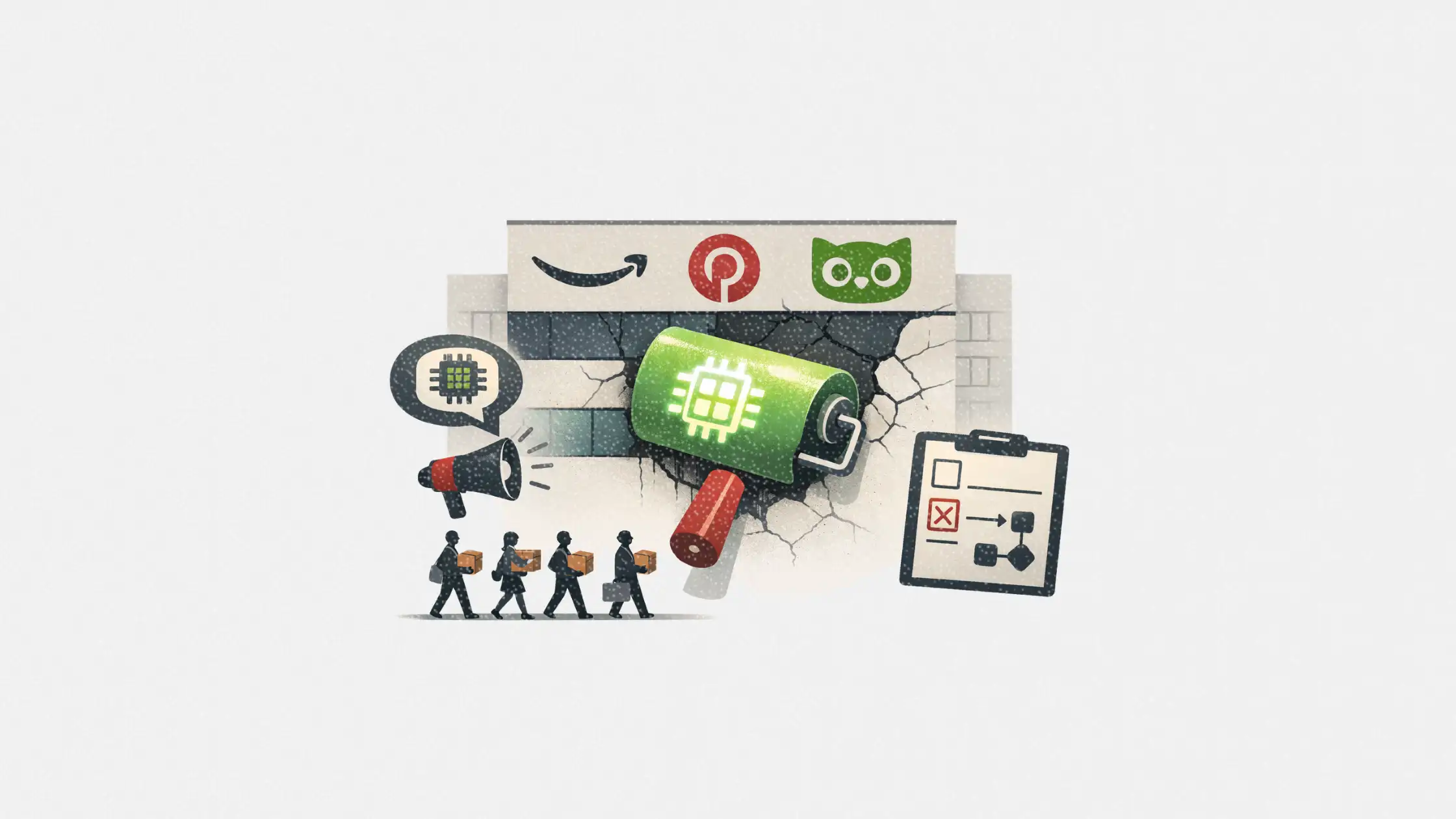
While firms like Amazon, Pinterest, and Duolingo claim that automation is making roles redundant, analysts warn that many of these companies are far from deploying AI at a scale that justifies such dramatic cuts. Instead, some experts argue the trend points to a phenomenon now dubbed “AI-washing.”
For marketers and comms professionals, this raises key questions about transparency, corporate storytelling, and the reputational risk of overstating AI adoption. It also highlights a growing disconnect between the AI narrative companies sell and the reality of operational readiness.
This article explores how AI is being used (or misused) as a justification for layoffs in the US tech sector, based on reporting from The New York Times, Forrester, and recent company statements.
Short on time?
Here’s a table of contents for quick access:
- What happened with AI-related layoffs
- Why experts are calling this ‘AI-washing’
- What marketers should know
 Patrecia Meliana
What happened with AI-related layoffs
In 2025 alone, over 54,000 layoffs were publicly attributed to artificial intelligence, according to Challenger, Gray & Christmas. Tech giants like Amazon, Pinterest, Duolingo, and Hewlett-Packard all cited AI as a key driver in their workforce reductions.
Amazon laid off 30,000 workers across two rounds, explaining in internal memos that AI was enabling faster innovation and making leaner teams possible. Similarly, Duolingo announced it would phase out contractors for tasks that could now be handled by AI.
But according to a January report by Forrester, many of the companies using AI as a layoff rationale don’t yet have mature systems in place that could realistically take over those jobs. In fact, Forrester estimates that only 6% of US jobs will be automated by 2030.
Despite the hype, AI is rarely advanced enough today to fully replace functions like customer service, copywriting, or technical support — especially at enterprise scale. The layoffs, critics argue, are more likely the result of post-pandemic overhiring, profit protection, or avoidance of politically sensitive explanations like tariffs or weak performance.
Why experts are calling this 'AI-washing'
“AI-washing” is the practice of invoking artificial intelligence as a justification for business decisions that may actually be rooted in less favorable reasons. And like its cousin “greenwashing,” it’s increasingly seen as a reputational risk.
Molly Kinder of the Brookings Institute called AI a “very investor-friendly message,” especially compared to publicly admitting operational missteps. Fabian Stephany from Oxford’s Internet Institute noted that companies using AI as a layoff rationale are able to frame the move as strategic and forward-looking, rather than reactive or cost-cutting.
But that narrative is beginning to crack. Forrester vice-president JP Gownder warned that companies assuming AI can instantly replace 20-30% of their workforce are likely making a major error. Without proven, deployed applications, it could take up to two years (or longer) to replicate human productivity — and even then, with unclear results.
Moreover, skepticism is growing among economists and labor experts. While AI has potential to reshape work, it's not yet the job-killing monster some headlines suggest. The disconnect between narrative and reality is fueling worker anxiety — 71% of Americans recently said they fear AI will lead to permanent job losses.
What marketers should know
For marketers, PR professionals, and brand leaders, this AI-layoff narrative carries several strategic implications:
- Beware the credibility gap
Citing AI before fully deploying it can backfire. If your company invokes automation to justify layoffs, be ready to show how and where it’s actually replacing work.
- Investor messaging ≠ public sentiment
What sounds compelling in an earnings call may alienate customers, workers, or media. AI-fueled layoffs may be interpreted as cost-cutting dressed in tech jargon.
- Handle internal comms with care
Teams may feel confused or threatened if automation claims are exaggerated. Clear, transparent messaging about the scope and timeline of AI initiatives is essential.
- Don’t overpromise AI's capabilities
Especially in B2B comms, focus on realistic use cases and benefits rather than grand narratives about revolutionizing operations.
- Monitor AI-washing backlash
The term is gaining traction in public discourse. Brands positioning themselves as AI-forward should be prepared for scrutiny — not just from media, but from workers, regulators, and watchdogs.
As with any trend, authenticity matters. Marketers who treat AI like a buzzword risk diluting trust in their brand story.
The rise of “AI-washing” reflects a growing tension in how companies talk about artificial intelligence. On one hand, it’s a powerful narrative tool that signals innovation and progress. On the other, it’s an easy scapegoat for decisions that might be harder to defend.
For marketing leaders, this moment calls for sharper discernment. Don’t just amplify the AI hype — interrogate it. Ensure the claims align with real capabilities. And remember that in today’s scrutiny-heavy environment, the story behind the story is often what resonates most.