AI workflows that save hours for content teams
Content teams are redesigning production with AI. Here are the workflows helping marketers save hours every week.

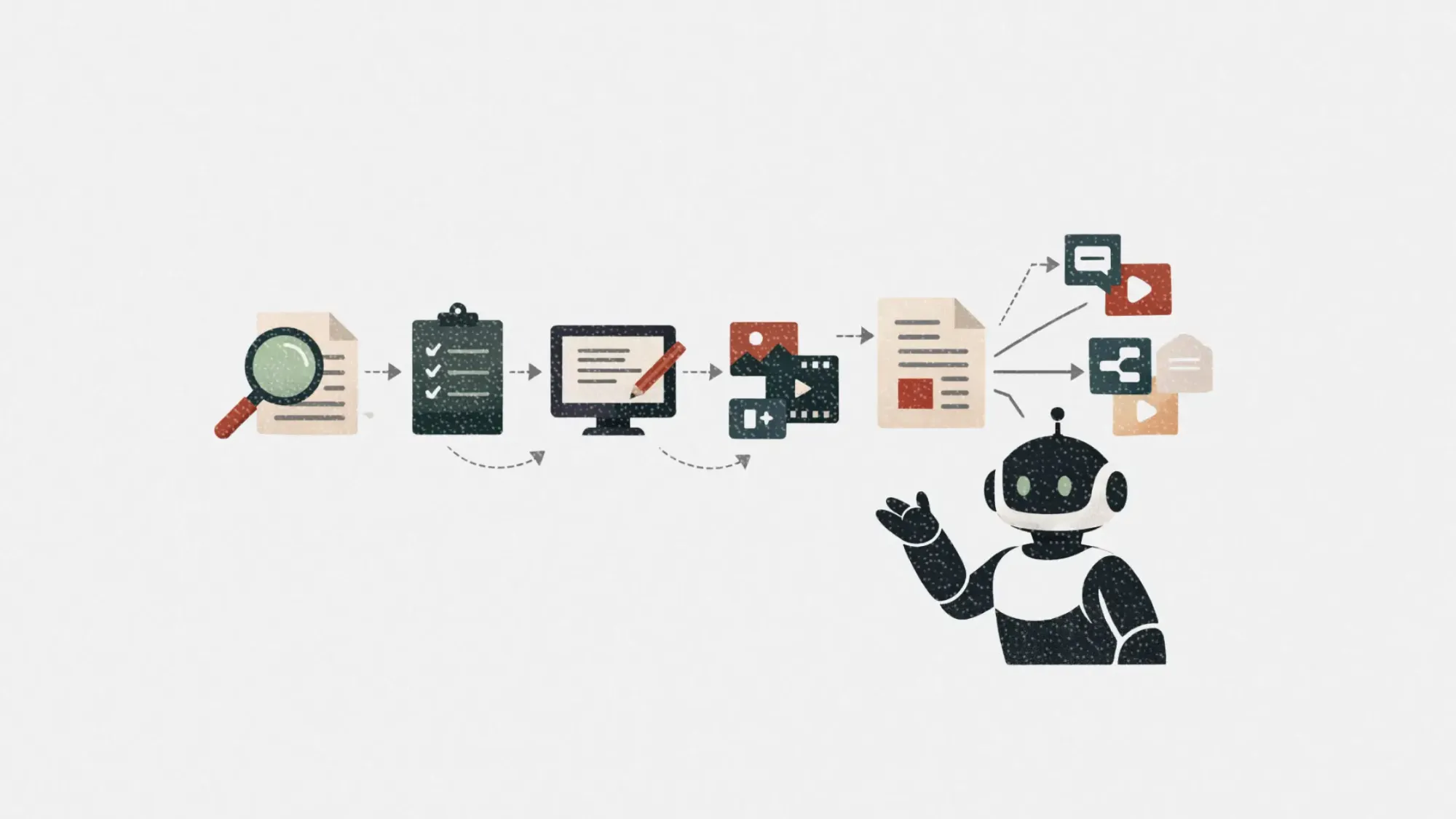
Content teams are under constant pressure to produce more: blog posts, newsletters, social media updates, SEO pages, and campaign content.
But the real bottleneck is rarely creativity. It is time.
Research suggests marketers using AI tools report 44% higher productivity and save around 11 hours per week on average, largely by automating repetitive tasks such as research, drafting, editing, and repurposing content.
This article explores practical AI-powered workflows that content teams can adopt today to accelerate production while maintaining quality and strategic control.
Short on time?
Here’s a table of contents for quick access:
- Why AI workflows matter for modern content teams
- Different ways AI workflows can save time for your team
- AI research workflow turning hours of reading into minutes
- AI outlining workflow generating article structures quickly
- AI drafting workflow creating the first version faster
- AI editing workflow improving clarity and readability
- AI repurposing workflow multiplying content across channels
- AI content refresh workflow updating old articles faster
- Best practices for building AI workflows
 Patrecia Meliana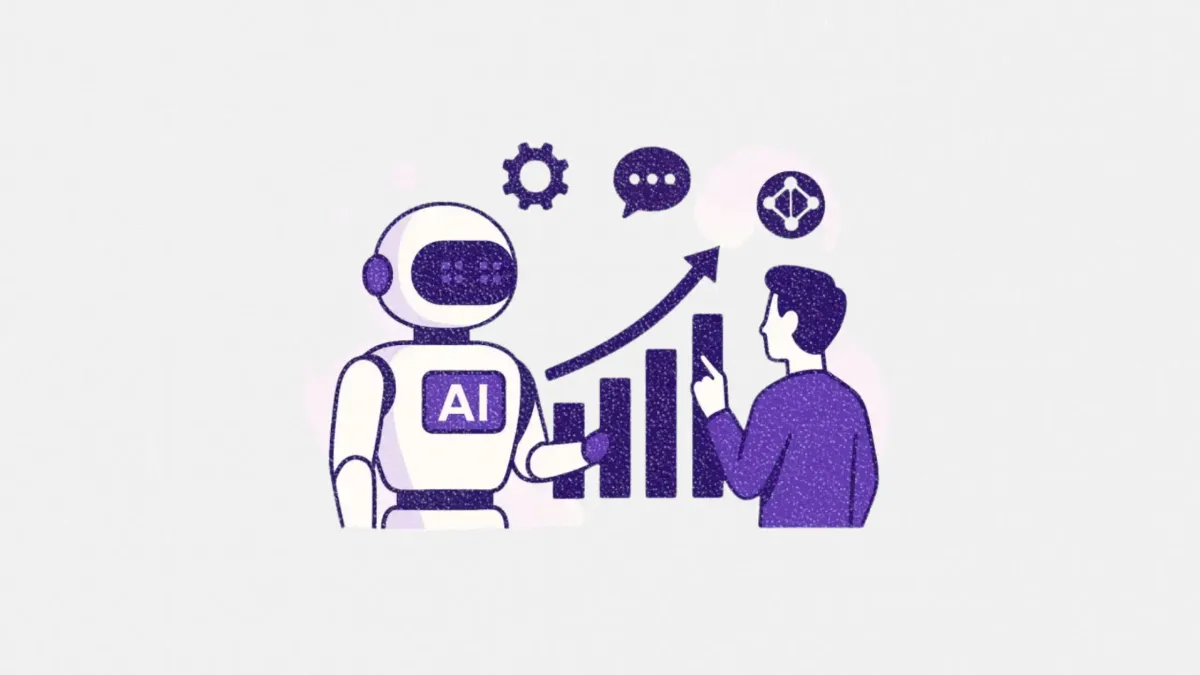
Why AI workflows matter for modern content teams
AI is rapidly becoming a core part of marketing operations.
Studies suggest that 85% of marketers now use AI tools for writing or content creation support, while workers using generative AI report productivity improvements of roughly 40%. AI video tools alone can save teams up to 34% of their time or around 45 hours per month in production work.
Instead of replacing writers, AI increasingly removes repetitive tasks such as research summaries, formatting, and editing. This allows content teams to focus on strategy, storytelling, and audience insight.
For marketing leaders, the shift is not just about adopting new tools. It is about redesigning workflows so AI handles the operational work while humans guide the narrative and strategy.
 Patrecia Meliana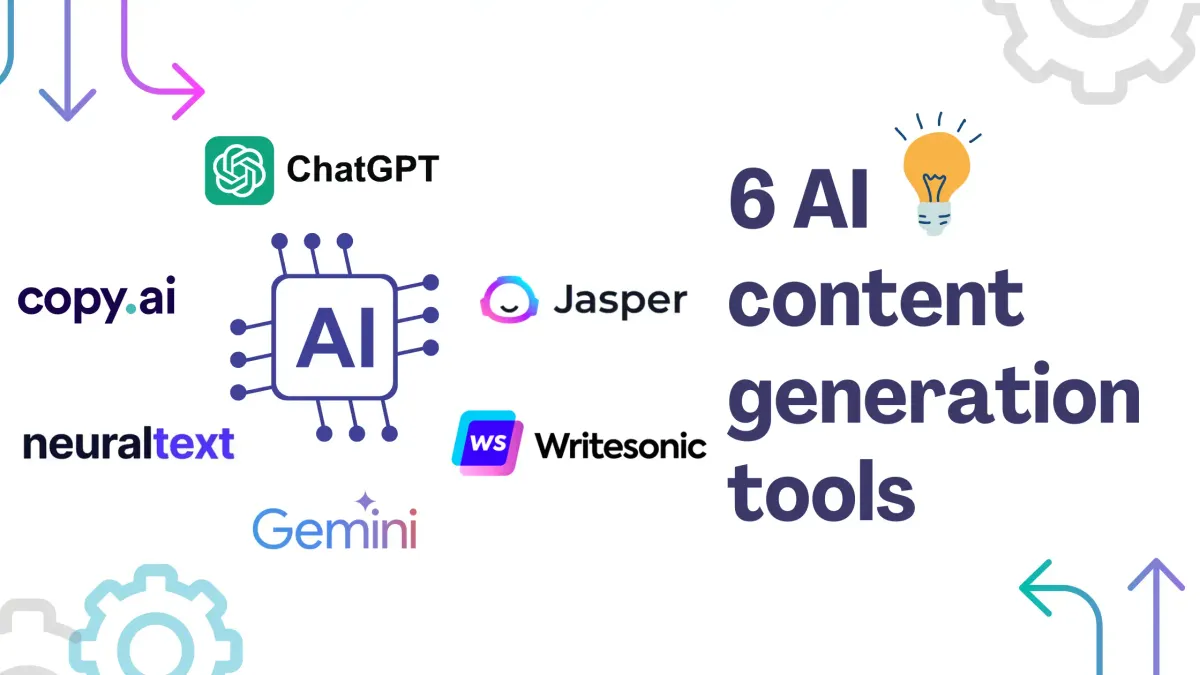
Different ways AI workflows can save time for your team
1. AI research workflow turning hours of reading into minutes
Content research is often the most time-consuming part of production. Traditional workflows require marketers to scan multiple articles, reports, and studies before extracting insights manually. Worry not because AI can compress that process dramatically.
Traditional workflow:
- Search multiple sources
- Read long articles or reports
- Extract statistics and insights
- Organize notes manually
AI-assisted workflow:
- Gather links to relevant sources
- Use AI tools to summarize and extract key insights
- Generate statistics, angles, and key points
- Turn findings into a structured research brief for writers
Typical tools used by content teams include ChatGPT, Perplexity, Claude, and NotebookLM. The result is faster topic discovery and more organized research for writers.
2. AI outlining workflow generating article structures quickly
Many writers struggle with the blank page problem. AI can help teams generate article structures and ideas before writing begins.
Typical workflow:
- Input the target keyword and topic
- Ask AI for an SEO-friendly outline
- Refine subheadings and the article angle
- Convert the outline into a content brief
This approach helps teams:
- Maintain consistency across multiple writers
- Align content with search intent
- Reduce planning time before writing begins
AI tools can propose multiple article structures within seconds, giving editors more options before committing to a final direction.
3. AI drafting workflow creating the first version faster
Drafting is often where AI delivers the largest time savings. Instead of starting from scratch, teams can use AI to generate a rough first draft based on research notes and outlines.
Workflow example:
- Provide the outline and research material
- Generate section drafts using AI
- Add examples, data, and brand voice
- Rewrite or expand sections manually
Many teams report saving several hours per article using this approach. The key is to treat AI drafts as a starting point rather than the final output. Human editors still refine the narrative, add insight, and ensure brand voice consistency.
4. AI editing workflow improving clarity and readability
Editing is another stage where AI tools can streamline content production. AI can quickly identify grammar issues, improve readability, and suggest structural improvements.
Common AI editing tasks
- Grammar correction
- Tone adjustments
- Readability improvements
- Headline rewriting
Typical workflow:
- Draft the article
- Run it through editing tools
- Improve clarity and structure
- Conduct a final human review
Tools frequently used by teams include Grammarly, Hemingway, Writer, and ChatGPT. These systems reduce the mechanical work of editing while allowing human editors to focus on storytelling and message clarity.
5. AI repurposing workflow multiplying content across channels
One blog article can fuel an entire campaign. AI helps content teams quickly convert long-form content into multiple formats.
Example workflow:
- Publish a blog article
- Use AI to generate:
- LinkedIn posts
- Newsletter snippets
- Social captions
- Short summaries
- Adapt tone and format for each platform
This workflow allows teams to maximize reach without rewriting content manually. AI-powered marketing tools increasingly support this kind of content repurposing, helping teams scale distribution efficiently.
6. AI content refresh workflow updating old articles faster
Refreshing existing content is essential for SEO, but many teams delay it because the process is time-intensive. AI can make these sort of updates significantly faster.
Typical workflow:
- Input an existing article into an AI tool
- Ask the AI to identify outdated sections
- Request updated statistics or insights
- Rewrite introductions or improve structure
This allows teams to update high-performing content without starting from scratch. For organizations with large content libraries, this workflow can significantly improve efficiency.
Best practices for building AI workflows
AI workflows work best when automation and human oversight are combined.
Here are three principles successful teams follow:
1. Use AI for repetitive tasks
Research summaries, formatting, drafts, and data extraction are ideal AI use cases.
2. Keep humans in charge of strategy
Audience insights, storytelling, and brand voice should remain human-led.
3. Standardize prompts and processes
Documenting prompts and workflows helps teams maintain consistent output and improve results over time.
By integrating AI into research, outlining, drafting, editing, and repurposing, marketing teams can remove hours of repetitive work each week and focus on what matters most: strategy, storytelling, and audience engagement.
The teams that benefit the most will not simply add AI tools to existing processes. They will redesign their workflows so humans and AI work together.