
Amazon's 400M Alexa shoppers signal a new test for retail marketers
Amazon's Alexa shopping scale raises new questions about product visibility, recommendation quality and retail media measurement.


Amazon has put a new scale marker on conversational commerce. Its Alexa for Shopping assistant is no longer just an optional way to ask about a product. It is becoming a familiar part of how customers search, compare and manage purchases inside Amazon's own store.
In its October 29 product update, the company described an assistant that can do more than recommend items. Shoppers can ask it to manage gift lists, registries, subscriptions and routine account tasks. For marketers, the deeper question is how much of a buying decision will be shaped before someone opens a familiar product page.
Table of contents
Jump to each section:
- How big the Alexa shopping habit has become
- Why product visibility is moving into the conversation
- What Amazon still controls in the shopping journey
- What marketers should know about AI shopping assistants
How big the Alexa shopping habit has become
The most useful signal from Amazon's third-quarter disclosure is reach. There is now a large pool of shoppers who have tried an assistant integrated into the marketplace itself, rather than being redirected to a separate AI tool.
More than 400 million customers used Alexa for Shopping over the prior 12 months, according to Amazon's October 29 earnings release.570% year-over-year growth in customer interactions with Alexa for Shopping was also reported by Amazon in that earnings release.
Those are adoption and activity signals, not proof that the assistant is creating incremental demand for every brand. A customer can ask for product comparisons, check a delivery, or manage an existing subscription without making an additional purchase. Interaction growth does not tell us the share of product discovery that is organic, sponsored or converted.
50% higher spending per order among US customers using Alexa for Shopping compared with nonusers was reported by Amazon CEO Andy Jassy, according to the company's earnings-call transcript.
That last comparison is commercially interesting, but it is not a controlled experiment. Shoppers who choose to use an assistant may already have different habits or order sizes. The right interpretation is that Alexa is associated with higher-value shopping activity, not that Amazon has shown Alexa causes customers to spend more.
Why product visibility is moving into the conversation
Alexa for Shopping combines product research with actions that used to require moving through individual pages and account menus. It can compare options, review price history, track deals and help a shopper make a purchase at a target price. The new update also extends the assistant into tasks that take place after product discovery.
More than 100 new shopping actions cover gift lists, registries, Subscribe & Save, payments and account management, according to Amazon's product announcement.
Amazon vice president of Conversational Shopping Rajiv Mehta described the intended direction plainly: "Our vision for Alexa for Shopping is to make every part of shopping as convenient as possible."
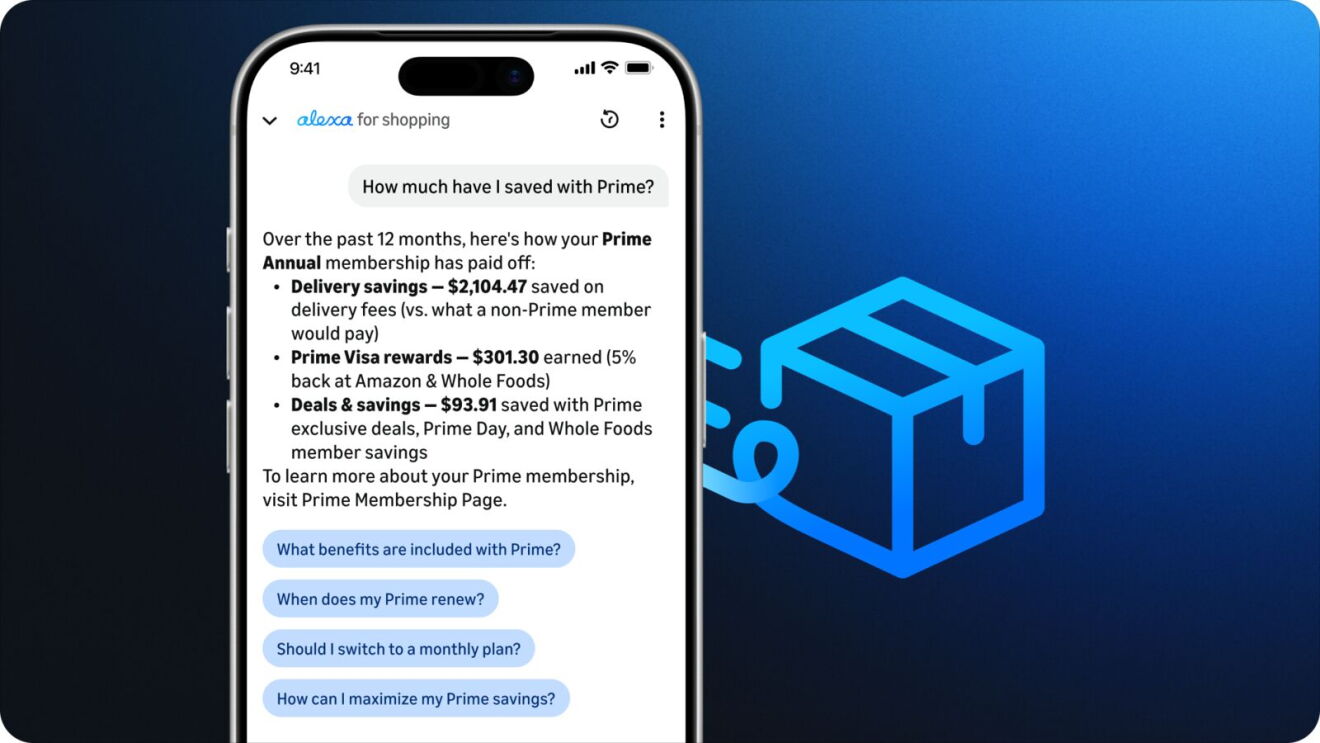
The interface matters because an assistant can bring product details, price context and a suggested next step into the same exchange. A shopper asking which item suits a budget may encounter a narrower set of options before browsing a conventional category page.
This changes the brand's job at the discovery stage. A compelling display image still matters, but so do trustworthy product attributes, comparable specifications, current availability and evidence that helps an assistant answer a precise question. The path to consideration can begin with a comparison, not a click.
What Amazon still controls in the shopping journey
Amazon's strategy is also about where the conversation happens. Alexa for Shopping sits next to the retailer's own catalogue, shopping history, payments and fulfilment systems. That makes it different from a general-purpose assistant that needs to obtain product and checkout information from outside services.
Jassy has said Amazon anticipates working with horizontal AI agents, while expecting Alexa for Shopping to remain the primary agent for customers shopping on Amazon. The company has also restricted some outside shopping-agent access to its marketplace. Those two positions are not necessarily contradictory: Amazon can consider partnerships while keeping control of its first-party shopping interface.
For advertisers, the difficult question is not simply whether AI can recommend products. It is how product selection, paid visibility and sales credit are handled when a recommendation is assembled inside a conversation. Amazon has separately introduced conversational ad formats, but the adoption figures in this announcement do not provide a breakdown of sponsored recommendations or incremental returns.
The marketer's advantage may therefore come less from writing an entirely new kind of ad and more from ensuring that the product evidence available to the commerce system is complete and consistent. That is a strategic implication, not a reported change to Amazon's ranking algorithm.
What marketers should know about AI shopping assistants
Alexa's scale gives retail teams a reason to examine agent-mediated discovery without treating every interaction as a new sale.
Make product information comparison-ready. Review whether attributes, compatibility information, pricing and availability answer the actual questions shoppers ask. Conversational commerce makes missing or conflicting details harder to ignore.
Separate usage from business lift. Amazon's user and interaction counts show the scale of an experience, not its incremental impact on a specific brand. Campaign measurement still needs conversion evidence and a sound baseline.
Think beyond the product page. Shopping assistants may combine discovery, evaluation and routine purchase management in one conversation. Creative and retail content should support those moments rather than assume a shopper will inspect every page.
Watch the boundary between assistance and advertising. Brands should look for clear disclosures and reporting around any paid conversational placements, rather than assuming they function like search ads with a different interface.
The strategic tension is that a more convenient buying journey can also offer brands fewer chances to frame the decision themselves. The interface may become simpler for shoppers while the work of making products understandable becomes more demanding for merchants.
The wider question is not whether consumers will abandon product pages overnight. It is whether brands are prepared for a retail environment in which the first meaningful product comparison happens inside an assistant that the retailer owns.
