
Ann Piper on Spotify's Spider-Man: Brand New Day campaign
Spotify's head of North America ad sales, Ann Piper, explains how the Spider-Man: Brand New Day campaign used first-party listening data, personalization, and interactive storytelling to create deeper fan engagement.

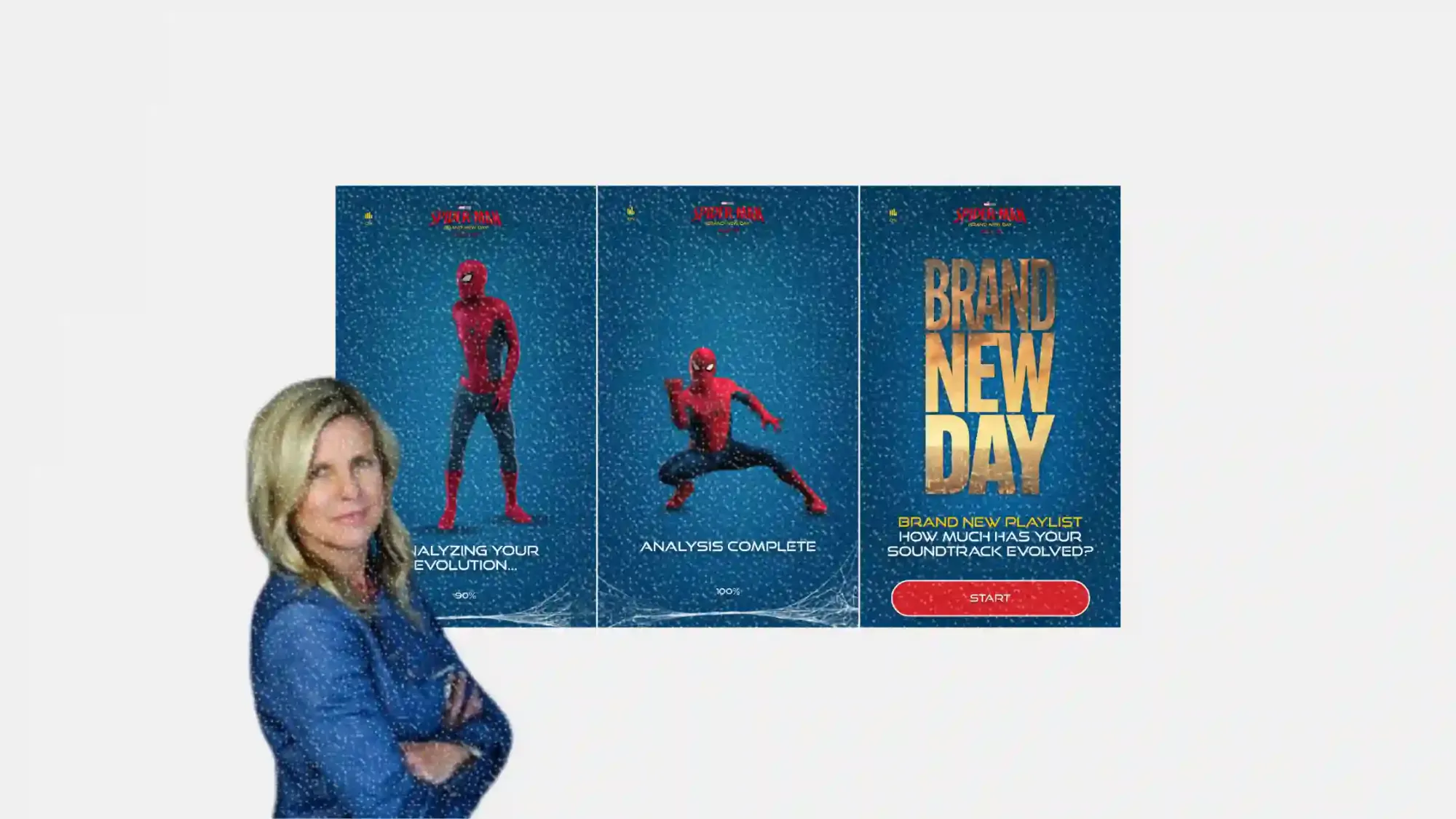
Spotify has spent years proving that first-party data can do more than power ad targeting. From Spotify Wrapped to personalized listening experiences, the platform has consistently shown that behavioral insights become more valuable when they are transformed into stories people want to share.
That philosophy is at the heart of Spotify's latest collaboration with Sony Pictures Canada and UM Canada for the launch of Spider-Man™: Brand New Day. Instead of promoting the film with a conventional media campaign, the team created an interactive experience that lets fans explore how their music tastes have evolved over the past few years, connecting their own listening journey with the movie's themes of change and new beginnings.
In an interview with LBB, Ann Piper, Spotify's head of North America ad sales, explained why the future of advertising is about making audiences active participants rather than passive viewers.
Table of contents
Jump to each section:
- Why storytelling matters more than personalization alone
- First-party data becomes creative material
- Experiences outperform impressions
- The future of branded entertainment
- Why marketers should pay attention
 Zoe Park
Why storytelling matters more than personalization alone
One of the strongest takeaways from Piper's interview is that personalization is only meaningful when it serves a narrative.
"Data should never feel like back-end analytics. It should serve as the creative spark that powers the entire narrative."
Rather than presenting users with static listening statistics, Spotify transformed years of listening behavior into an evolving story. Fans could compare their music tastes with the broader Spider-Man community before unlocking a personalized "Brand New Playlist," making the campaign feel like a natural extension of the film instead of another branded activation.
As Piper explains:
"Instead of delivering standard ads, Sony Pictures Canada and UM Canada co-created a data-driven experience that puts the fan at the centre."
That distinction matters. The experience wasn't built around collecting data. It was built around giving users a meaningful reason to engage with data they had already created.
First-party data becomes creative material
For marketers navigating a world with fewer third-party cookies and increasing privacy expectations, Piper's perspective offers an important shift in thinking.
Rather than treating first-party data as marketing intelligence alone, Spotify approaches it as creative input.
Piper told LBB:
"The creative was born directly from fan behaviour insights, tied seamlessly to interactive technology, and informed by the film itself."
She added:
"Rather than just displaying static numbers, we built a personalised data story that users can actively manipulate to feel part of the community."
The campaign demonstrates how behavioral data can become part of the entertainment itself when it supports storytelling instead of interrupting it.
Experiences outperform impressions
Another notable insight from the interview was Spotify's definition of campaign success.
Piper argues that marketers should move beyond traditional media metrics.
"To measure true connection, we must look beyond high-level vanity metrics and focus on depth of immersion and intent."
Instead of simply counting impressions, Spotify evaluated:
- Completion of the gyroscope phone-flip interaction
- Whether users compared themselves with the broader Spider-Man fan community
- Playlist engagement
- Trailer views
- Social sharing across platforms like TikTok and Instagram
As Piper summarized:
"When a fan moves from a passive listener to physically flipping their phone, comparing their taste to a global community, and sharing the trailer, that's where true brand impact happens."
For marketers, these behaviors reveal genuine engagement rather than simple exposure.
 Zoe Park
The future of branded entertainment
Perhaps the most compelling takeaway from the conversation is Piper's vision for where branded experiences are heading.
She believes campaigns should increasingly blur the line between storytelling, technology, and everyday user behavior.
"Modern entertainment marketing can no longer rely on static media alone, it requires turning the user's everyday environment into an extension of the story itself."
She also noted:
"Branded entertainment is heading toward these high-touch, multi-layered touchpoints where native technology, real-world utility, and storytelling intersect."
This reflects a broader industry movement where interactive experiences, native device capabilities, and first-party insights work together to create memorable moments that audiences voluntarily participate in and share.
 Patrecia Meliana
Why marketers should pay attention
Spotify's Spider-Man campaign illustrates an increasingly important lesson for marketers.
First-party data is becoming more valuable, but its value won't come from better segmentation alone. The competitive advantage lies in turning customer behavior into experiences that feel personal, culturally relevant, and emotionally engaging.
As Piper puts it:
"Data should never feel like back-end analytics. It should serve as the creative spark that powers the entire narrative."
That mindset may ultimately define the next generation of brand storytelling.