How Ardath Albee builds B2B buyer personas that actually work
Marketing strategist Ardath Albee shares her diagnostic framework for building effective B2B buyer personas and why most companies start too late.

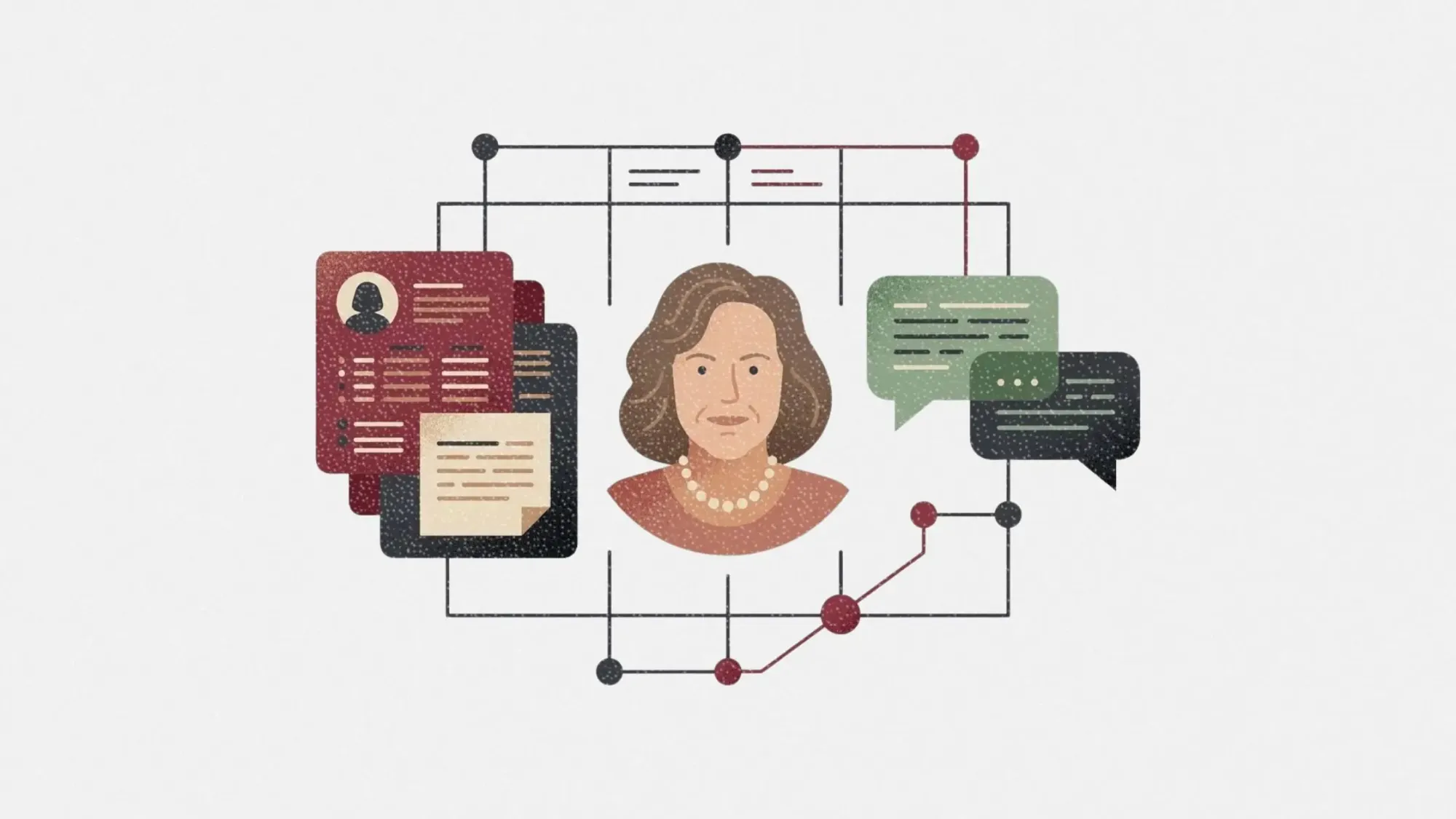
Most B2B marketers assume they know their buyers. Ardath Albee makes them prove it.
As CEO of Marketing Interactions, Ardath has spent over 30 years challenging companies to move beyond surface-level buyer personas built from assumptions and demographics. Her approach is rigorous: 30-minute stakeholder interviews, 10-12 customer conversations, external research across industry forums and LinkedIn profiles, and a diagnostic framework that exposes gaps most marketing teams never knew existed.
Marketing Interactions helps B2B companies with complex sales create persona-driven content marketing strategies. The firm specializes in buyer persona research, Brand-to-Demand content strategies, and what Ardath calls "The Continuum Experience" - engaging buyers across their entire journey from status quo through purchase decision.
Ardath's philosophy extends beyond her professional work. She loves taking deep dives into topics to explore possibilities, whether that's browsing recipes to cook Chinese and Thai dishes from scratch or writing women's fiction. She approaches marketing the same way she approaches cooking: no shortcuts, no processed ingredients, just authentic research and genuine insight.
Speaking with ContentGrip, Ardath shares her diagnostic framework for building effective buyer personas, why most companies start their content too late in the buying journey, and how to use AI strategically without producing what she calls "AI slop."
Short on time?
- Why most buyer personas fail
- The diagnostic framework that exposes gaps
- The Continuum approach: Starting at status quo
- Using AI right and avoiding AI slop
Why most buyer personas fail
The problem starts with assumptions. Companies believe they understand their buyers because they've been selling to them for years. But Ardath sees a different reality when she reviews existing personas: surface-level demographics, job titles, and generic pain points with no depth.
"A lot of marketers talk about using AI to construct personas for them, but I haven't seen one do so with the specificity needed to engage a client's target market successfully," Ardath explains. "The personas created by AI could be representative of anyone's buyer who has the title of Director of IT for a US$500 million company in financial services, for example."
The missing ingredient is specificity grounded in actual buyer conversations. What makes your buyers different from everyone else's? Why do they choose your company over competitors?
Ardath's research process involves two distinct parts: research and build. The research phase includes 30-minute stakeholder interviews with product marketing, sales, account executives, and customer service managers, followed by 10-12 customer interviews with people materially involved in the buying process. External research explores analyst reports, industry forums, social media activity, and job listings.
"You can't derive that information unless you know what they're responsible for, where they're challenged, how they perceive risk, and more," she notes. "LLMs can't get that granular yet and they have no lived experience or emotion. While people think B2B is logical because it's business based, it's actually grounded in emotion first because buyers are still human."
 Enricko Lukman
The diagnostic framework that exposes gaps
Once research is complete, Ardath builds personas around components most marketers overlook. Each persona includes a first-person profile written as if the buyer is speaking directly to you about their day, challenges, and what they wish for in their role.
But the centerpiece is what she calls the buyer questions - a list of questions that span the entire buying process. For each persona, Ardath typically identifies around 12 questions designed to uncover what the buyer needs to know to decide to change, change now, and select your company successfully.
The framework reveals buying group dynamics: Who plays which role in the process? What objections does each persona face from others? How do different perspectives within the buying committee create conflicts that must be resolved?
"If you review your current customers and get to know them, you'll find distinct reasons why they chose your company, such as how your culture matches theirs, the expertise you bring they don't have, or other factors that mattered more to them than they would to those not in your company's target addressable market," Ardath explains.
Beyond the questions, each persona includes the buyer's role in the process (decision maker, influencer, champion, end user), problems they must overcome, objectives and obstacles, orientation (analytical, multi-tasker), engagement scenarios, channels they use, and types of content that will appeal to them.
The Continuum approach: Starting at status quo
Traditional B2B marketing starts too late. Most campaigns focus on the trigger event that puts buyers in-market, but by then, they've already formed opinions and built their shortlist.
Ardath's Continuum approach starts earlier - while buyers are still in status quo. The goal is to help buyers recognize and define the problem before urgency hits, becoming the anchor for how they think about solving it.
"Given our buyer's ability to control their buying process, content must be designed for connection, rather than merely consumption," she explains. "That's why we need to start earlier. To become the anchor for how our buyers think about the problem - and how to solve it - content must help them recognize and define the problem."
A simple Continuum might look like this:
- Status quo - situational entry point (not product focused)
- Why should I care? - explain the problem and its impact
- Why should I care about you? - show your expertise (now introduce your product)
- What should I know? - explain use cases, business cases, how to minimize risk, time to value, focus on outcomes not product features
- Will it work? - mitigate risk of change, show proof points and evidence that relates to the concerns of specific buyers to help them build confidence they're making the best choice
The important point is the flow of connected meaning. The narrative must pull buyers forward by building anticipation for what's possible and showing them the path to the tangible outcomes they need.
"Buyers now type an average of 23-word prompts into GenAI to research what to do next," Ardath notes. "How confident are you that you've engineered your content to answer those prompts?" The better you know your buyers, the better able you'll be to create content that matches the context of the prompts they enter into LLMs.
The rise of AI search makes this buyer understanding even more critical. When buyers enter detailed prompts into LLMs, those systems surface content based on semantic connections, consistency, and context - exactly what shallow personas can't inform. AI hasn't lowered the bar for buyer understanding. It's raised it.
 Enricko Lukman
Using AI right and avoiding AI slop
Ardath uses AI strategically, but not for writing. Her research toolkit includes Gemini Deep Research, ChatGPT, and Perplexity for exploring angles. For mining persona insights, she relies on NotebookLM, loading all buyer interview transcripts and asking questions. The tool searches across transcripts and finds specific quotes that apply to concepts of interest.
"It's a huge time saver," she says.
For semantic connections and mapping internal links across blog posts, she's been alpha testing VizzEx.ai, which does horizontal analysis to identify semantic connections, bridges, and recommend internal links to boost authority with LLMs by deepening context.
But she draws a hard line at using AI for writing. She drafts content herself and then uses Gemini to help improve that draft. The reason? AI-written content can appear grammatically correct while feeling hollow.
"There's no strong point of view, it doesn't make you curious, and it falls flat," Ardath says. "It may say all the 'right' things, but it says them in a way that leaves the reader meh."
Her test for AI slop is simple: read it out loud. If you stumble over the words or think "I would never say that," you know you need to jump in and fix it.
"Even better is to do the writing and thinking yourself and use AI for stuff it's good at, like research, brainstorming, and pointing out semantic/entity connections to include," she advises.

When she's not building buyer personas or testing AI tools, Ardath is adjusting to life with two rescue dogs adopted this year - a one-year-old and a two-year-old, both raised in the shelter after being abandoned as pups. "You should have seen them when they were first introduced to my home," she says. "Oh, and the TV! Helga is an avid watcher. Lea couldn't care less."
It's been an amazing journey, she notes - quite different from training a puppy from day one.