Baidu’s brutal layoffs mark a bigger bet on AI and cloud
Baidu is cutting legacy teams to focus on AI and cloud. Here’s what marketers and comms pros should know

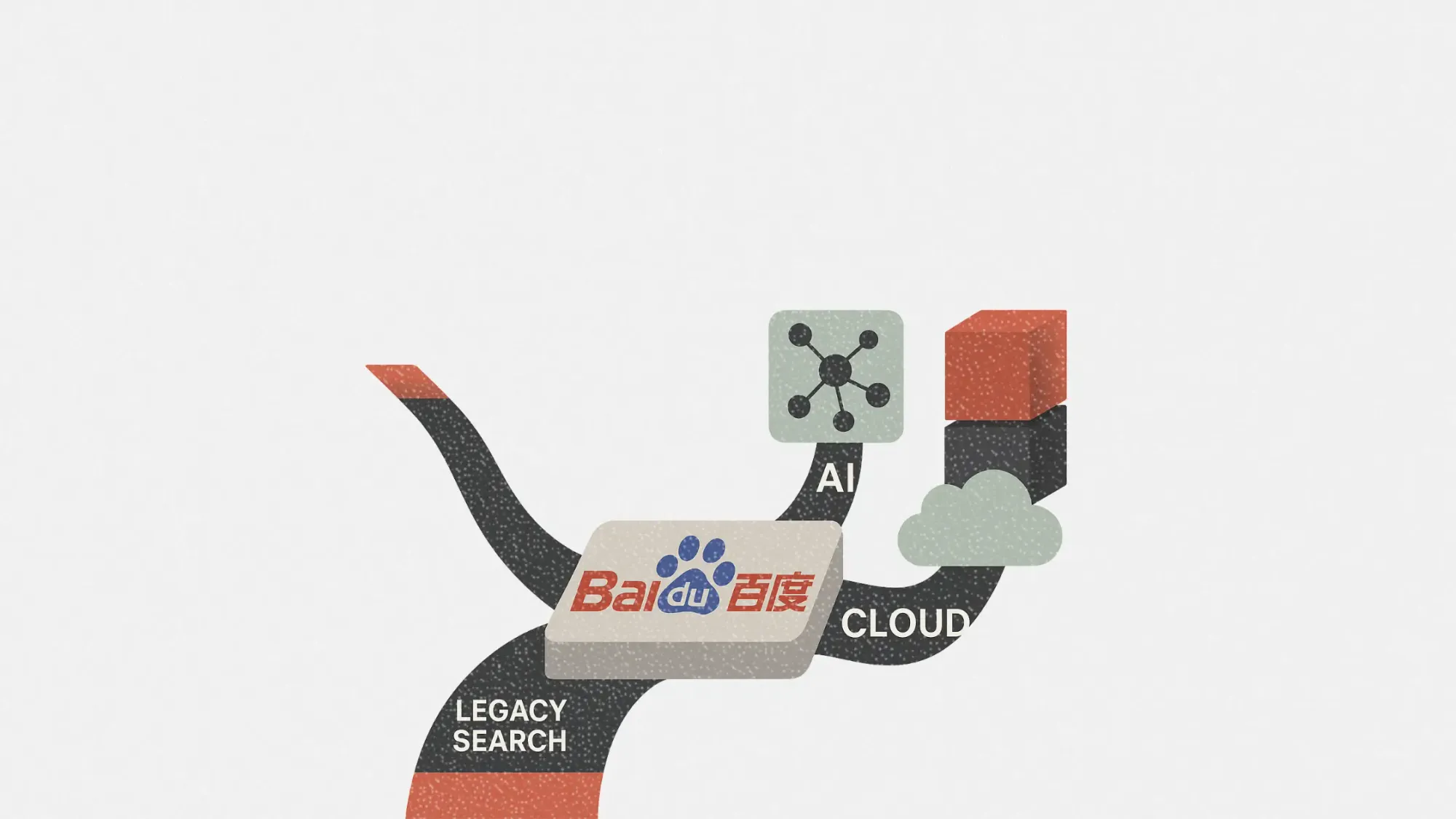
Baidu is trimming deep. After reporting a bruising US$1.6 billion loss in Q3 2024, the Chinese tech giant has kicked off a sweeping round of layoffs expected to run through year-end. The affected units? Mainly legacy internet teams and ad-tech functions tethered to a slowing search economy.
But this isn't just a cost-saving move. It’s Baidu drawing a clear line between its past and its future.
While jobs in mobile ecosystems and traditional monetization are being slashed, some by as much as 30 to 40%, roles tied to artificial intelligence (AI), foundation models, and Baidu’s cloud platform are being preserved or even expanded. In a saturated digital market where short video and super-apps dominate discovery, Baidu is signaling that its next growth engine will not come from capturing eyeballs. It is going all-in on capability scale.
This article explores Baidu’s restructuring through the lens of AI adoption, what it means for enterprise tech players, and how marketers should interpret the company’s evolving identity.
Short on time?
Here’s a table of contents for quick access:
- A quarter of reckoning: Baidu’s losses weren’t about AI
- Where Baidu is cutting and where it’s doubling down
- From search engine to enterprise AI backbone
- What marketers and tech strategists should know
 Patrecia Meliana
Baidu's losses weren't about AI
Baidu’s Q3 2024 results were sobering. Revenue dropped 7% year-on-year to around US$4.4 billion, largely due to an 18% decline in online marketing, the company’s traditional cash cow. With advertiser spend drifting toward ByteDance-style short-form video and lifestyle platforms, Baidu’s search-adjacent model took a major hit.
Yet its AI-driven businesses told a different story. AI-related revenue rose 50%, and Baidu AI Cloud showed solid double-digit growth, fueled by enterprise demand for model APIs and compute services. Non-marketing revenue, powered mostly by cloud offerings, grew by 21%.
This wasn’t a case of AI underdelivering. It was legacy drag weighing down the business.
Where Baidu is cutting and where it's doubling down
The most severe cuts are hitting teams vulnerable to the ad economy’s decline, such as mobile and search-linked product groups. After years of gradual shrinkage, Baidu’s total headcount has dropped from over 41,000 in 2022 to about 35,900 in 2024. This round speeds up that trend.
But Baidu’s AI and cloud divisions are shielded. Teams supporting its Ernie foundation models and AI Cloud unit are being protected, and in some cases bolstered with new resources. Baidu has also reaffirmed its investment in chip design, building proprietary hardware to reduce reliance on tight global GPU supplies.
This shows a clear shift from audience scale to infrastructure depth. Rather than propping up a fading search engine model, Baidu is positioning itself as a foundational layer in China’s enterprise AI stack.
From search engine to enterprise AI backbone
Baidu’s pivot is also a recognition of changing consumer behavior. Search is no longer the primary discovery method in China. People find products, services, and entertainment through short videos, influencer-driven content, and walled-garden super apps.
Trying to maintain dominance in this environment would stretch Baidu thin. Instead, the company is shifting its center of gravity toward enterprise AI and cloud computing, a space where demand is rising and monetization is more predictable.
But that strategy brings execution pressure. Ernie, Baidu’s ChatGPT-style model, launched early but has not dominated consumer usage. Its monthly active user base still trails products from ByteDance and DeepSeek. So rather than chasing chatbot supremacy, Baidu is repositioning Ernie as the engine behind enterprise solutions, developer platforms, and vertical AI applications.
In this model, Baidu does not need a billion users. It needs to become the go-to AI infrastructure partner for China’s regulated sectors, including banks, manufacturers, and public agencies that require domestic AI solutions.
What marketers and tech strategists should know
Baidu’s strategy reset carries several signals for B2B marketers and comms professionals operating in tech, cloud, and AI:
1. Enterprise AI is the new battleground
Baidu’s restructuring reinforces a broader shift. The real action in AI is moving from consumer-facing apps to enterprise-grade deployments. If you’re marketing cloud, AI-as-a-service, or developer platforms, Baidu’s playbook offers insight into how large tech brands are repositioning to serve B2B buyers in regulated markets.
2. Platform risk is now strategic
The collapse of Baidu’s ad-led business highlights how platform dependence can quickly become a liability. Marketers should review how much of their strategy relies on vulnerable legacy platforms, especially those whose user behavior or monetization model is in decline.
3. AI execution matters more than headlines
Baidu launched early in the generative AI race but struggled to maintain momentum at the user level. The lesson? Early visibility means little without practical, recurring use cases. Marketers should align narratives with real-world ROI and adoption metrics, not just flashy launches.
4. Cloud isn’t just infrastructure, it’s delivery
Baidu is using cloud as a commercial bridge between its AI R&D and paying customers. That’s a positioning lesson. Marketers selling AI solutions must also educate audiences on the delivery mechanism, including how compute, APIs, and managed services translate into business outcomes.
A future bet with no guarantees
Baidu isn’t retreating. It is reorganizing around a core belief that it can outcompete in AI infrastructure and enterprise services even if it loses ground in consumer-facing platforms.
But with search ad revenue drying up, that belief must now turn into profitable growth, and fast. The next few quarters will show whether Baidu’s AI Cloud can carry enough weight to justify the layoffs and reset.
For marketers, Baidu’s pivot is a reminder of how quickly digital empires can shift direction, and how critical it is to align strategy not just with audience trends, but with underlying capability.