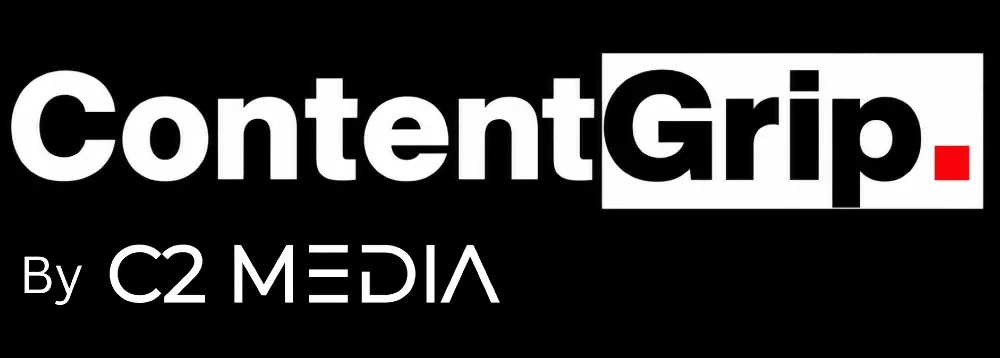
Databricks rolls out CustomerLake, an agentic CDP built on its lakehouse
Databricks CustomerLake targets always-on personalization by unifying data, identity, and activation in its lakehouse, now in Private Preview.

Databricks is expanding deeper into marketing software with CustomerLake, an “agentic” customer data platform designed to manage customer data and run AI-driven marketing campaigns inside the same environment.
The company outlined the product and its positioning in an official newsroom announcement, framing CustomerLake as a shift from one-off campaigns to continuous, agent-driven decision loops. The product is currently in Private Preview, with early testing cited with brands including HP, Circle K, AB InBev, and Getnet by Santander.

Table of contents
Jump to each section:
- What CustomerLake is designed to do
- How “agentic” changes CDP workflows
- Identity, integrations, and the open ecosystem claim
- Early testing signals from Circle K and Getnet
- What this means for marketers
What CustomerLake is designed to do
CustomerLake is positioned as an agentic CDP that unifies customer data, AI models, agents, identity resolution, audience building, and activation inside Databricks. The core idea is to reduce the distance between where customer data lives (the lakehouse) and where marketing actions get executed.
Databricks describes a move from discrete campaigns to continuous loops, using agents to analyze customer behavior and decide the offer, message, channel, and timing for each individual in real time. It also emphasizes that teams can start with humans approving actions and then increase autonomy over time.
 ContentGrip
How “agentic” changes CDP workflows
In a traditional CDP model, marketers often define segments, build campaigns, and manage execution step-by-step across multiple systems. CustomerLake’s agent framing shifts that workflow toward systems that can draft campaign briefs, build audiences on request, resolve identities, and deploy campaigns across channels as a continuous process.
Databricks highlights specific agent roles, including campaign and profile agents. The product is described as supporting third-party plug-ins via APIs or model context protocol (MCP), for teams that want to bring their own models or agentic systems into the environment.
One practical implication is governance and control. Databricks ties CustomerLake to Unity Catalog governance, and it explicitly describes a “humans in the loop” path to adoption, which reflects common enterprise requirements around approvals, auditability, and risk management for automated marketing actions.
Identity, integrations, and the open ecosystem claim
CustomerLake includes AI-driven identity resolution and built-in access to third-party identity graphs. Identity partners and sources named include Acxiom (Omnicom), Epsilon (Publicis), LiveRamp, TransUnion, and Adstra, with Databricks also describing an identity marketplace for enrichment.
On activation, Databricks positions CustomerLake as an open ecosystem that can ingest and activate data across major platforms and partners. Integrations and activation destinations named include Adobe, Meta (including Conversions API), The Trade Desk, Braze, Iterable, Snapchat, Magnite, Twilio, IAS, and Unity.
Databricks also signals a broader category argument: if data, models, identity, and activation sit closer to the warehouse, some CDP “middleware” functions may collapse into the core data platform. The company’s messaging raises a direct question about what role marketing clouds and stand-alone CDPs play if the system of record and the system of decisioning converge.
Early testing signals from Circle K and Getnet
CustomerLake is described as being in early testing with partners including AB InBev, HP, Circle K, and Getnet by Santander. Two examples show what Databricks wants to prove operationally: faster activation without copying data into a separate platform.
Circle K is described as using the product to build target audiences and then activate via Adobe, with measurement flowing back, while avoiding moving its full data lake into another environment. Getnet by Santander is described as using the product to unify merchant and customer data so teams can move from insight to action and personalize across its stack.
Databricks also says it intends to keep costs under control by using smaller models tailored to specific marketing tasks rather than relying on frontier models for every interaction, suggesting an emphasis on unit economics for always-on automation.
What this means for marketers
CustomerLake is less about a new UI for campaign management and more about where marketing decisioning happens in the stack. If the product delivers as described, it changes how teams think about segmentation, identity, activation latency, and governance.
- Expect “continuous campaigns” to become an architecture decision, not a tactic
Databricks frames “infinity campaigns” as loops that constantly analyze and act. For marketers, the implication is that always-on personalization becomes constrained by data access, model execution, and controls, not just by creative or channel planning. - Data gravity is becoming a marketing constraint
Circle K’s example highlights a familiar friction point: moving large, governed datasets into separate martech environments. CustomerLake’s pitch is that if execution can happen where the data already lives, teams may reduce duplication, reconciliation work, and time-to-activation. - Identity resolution is being pulled into the AI workflow
CustomerLake bundles identity resolution with agents and activation, plus access to third-party identity graphs. That matters because identity is not just a matching task anymore; it influences what an autonomous system decides to do next, and how confident it is in those decisions. - Ecosystems will matter more than “single platform” claims
Databricks lists many activation partners, including platforms that operate adjacent CDP or marketing cloud capabilities. For marketers, the practical question becomes: how well does the system activate into the tools you already run, and how cleanly does performance and outcome data return for iteration. - Automation will force new approval and accountability patterns
Databricks emphasizes optional autonomy and human-in-the-loop approvals. Marketing teams should assume that agentic execution will require clearer internal policies: what agents can do automatically, what requires approval, and what audit trails need to exist when decisions are made at scale.
Over time, the key marketing impact is organizational as much as technical. If campaign planning becomes less “build a campaign” and more “set objectives and constraints,” teams will need different skills in measurement design, data governance coordination, and creative operations.
The most immediate adoption path is likely hybrid: start by using agents to accelerate briefs, segmentation requests, and identity work, then expand into controlled automation once stakeholders trust the system’s decisions. That staged approach is also where platform differentiation will show up, in how transparent and governable the agent actions are, not only in how fast they run.