Datalinx AI raises $4.2M to help enterprises get marketing data AI-ready
Datalinx AI raises $4.2M to help enterprises automate data readiness for marketing and AI.

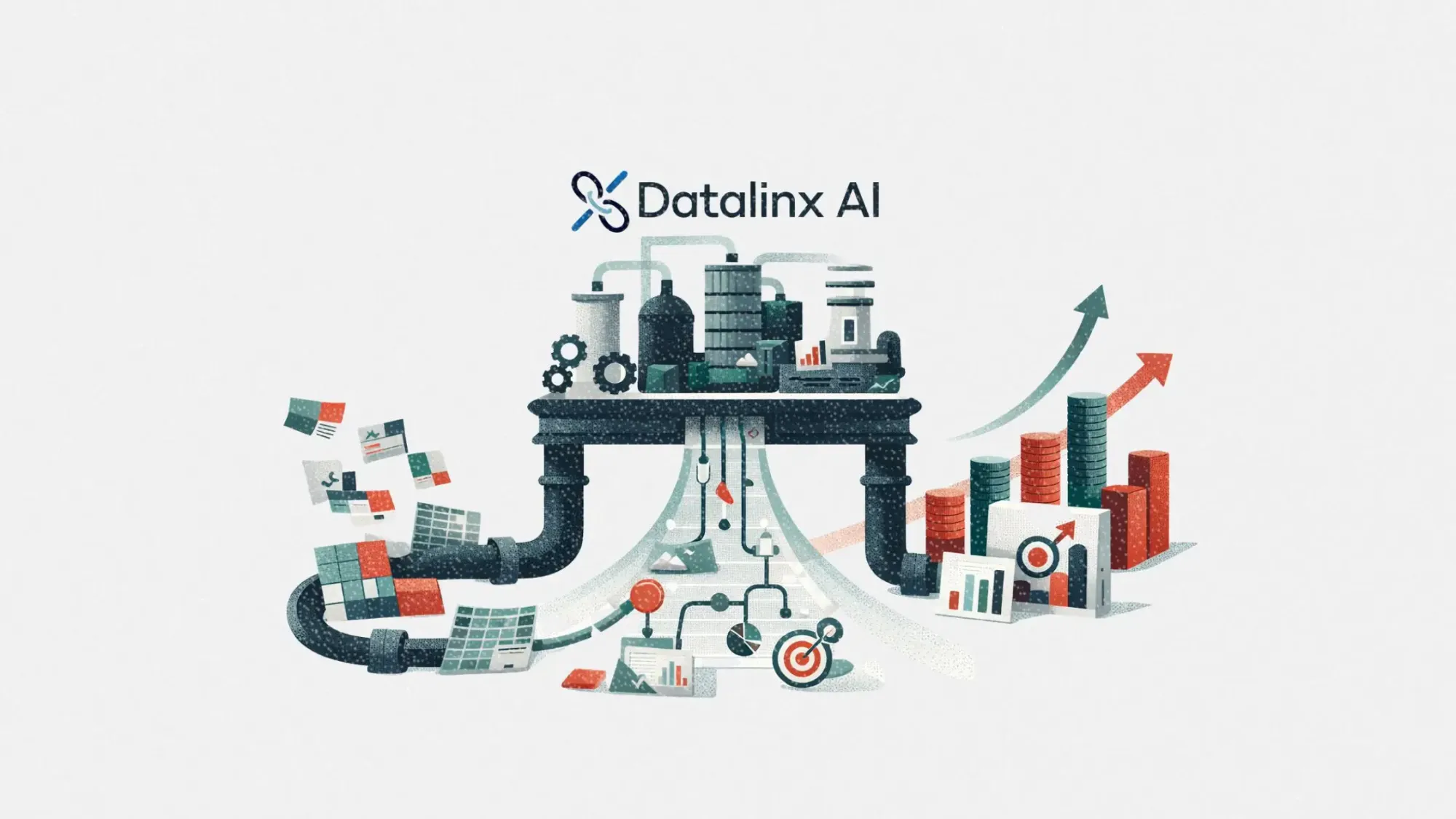
Datalinx AI, a US-based startup focused on solving data readiness for enterprise marketing, has raised $4.2 million in seed funding. The round was led by High Alpha, with participation from Databricks Ventures, Aperiam, and several notable angel investors. Datalinx positions itself as an “AI data refinery,” aiming to help large organizations turn messy, fragmented data into clean, actionable assets for marketing, advertising, and commerce.
The company’s platform automates the discovery, cleaning, validation, and activation of commercial data, promising to accelerate time-to-value for marketing and data science teams. With this new funding, Datalinx plans to scale its operations and meet growing demand for AI-ready data infrastructure.
Short on time?
Here’s a quick look at what’s inside:
- Who is Datalinx AI, and why does this funding matter?
- How Datalinx AI tackles data readiness for marketers
- What marketers should know about Datalinx AI
- The bigger picture for AI and marketing data
Who is Datalinx AI, and why does this funding matter?
Datalinx AI is a New York-based startup led by CEO and co-founder Joe Luchs, a former Amazon and Oracle executive. The company is focused on a persistent challenge for enterprise marketing and data teams: getting data into a state where it can be used effectively for AI, analytics, and campaign activation.
The $4.2 million seed round, led by High Alpha and joined by Databricks Ventures and other industry veterans, signals growing investor interest in tools that address the “data readiness” gap. While Datalinx is still early-stage, its backers and partnerships with platforms like Databricks give it credibility in a crowded martech landscape.
 Patrecia Meliana
How Datalinx AI tackles data readiness for marketers
Datalinx AI’s platform is designed to automate the most time-consuming parts of preparing data for marketing and analytics. Key features include:
- Automated data discovery and cleaning: The platform uses AI agents to find, clean, and validate data across fragmented sources, reducing manual work for technical teams.
- Domain-specific intelligence: Datalinx applies commercial ontologies and context-aware agents to ensure data is structured and relevant for marketing use cases.
- AI-assisted workflows: Marketers and data teams can use natural language to explore and activate data, making advanced data products more accessible.
- Integration with leading platforms: Datalinx works directly inside a customer’s data environment and integrates with tools like Databricks, supporting analytics, personalization, and media measurement.
For marketers, this means less time spent wrangling data and more time focused on campaign strategy, measurement, and optimization.
What marketers should know about Datalinx AI
- Faster time-to-value: By automating data prep, Datalinx helps teams move from raw data to actionable insights up to 10 times faster.
- Transparency and control: The platform is designed to provide full visibility into how data is processed, supporting governance and compliance needs.
- AI for real business outcomes: Datalinx is built to help marketers unlock use cases like personalization, analytics, and media measurement—without needing deep technical expertise.
- Enterprise focus: The solution is aimed at large organizations with complex data environments, but the core challenge of data readiness is relevant to any team looking to scale AI-driven marketing.
The bigger picture for AI and marketing data
Datalinx AI’s funding round highlights a growing recognition: AI in marketing is only as good as the data it runs on. As more enterprises invest in AI-driven campaigns and analytics, the need for reliable, ready-to-use data is becoming a top priority.
For marketers, the takeaway is clear—solving data readiness is foundational for any AI or advanced analytics initiative. Tools like Datalinx AI are emerging to bridge the gap, making it easier for teams to focus on growth rather than data cleanup.