Day AI raises $20M to bring autonomous intelligence to enterprise CRM
Day AI’s $20M funding aims to make CRM smarter and less manual for marketers.

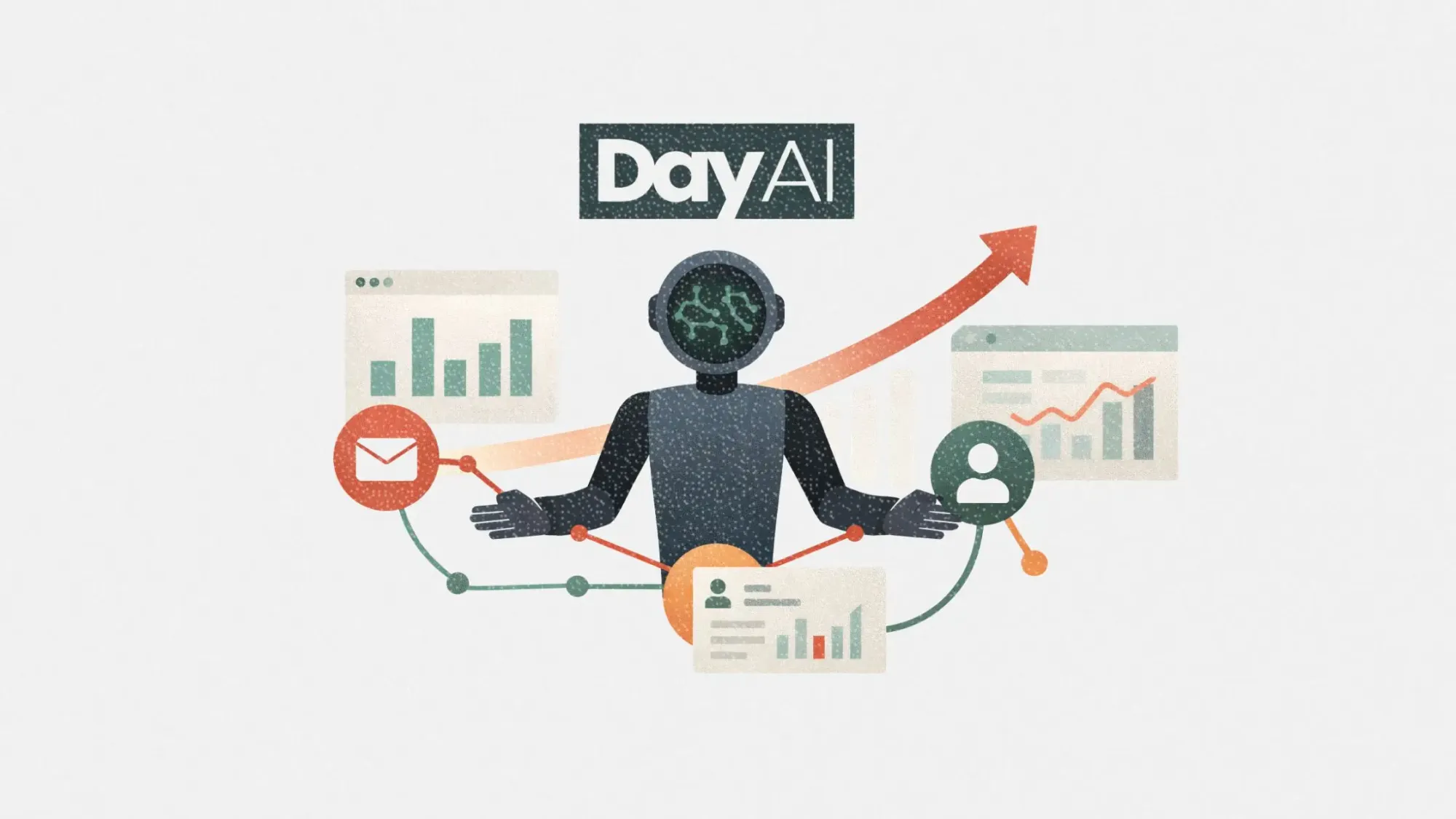
Day AI, a US-based startup, has raised $20 million in Series A funding led by Sequoia Capital to launch its AI-native CRM platform, aiming to automate the most time-consuming parts of sales and customer management. The company’s approach is designed to move CRM from a passive database to an active, autonomous system that works on behalf of sales teams and marketers.
The funding round, which also included Sound Ventures, Permanent Capital, Conviction, and Greenoaks, positions Day AI as a notable new entrant in a market long dominated by legacy platforms like Salesforce and Microsoft Dynamics. The company’s “CRMx” platform is now generally available, promising to help businesses answer critical questions and manage customer relationships with far less manual effort.
Short on time?
Here’s a quick look at what’s inside:
- Who is Day AI, and why does this funding matter?
- How Day AI’s autonomous CRM works for marketers
- What marketers should know about AI-native CRM
- The bigger picture: What’s next for CRM and marketing automation?
Who is Day AI, and why does this funding matter?
Day AI is a startup focused on reimagining CRM for the era of autonomous intelligence. The company’s founders spent the last 18 months working with early customers to build a platform that replaces manual data entry and reporting with AI-driven automation. The $20 million Series A, led by Sequoia Capital, signals strong investor confidence in the shift toward AI-native enterprise software.
The CRM market is massive—projected to reach $128 billion by 2028—but user satisfaction with traditional platforms remains low. Sales and marketing teams often spend more time updating records than engaging with customers. Day AI’s approach is to make CRM a system that actively works for its users, not the other way around.
How Day AI’s autonomous CRM works for marketers
Day AI’s platform is built for AI agents, not just human users. Instead of requiring teams to log every interaction or build custom reports, the system automatically ingests data from emails, meetings, and other communications. It then uses AI to connect the dots, providing instant answers to questions like “Which deals are at risk?” or “What’s driving customer churn?”
For marketers and sales teams, this means:
- Automatic data capture: No more manual entry—customer interactions are logged and analyzed in real time.
- Context-rich insights: The platform doesn’t just record what happened; it understands why, surfacing the reasons behind deal outcomes or customer behavior.
- Conversational interface: Users can ask questions in plain language and get actionable answers in seconds.
- Proactive recommendations: AI assistants can spot slipping deals, suggest next steps, and help teams focus on high-impact activities.
Day AI can either replace a company’s existing CRM or sit alongside it, combining all customer context in one place.
What marketers should know about AI-native CRM
For marketers, Day AI’s approach offers several practical benefits:
- Faster, more accurate reporting: Get answers to key questions without waiting for custom reports or data validation.
- Reduced administrative burden: Free up time for strategy and customer engagement by automating routine CRM tasks.
- Improved data quality: Automatic ingestion and analysis reduce the risk of incomplete or outdated records.
- Better alignment across teams: With a shared, AI-driven understanding of customer context, marketing, sales, and support can coordinate more effectively.
However, adopting an AI-native CRM also raises new considerations:
- Data privacy and security: Granting an AI system broad access to company communications requires robust safeguards and compliance.
- Change management: Teams will need to adapt workflows and develop new skills as automation takes over traditional CRM tasks.
- Customization: The platform must be flexible enough to handle unique processes and terminology across different organizations.
The bigger picture: What’s next for CRM and marketing automation?
Day AI’s funding and product launch reflect a broader shift in enterprise software, as AI moves from a feature to the foundation of core business systems. The company’s vision is to give organizations real-time, context-rich understanding of their entire go-to-market motion—from first touch to renewal.
For marketers, the rise of autonomous CRM platforms could mean less time spent on administration and more focus on building relationships, understanding customer needs, and driving growth. But realizing these benefits will require thoughtful implementation, strong data governance, and a willingness to rethink established processes.