Disney reveals AI-fueled ad tools and vertical video push at CES 2026
Disney leans into AI, automation, and short-form video to future-proof its advertising business

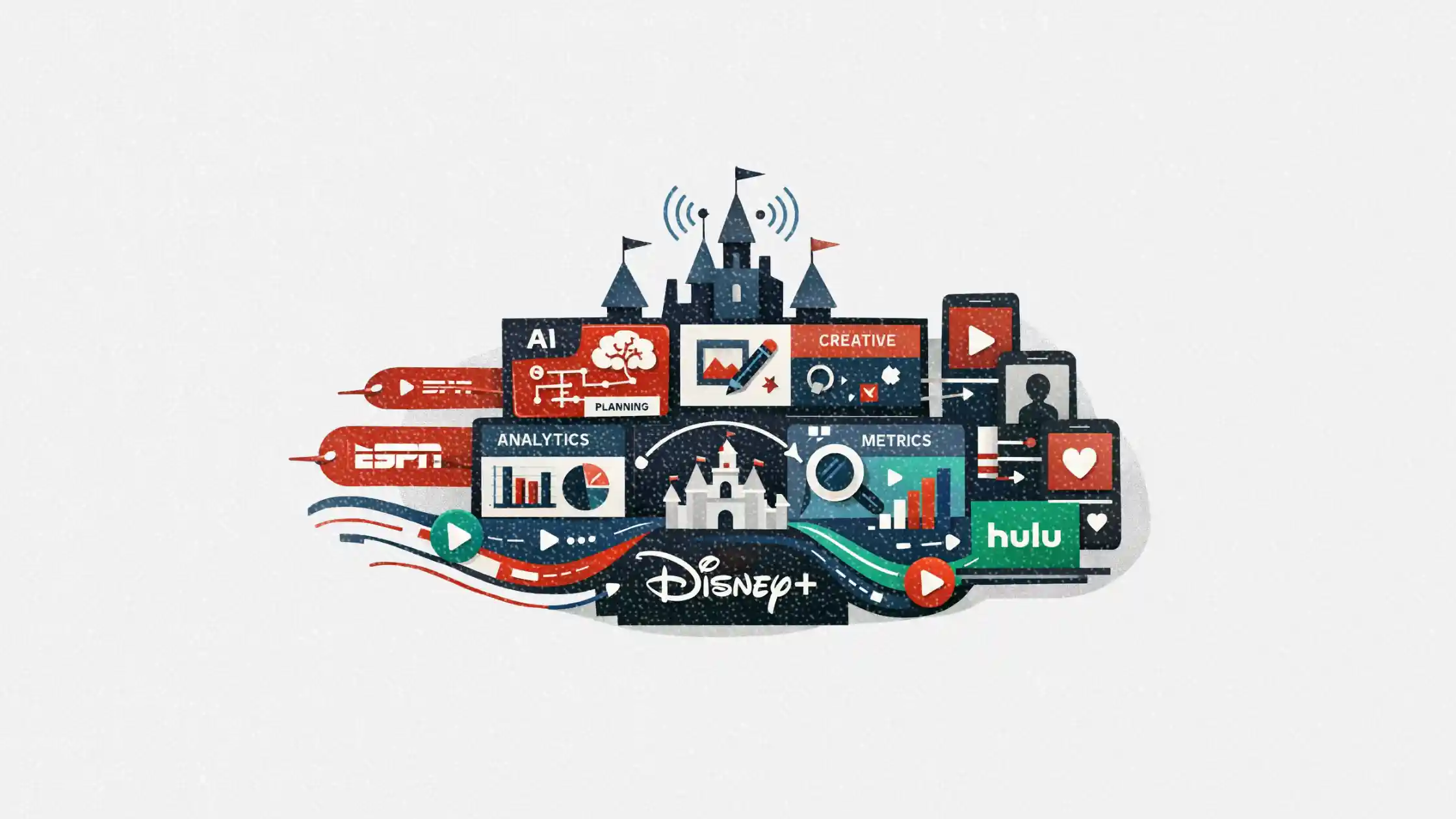
At CES 2026, Disney took the wraps off a fresh suite of advertising solutions, all built to help marketers move faster, learn more, and create smarter. From creative automation to vertical video, the showcase was designed to prove that Disney isn't just selling ad inventory anymore. It's selling an integrated performance engine.
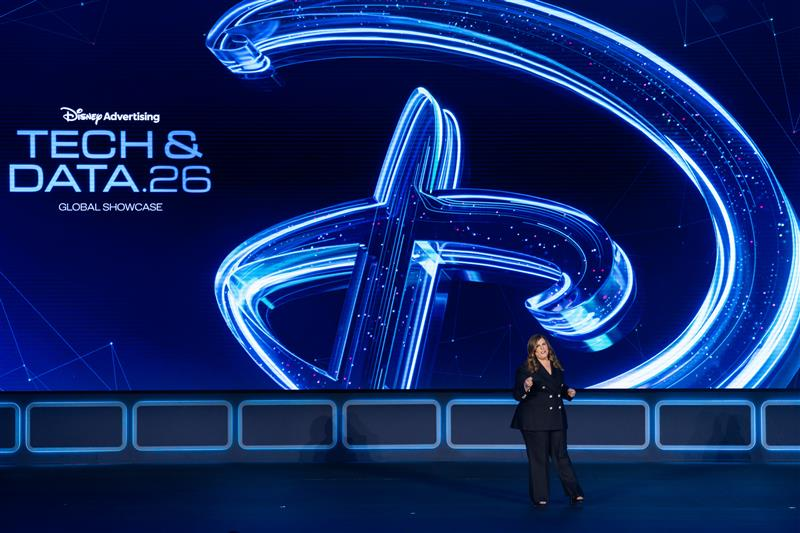
This article explores the key capabilities announced at Disney’s sixth annual Global Tech & Data Showcase, including a new AI-powered planning tool, a connected measurement dashboard, and an upcoming shift toward short-form video on Disney+.
Short on time?
Here’s a table of contents for quick access:
- What Disney announced at CES 2026
- Creative automation: smarter versioning, not just scale
- AI-fueled planning for faster campaign alignment
- Disney Compass: bridging brand building and performance
- Disney+ vertical video: chasing engagement with short-form
- What marketers should know
 Patrecia Meliana
What Disney announced at CES 2026
At the center of Disney’s latest rollout is a sharpened focus on accountability, automation, and content personalization. Executives from across the company’s product, data, and advertising teams outlined four core innovations for 2026:
- Creative automation tools to generate high-quality connected TV (CTV) ads from existing brand assets
- An AI-powered planning assistant that simplifies campaign setup
- Disney Compass, a single dashboard that unifies planning, reporting, and AI-powered campaign insights
- A vertical video feed coming to Disney+ in the U.S., following ESPN’s “Verts” rollout
These updates aim to help brands extract more value from Disney’s global footprint across streaming and live sports, including ESPN, Hulu, and Disney+, while adapting to a media environment where speed, personalization, and cross-platform impact are critical.
 Patrecia Meliana
Smarter versioning, not just scale
Disney is testing a new video generation tool that builds campaign-ready ads using a brand’s existing guidelines and creative assets. The tool doesn’t just crank out more versions. It optimizes them based on performance signals, audience segments, and contextual cues within the Disney ecosystem.
Crucially, Disney emphasized that human oversight remains a key part of the process. Marketers can expect tools that support creative strategy, not replace it.
Known and Instinct Pet Food were among the early partners to experiment with the tool and develop proof-of-concept ads. For marketers, this could be a game changer for CTV and digital campaigns that need tighter targeting without ballooning production costs.
AI-fueled planning for faster campaign alignment
Disney also introduced an internal AI-powered planning assistant that streamlines the campaign setup process. Instead of manually plugging in goals, timelines, and targeting specs, marketers can feed in their high-level strategy and the tool does the rest.
This shift from setup to strategy allows for faster turnaround and more collaboration, which could help agencies and in-house teams focus on alignment rather than admin.
SVP of Addressable Sales Jamie Power put it bluntly: “We’re now experience-level planning. Same goals, new tools, limitless possibilities.”
Bridging brand building and performance
Originally launched in 2025, Disney Compass is evolving into a full-stack ad intelligence platform. It combines planning, measurement, and data collaboration into one dashboard and now supports campaigns across the U.S. and LATAM, with EMEA next on the roadmap.
New in 2026: the Disney Compass Brand Portal. It lets advertisers view performance across campaigns and platforms, with AI-generated summaries, category benchmarks, and insight recommendations included.
Perhaps most importantly, Compass will soon integrate Disney’s new Brand Impact Metric — a tool that shows how exposure affects everything from attention and search behavior to long-term brand health. This move toward multi-signal measurement could help advertisers finally close the loop between brand building and performance outcomes.
Chasing engagement with short-form
In a bid to boost daily engagement, Disney+ will introduce a vertical video feed in 2026. The move builds on the successful launch of “Verts” on ESPN’s app and mirrors strategies already seen on TikTok, Instagram Reels, and Netflix.
The vertical format will support a mix of content, including short-form originals, social clips, and recut scenes from longer shows. EVP of Product Management Erin Teague emphasized that the experience will be natively integrated, not a bolt-on.
“This is what Gen Z and Gen Alpha are expecting,” Teague said, noting that today’s audiences aren’t always looking for two-hour viewing sessions. They’re tapping in for quick, snackable content that fits mobile behavior.
While Netflix got a head start on this format, Disney’s deep content library and multi-platform reach could give it an edge, especially if vertical video becomes the new front door to its broader ecosystem.
What marketers should know
These updates aren’t just cosmetic. They signal strategic shifts that marketers should watch closely:
1. Vertical video is the new battleground
With Disney+ joining the vertical feed trend, short-form is no longer just for social. CTV and streaming platforms are now competing for attention in seconds, not sessions.
2. Creative versioning just got smarter
Disney’s ad creation tools offer performance-informed personalization without increasing production overhead. This is a key benefit for brands juggling multiple audience segments.
3. Measurement is moving beyond impressions
With the new Brand Impact Metric and expanded Compass platform, Disney is betting on deeper attribution and cross-signal learning. Marketers should prepare for richer performance conversations.
4. Strategy is the new speed advantage
AI tools are cutting the time from brief to launch. Brand teams need to shift focus from setup to strategic alignment. Planning is becoming predictive, not reactive.