Jin and a tuna ride: Dongwon Tuna’s “sea protein” campaign leans into AI play
Dongwon F&B pairs a Jin ad with an AI image promo, positioning tuna as “sea protein” and rewarding participation through UGC and purchase


There’s a very specific kind of K-pop ad that fans clock instantly: the one that feels like a mini fantasy scene, not a product demo. BTS’s Jin surfing the ocean on a tuna is exactly that kind of visual. It’s meme-ready, screenshot-friendly, and easy to recreate, which is basically the whole point.
In South Korea, Dongwon F&B is using that fan instinct to turn a protein message into something participatory. The company outlined the campaign in an official announcement, tying the ad to a consumer promotion built around generative AI images and proof-of-purchase.
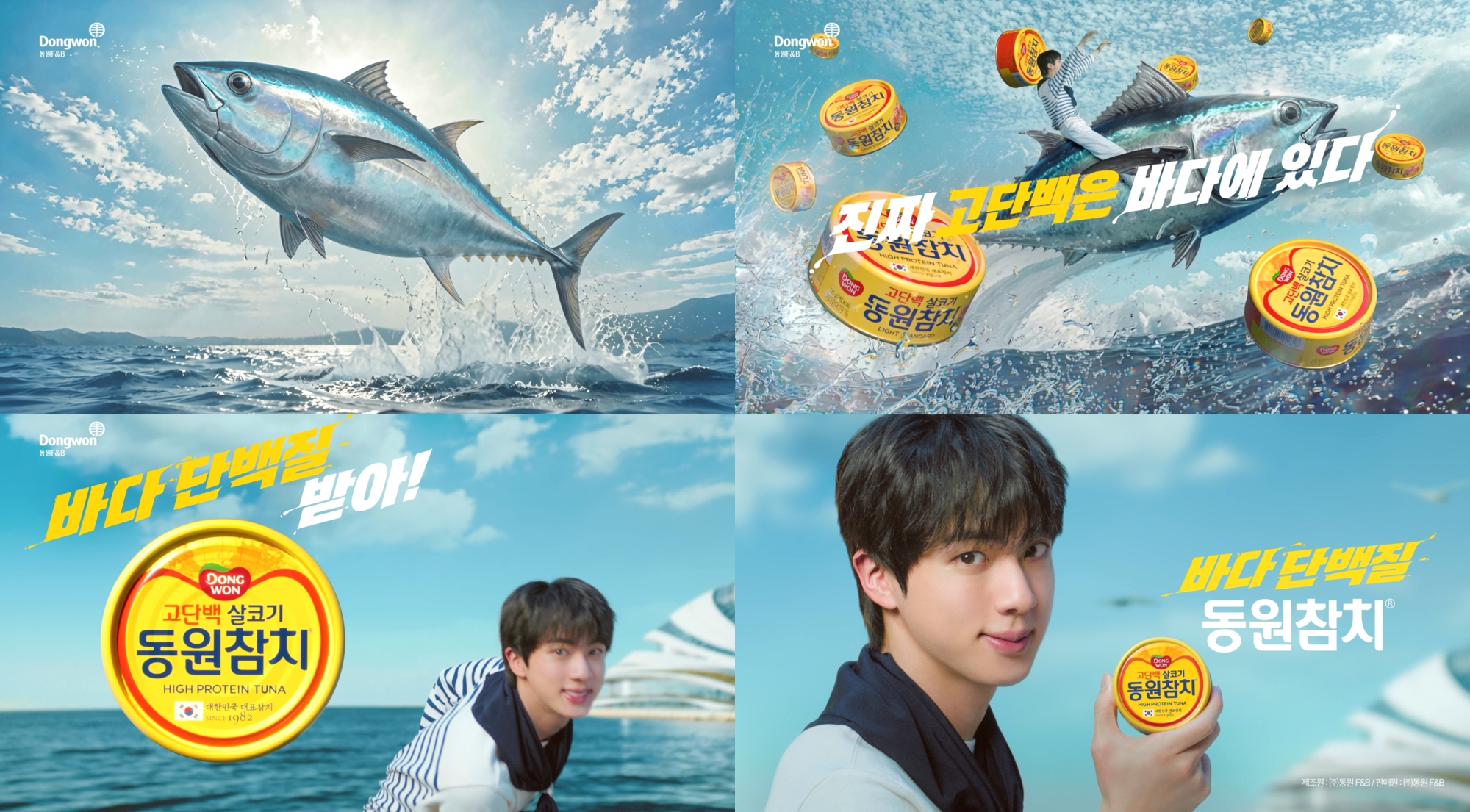
Table of contents
Jump to each section:
- Why “sea protein” is a message that travels
- How the Jin ad and wordplay make the claim feel sticky
- The generative-AI promo turns fans into the creative format
- What marketers should know about fandom-led participation mechanics
Why “sea protein” is a message that travels
Protein has become a lifestyle shorthand, not just a nutrition macro. People are comparing grams, building “high-protein” routines, and looking for options that fit convenience, taste, and identity. Dongwon F&B is plugging Dongwon Tuna into that behavior by framing tuna as “blue protein” and simplifying it into “sea protein.”
The campaign’s core claim is direct: “Real high protein is in the sea.” It also adds a Korean wordplay slogan, “바다 단백질, 받아,” built on a same-sound twist between “받아” and “바다.” The creative choice matters because it gives people a phrase they can repeat, caption, and remix without needing to explain it.
Dongwon F&B also anchors the protein argument with a concrete reference point: one can of Dongwon Tuna (Light Standard, 135g) contains 25g of protein, which it describes as about half of the recommended daily protein intake for adults (55g). It compares that amount to 4.3 eggs, one block of tofu, or 110g of chicken breast.
 ContentGrip
How the Jin ad and wordplay make the claim feel sticky
The ad concept is intentionally not subtle: Jin rides through the sea with a tuna, acting out the “from the sea” premise as a literal adventure visual. For fandom audiences, that kind of heightened concept reads more like character content than a traditional food commercial, which increases the odds that people actually watch it rather than tune out.
Distribution is split for reach and replay. Dongwon F&B said it will run a 15-second edited version on TV, while the full version will be available on digital channels like Dongwon F&B’s YouTube channel. That pairing fits how fans consume: a short cut that’s easy to encounter, plus a longer version that people can seek out and rewatch.
The wordplay slogan does more than “add humor.” It gives the campaign a verbal hook that matches the absurdity of the visual, so the message lands as a quote-able line, not a nutrition lecture.
The generative-AI promo turns fans into the creative format
To line up with the ad release, Dongwon F&B is running a consumer participation promotion also titled “바다 단백질, 받아.” The most telling mechanic is the AI one: people can generate and share a generative-AI image of themselves riding on a tuna like Jin in the commercial.
That is not just a gimmick. It is a format swap: instead of asking people to share the brand’s creative, it asks them to place themselves inside the campaign’s core visual. For audiences used to filters, templates, and “put yourself in the scene” edits, it fits existing internet behavior while keeping the brand idea intact.
The promo also includes a more traditional path: verifying a purchase of Dongwon Tuna. Prizes include a one-year subscription of Dongwon Tuna (one can per day, total 365 cans) and a Dongwon Tuna-shaped auxiliary battery pack (power bank). Dongwon F&B also said it plans global marketing activities like Dongwon Tuna merchandise and a hot pepper tuna sampling event.
What marketers should know about fandom-led participation mechanics
A campaign like this works best when it treats culture as the product experience first, and the nutritional claim as the reason it can exist.
1) Use spectacle to earn attention, then make the message easy to repeat
The tuna-riding visual earns the pause. The “sea protein” phrasing and wordplay give people something simple to carry into captions, comments, and conversation.
2) Participation is stronger when people can “join the scene”
Generative AI here is not framed as tech for tech’s sake. It is a way for consumers to recreate the ad’s most recognizable moment with themselves as the main character.
3) Give two entry paths: creative play and proof-of-purchase
Not everyone wants to make an image. Pairing UGC-style participation with purchase verification broadens who can join without making the campaign feel gated.
4) Make the prize feel like a collectible, not just a discount
A tuna-shaped power bank and a 365-can prize are specific and brand-coded. They are the kind of rewards people can show friends, not just quietly redeem.
In practice, the campaign signals a useful shift: food marketing is increasingly borrowing the logic of fandom content. People do not just want functional benefits like “25g of protein.” They want a story they can step into, a visual they can remix, and a moment that feels socially shareable.
For brand teams, the bigger lesson is about creative structure. If you can build one iconic scene (the “I can recreate this” moment), you can connect TV, digital video, and participation mechanics without needing a dozen separate ideas. The product claim becomes the anchor, but the community behavior becomes the engine.