
Duolingo's Manu Orssaud: Even a viral joke needs to get people learning
Duolingo CMO Manu Orssaud explains why an iPhone Duo joke needed a path from QR-coded apples to actual language lessons.

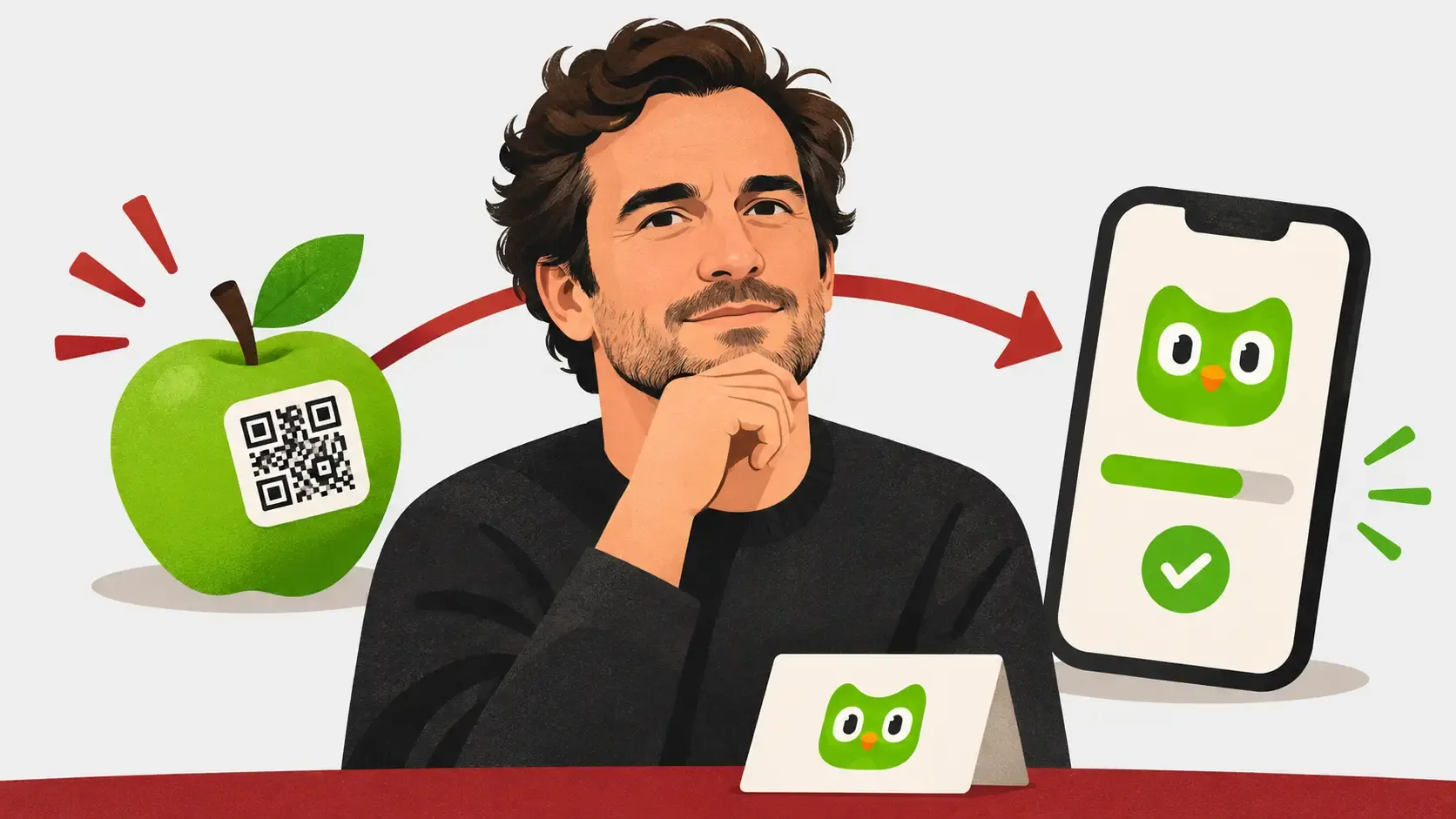
A free green apple outside a flagship Apple Store is an easy photo opportunity. Turning that moment into a reason to open a language-learning app takes another step.
On October 23, the green Duo mascot appeared outside Apple's Fifth Avenue store in New York with a cart of fruit as the iPhone Duo went on sale. It was an extension of a September name joke, but Duolingo had a more practical goal than being photographed beside a queue. The apples carried QR codes that pointed people toward the language-learning app.
ContentGrip spoke with Manu Orssaud, Duolingo's chief marketing officer, about the decision to bring the joke onto the street, how his team decides which cultural moments are worth joining, and the difference between earning attention and getting somebody to complete a lesson. Duolingo's investor biography confirms his title and responsibility for global brand building and user growth.
Table of contents
- From an iPhone name joke to free apples
- The numbers that matter after the joke
- A simple idea made the campaign possible
- Why Duolingo does not join every trend
- A fashion collection showed the same approach
- What marketers should measure after a cultural stunt
From an iPhone name joke to free apples
Apple's first foldable iPhone, the iPhone Duo, arrived in its stores on October 23, 2026, including at the company's Fifth Avenue location, according to Apple's launch announcement. The phone's name also belonged to Duolingo's green owl mascot, giving the education brand a ready-made opening.
Duolingo had responded to the phone's September announcement on social media. According to figures Manu supplied to ContentGrip, those early posts generated 36.8 million impressions across Duolingo's social channels. That is a company-reported measure of exposure to the September content, rather than a verified count of people who downloaded the app or completed lessons after the October stunt.
For the retail launch, the brand brought its mascot and a cart of green apples outside Apple Fifth Avenue. As WeRSM documented, the fruit had Duo-themed stickers, a lesson reminder and a QR code. Passersby could get a literal apple while customers queued for a phone called Duo.
Manu said the team anticipated crowds at the store and spotted a simple way to make the online joke physical: if Apple was selling Duos, the language app would give away apples. The two companies were not collaborating on the activation, a boundary the team kept in mind when planning the stunt.

The numbers that matter after the joke
The apples gave people something to photograph, but the QR code was there to prompt action. Manu explained that it took people to Duolingo with a straightforward next step: download the app and begin learning.
For a marketer assessing a stunt like this, an impression, a scan, a download and a completed lesson answer different questions. Impressions show that content appeared in feeds. A scan suggests someone noticed the invitation. A download gets that person closer to using the product. Completing a lesson is evidence that the activity reached the behavior the brand exists to encourage.
Manu put the goal plainly: "The best brand work gets people talking and gives them a reason to use the product."
He said Duolingo examines the social reaction alongside QR scans, downloads and lesson completion. The company did not provide scan, installation or lesson-completion figures for the October giveaway, so the available evidence shows the campaign's design and intended measurement, rather than a demonstrated conversion result.
That distinction gives marketers a more useful way to evaluate cultural campaigns. A joke may earn attention because its timing is perfect. The business question is whether the campaign gives the audience an obvious action to take after they smile.
A simple idea made the campaign possible
Real-time marketing is usually described as a race to react before an internet joke expires. Manu's account suggests that a brand also needs the restraint to choose an idea it can explain almost instantly.
The team considered larger concepts for the launch. It chose the apple cart because the physical gag was easy to grasp, made a good visual and could be executed while people were still talking about the phone.
Tone was a separate decision. Manu explained the intended tone: "We weren’t partnering with Apple, but we also weren’t making fun of them." The intention was to be part of the launch excitement while remaining unmistakably Duolingo, rather than leaving passersby confused about whether the two brands were working together.
That simple creative choice also shaped the operational work. A real-world activation also introduces logistical questions that a social post does not. Manu did not provide a detailed account of those arrangements, so the interview offers no basis for claiming the team bypassed any standard requirements. He did describe an internal environment that allows familiar teams to make timely creative calls.
Why Duolingo does not join every trend
Manu said: "Our team knows the brand and internet culture incredibly well, so we give them the freedom to move quickly without layers of approvals." For the iPhone Duo joke, both the name connection and the apple-cart execution were immediately recognizable.
Speed alone is not the rule. Manu said the team walks away when the connection to Duolingo feels forced or the joke needs too much explanation. That leaves a practical creative filter for any brand considering a reactive campaign: can someone who sees the idea once understand why this company is participating?
The answer will differ for a bank, a retailer and a learning app. Duolingo can use Duo's name, its mascot and a lesson reminder as a link between a phone launch and the product itself. Copying the surface-level stunt without an equally natural connection would lose the mechanism that made it relevant.
The company's experience also suggests that fewer approval layers depend on shared understanding of the brand. It is easier to give teams discretion when they already know what kind of humor belongs to the company and which opportunities to decline.
A fashion collection showed the same approach
Manu pointed to another campaign when asked how cultural attention can translate into something educational: Duolingo's Phonetic Fashion Collection during New York Fashion Week. The brand worked with designer and Next in Fashion alum Megan O'Cain on clothing decorated with phonetic spellings of designer names people commonly struggle to pronounce. Contemporary campaign coverage also documented the collaboration.
Fashion gave the brand an audience and a topical moment. Pronunciation gave it a reason to participate. A viewer who came for an unusual garment could leave knowing how to say a name correctly.
Manu said: "It worked because it joined a cultural conversation while also teaching people something useful."
The common thread between the fashion pieces and the apple giveaway is the connection to learning. One used names people might mispronounce; the other put a route to language lessons onto a piece of fruit. In both, the cultural reference created the opening, while the brand's core purpose supplied the follow-through.
What marketers should measure after a cultural stunt
Manu's interview offers a practical way to brief and assess a reactive campaign before deciding whether its popularity made it successful.
Start with the cultural connection: why does the brand belong in this moment, and would the audience understand the idea without a long caption? Next define the immediate action the activation should invite. For Duolingo's apples, it was a QR scan leading into the app. Finally, decide what product behavior matters after that action: in this case, installing the app and completing a lesson.
Those stages should be measured separately. An impressive social reach figure cannot stand in for downloads, and a download is not proof that someone learned anything. By the same logic, a completed lesson is a stronger indicator of immediate product participation than a photograph of the mascot, although the company would still need longer-term data to assess retention or revenue.
The iPhone Duo stunt was playful because the joke came naturally to the brand. Its marketing logic was more disciplined: give people a reason to notice, then give them a clear next step. What happens after that step is what turns a memorable moment into something the marketing team can evaluate.
Away from work, Manu returns to spinning for the energy and music, an hour when he can unwind and pretend he is at a nightclub. He also enjoys a steam or sauna afterward.
