FactSet trolls AI hype with subway ads Wall Street can't ignore
FactSet’s new campaign flips the AI narrative with ads that expose what generic AI tools miss in finance


As B2B marketers race to bolt “AI-powered” onto every product pitch, financial intelligence firm FactSet is doing the opposite — and making a point while they’re at it.
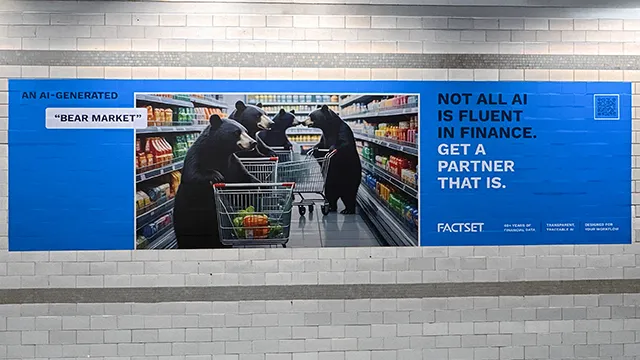
The company’s new out-of-home (OOH) campaign, launched in New York’s Financial District, uses intentionally flawed AI-generated visuals to highlight what generic tools get wrong about high-stakes finance. Instead of pushing AI features, FactSet is selling fluency: the ability to speak the nuanced language of institutional investors, hedge funds, and capital markets pros.
This article explores FactSet’s campaign concept, why the approach resonates with today’s finance buyers, and how marketers can apply the same playbook to earn trust in complex, regulated industries.
Short on time?
Here is a table of content for quick access:
- What happened: AI jokes on Wall Street with a serious message underneath
- Why this campaign lands with B2B decision-makers
- What marketers should learn from this
 Patrecia Meliana
AI jokes on Wall Street with a serious message underneath
Created in partnership with agency VSA Partners, FactSet’s latest campaign floods the Wall Street subway station with ads showing AI-generated images that misinterpret financial terms. Think “hedge” as an actual garden hedge or a “bear market” as literal bears pushing carts through a grocery store.
The humor is obvious. But so is the strategic message: if your AI doesn’t understand your industry, why would you trust it to make critical business decisions?
This isn’t just a punchline for commuters. It’s a visual critique of the one-size-fits-all approach many tech vendors use when selling AI solutions to enterprise buyers.
Why this campaign lands with B2B decision-makers
FactSet’s target audience — financial services professionals, institutional investors, and analytics-driven execs — know better than most that generic AI models often fall short in specialized domains.
By showcasing those AI failures in public, FactSet positions itself as the opposite: a partner that builds vertical-specific, finance-fluent solutions. It’s a move that trades technical specs for trust and resonates with execs who have been burned by tools that can't parse the difference between market volatility and garden plants.
The campaign also taps into a growing buyer sentiment: skepticism toward overpromised AI capabilities. Many enterprises are now looking for traceability, transparency, and explainability instead of flashy demos.
What marketers should learn from this
For brands selling into complex, regulated, or high-trust sectors, FactSet’s campaign offers three key takeaways:
1. Flip the AI script
Instead of competing on vague “AI-powered” claims, highlight what your AI doesn't do or what it does better because it's narrowly focused. Point out the real risks of using generic tools in mission-critical contexts.
2. Use humor to sharpen your edge
AI-generated visuals that fail can be more effective than polished renders. In this case, the humor works because the audience already knows the stakes. The joke reinforces your product’s purpose.
3. Speak the buyer’s language
The most resonant line in the campaign is its tagline: “Get a partner that is fluent in finance.” It avoids jargon and makes the emotional case for choosing a solution that actually understands your world. For marketers, this is a reminder to center messaging around audience fluency, not internal features.
FactSet’s campaign doesn’t need to explain what its product does. The ads already make the case. In a climate where everyone is racing to deploy AI, the company is winning attention by challenging assumptions and showing its edge through restraint.
Marketers in other verticals should take note. In enterprise sales, trust beats trend. If your brand can prove that it speaks the language of your buyers — whether that’s finance, healthcare, or supply chain — you’re already ahead.