Fake Forbes sites put guaranteed PR model under scrutiny
A fake Forbes investigation and WIPO ruling show why PR buyers must verify domains, disclosures, and publisher relationships.


Baden Bower is under scrutiny after an undercover inquiry found that one of its representatives appeared to offer a paid placement on Forbes LA, one of two websites that Forbes said were unauthorized uses of its name and branding. The inquiry also identified links from pages associated with Baden Bower and Global Recognition Awards to Forbes LA and Forbes Liechtenstein. Baden Bower denied any relationship with either site.
The issue is larger than one sales call. Guaranteed publicity is a legitimate commercial category when the publisher, payment route, editorial control, and disclosure are clear. It becomes a credibility risk when paid distribution is presented as independent earned coverage, or when the value being sold depends on a masthead that the trademark owner has not licensed.
Key Takeaways
- Forbes said Forbes LA and Forbes Liechtenstein were not authorized editions of its publication.
- A WIPO panel separately found that forbesliechtenstein.com impersonated Forbes and ordered the domain transferred to the publisher.
- PR buyers should verify the exact domain, publisher relationship, editorial label, and payment route before treating guaranteed coverage as earned media.
Table of contents
Jump to each section:
- What the investigation found
- Why the Forbes Liechtenstein decision matters
- Where guaranteed coverage becomes a credibility risk
- What comms teams should verify before buying coverage
What the investigation found
The two websites presented themselves as regional Forbes properties and published high volumes of business and lifestyle content, including promotional profiles. Forbes confirmed that neither Los Angeles nor Liechtenstein was an authorized edition and said it was taking action.
US$10,000 was the price quoted for a placement on Forbes LA, a site Forbes said was not an authorized edition.
A later written proposal offered a discounted Forbes placement, while other outlets and broadcast appearances were discussed at different prices. The commercial menu matters because it positioned the masthead itself as the product. A buyer was not simply purchasing writing or distribution, but the credibility associated with a named publication.
When asked whether placements were marked as sponsored, a Baden Bower representative replied that “some are and some aren’t.” The agency said it worked only with licensed regional Forbes editions and denied any connection to Forbes LA or Forbes Liechtenstein. Its current public FAQ describes the service as “paid promotion” and says its network includes “organic or discretely sponsored publications.”
Why the Forbes Liechtenstein decision matters
The strongest independent evidence concerns Forbes Liechtenstein. In a July 22 decision, the World Intellectual Property Organization found that forbesliechtenstein.com was confusingly similar to the Forbes trademark, copied the publisher’s logo, design, and color scheme, and created a false association with Forbes. The panel ordered the domain transferred to Forbes.
The ruling does not establish that Baden Bower owned or controlled the domain. It does establish that the site itself was unauthorized. That distinction is important: the evidence supports scrutiny of how the site entered a placement offer, but it does not justify attributing domain ownership to the agency without further proof.
49 licensed editions across 81 countries are listed in Forbes’s current global footprint, which gives buyers a concrete benchmark against which to check a purported regional edition.
Forbes’s licensing materials also state that uses of its content and brand require permission and must not be misleading. A geographic suffix can look plausible, especially in a fragmented international publishing market, but it is not evidence of authorization.
Where guaranteed coverage becomes a credibility risk
The commercial promise behind guaranteed PR is straightforward: a client pays for a defined outcome instead of an open-ended pitching process. That can be useful for teams that need predictable timing, distribution, or a clearly labeled sponsored placement. The risk begins when the guarantee depends on ambiguity about who controls the publication and whether the resulting article is advertising.
The Federal Trade Commission’s native advertising guidance says promotional content can be deceptive when it implies that it is independent or comes from a source other than the advertiser. Clear disclosure is therefore not a minor formatting issue. It is what allows a reader to judge the commercial nature of the material.
For a brand choosing an agency this week, the investigation changes the procurement question. A guarantee should not be treated as evidence of quality or legitimacy on its own. It should trigger a request for more documentation, particularly when the promised value comes from an international edition, an unfamiliar domain, or an article that will carry no visible sponsorship label.
This also aligns with two broader PR industry shifts: media fragmentation and pressure on trust and credibility. As publishers license brands across markets and commercial content travels through partner networks, a familiar logo is no longer enough to establish provenance. Agencies that can document the chain from client payment to authorized publisher will have a stronger proposition than those that ask buyers to rely on the masthead alone.
What comms teams should verify before buying coverage
The operational response is a tighter vendor check, not a blanket rejection of paid media. Comms teams can use the following sequence before approving any guaranteed placement:
- Confirm the exact publication domain and check it against the publisher’s official list of licensed editions or partners.
- Ask whether any payment reaches the publisher, an intermediary, or an editorial contributor, and require the answer in writing.
- Request a screenshot or live example showing the label that will appear on the article, including sponsored, partner, contributor, or BrandVoice wording.
- Identify which entity signs the contract and whether it has documented authority to sell the named placement.
- Add remedies for unauthorized branding, missing disclosure, takedowns, or a publication that later proves unaffiliated.
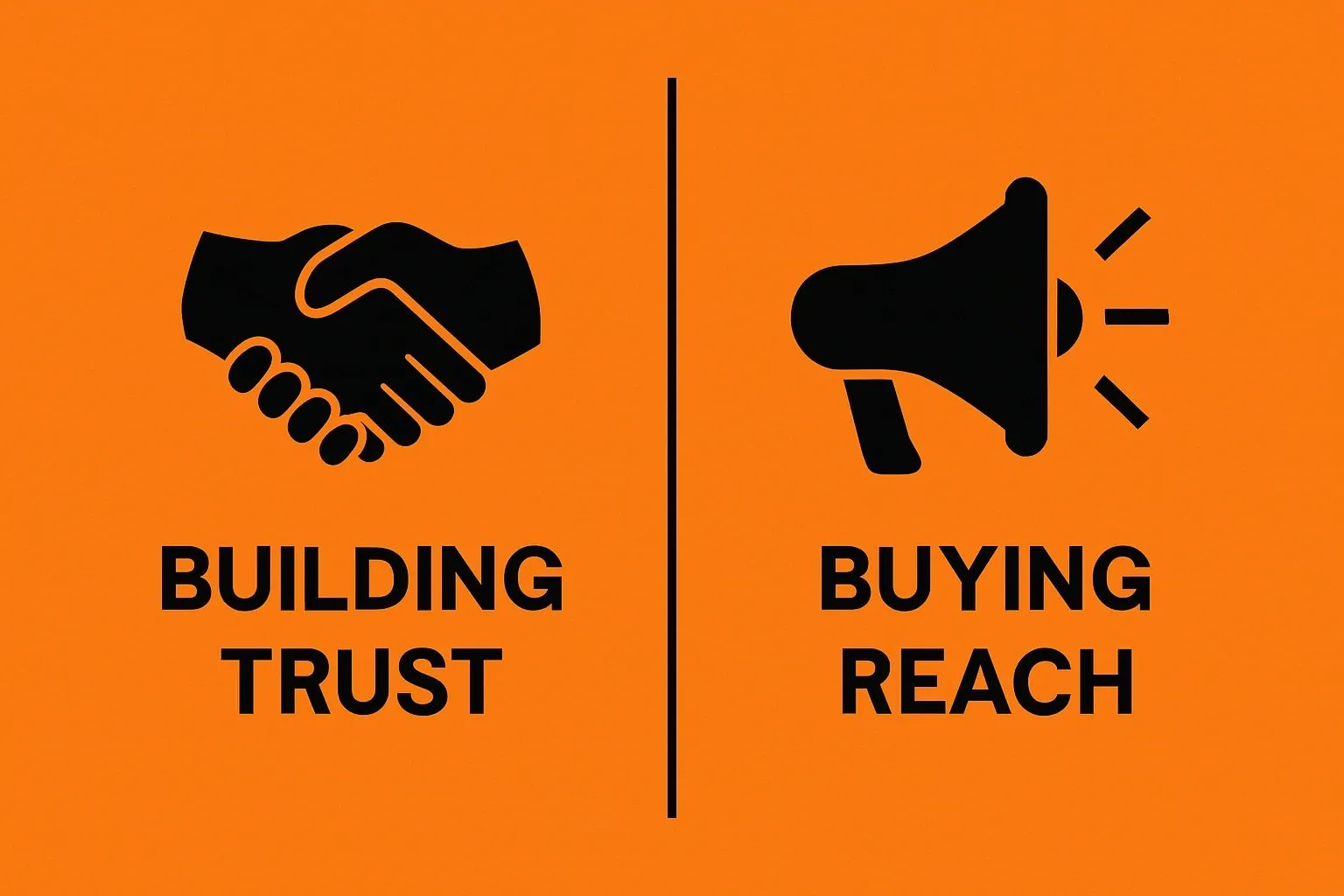
The practical dividing line is simple. Paid coverage can be useful when everyone knows it is paid. Earned coverage carries value because an independent editorial party chose to publish it. Blurring those categories may deliver a logo and a URL, but it also transfers the publisher’s, agency’s, and client’s credibility risk into the same transaction.