Jan Ravnik and FINNSUL turn a TikTok hoodie into a 46,000-person waitlist
The wellness brand reports 76% of Lemonade Squeeze purchasers were new customers after a dance-community campaign built around Jan Ravnik.


A branded hoodie can be an easily overlooked detail in a backstage TikTok, but for FINNSUL, one worn by professional dancer Jan Ravnik became the starting point for an entirely different kind of product launch. Ravnik, a former Taylor Swift Eras Tour performer and a Dancing with the Stars professional, appeared in a video alongside his dance partner Tatyana Ali. Both wore the beverage company's merchandise.
Instead of treating the clip as a fleeting exposure opportunity, FINNSUL invited people who followed the show to help make a collaboration happen. In a November 24 announcement, the wellness brand reported that the eventual Lemonade Squeeze partnership drew more than 46,000 waitlist registrations and that content surrounding the launch exceeded one billion social views. The announcement was published November 25 in Southeast Asia. Those are company-reported results rather than independently audited figures.
Table of contents
Jump to each section:
- How a hoodie became a product collaboration
- Why the dance community was central to the launch
- What the waitlist reveals about customer acquisition
- What marketers should learn from FINNSUL
How a hoodie became a product collaboration
The story started in September when FINNSUL mailed hoodies to members of the Dancing with the Stars cast. When Ravnik and Ali wore them in a TikTok about two months later, the founders began asking their own followers to tag Ravnik and follow the effort to recruit him.
The family behind FINNSUL already watched the show. Maureen Kelly, who founded tarte cosmetics, started the beverage brand with her sons Finn and Sully McDonough in 2026. The family organized watch parties, sent rehearsal care packages and encouraged followers to vote for the pair during the competition, according to the brand.
By the time Ravnik agreed, the audience had been given a story to follow rather than simply a finished endorsement to consume. That is an unusually public route to a partnership: the question of whether the dancer would say yes was itself part of the content.
The team then photographed the campaign and began teasing a new drink mix. Lemonade Squeeze is a sugar-free powder sold through FINNSUL's own storefront and TikTok Shop, with Amazon distribution planned at the time of the announcement.
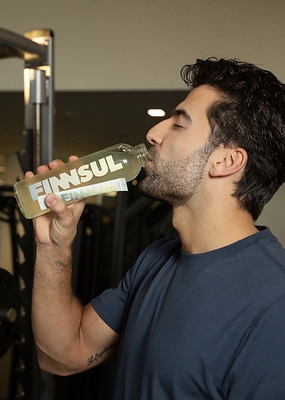
A product that emerges from an ongoing conversation can feel different from one that arrives with a celebrity's name already printed on the box. The important distinction here is that the brand made the process of recruiting Ravnik part of the audience experience. It was a narrative with an unresolved outcome, not simply a series of teaser assets.

Why the dance community was central to the launch
Ravnik brings together two entertainment audiences: people who recognize him from the Eras Tour and viewers who follow his performances on Dancing with the Stars. Entertainment Weekly reported that he joined the latter show in 2025 and partnered with Ali for its 2026 season.
A recurring competition creates natural moments for people to follow a performer, talk about the choreography and vote. For FINNSUL, that rhythm provided opportunities to show up before there was a product to sell.
The team extended the launch beyond Ravnik by delivering Italian lemon ice and samples to other professional dancers, including Ezra Sosa, Emma Slater and Brandon Armstrong. FINNSUL described the resulting posts as organic. The exact nature of each creator arrangement and the original posts could not be independently established.
FINNSUL co-founder Finn McDonough called the community “a creative partner” in the announcement. That network matters because a dancer is not an isolated media channel. Colleagues, collaborators and the audience that follows the same show all provide cultural context. A drink presented within that environment is easier to connect with rehearsals and travel than one introduced through an unrelated celebrity photoshoot.
The approach shares a feature with KIND's recent Jackson Olson snack partnership, which also connected a performer known for entertainment with a food product and TikTok Shop. FINNSUL's distinctive move was to turn the pursuit of its collaborator into a public storyline before announcing the product.
What the waitlist reveals about customer acquisition
FINNSUL's announcement provides several indicators that the campaign reached people outside its existing customer base. The company says more than half the waitlist had not previously joined its email or SMS lists.
76% of Lemonade Squeeze purchasers were new to FINNSUL, according to the company's November 24 release.
The brand also reported that its website briefly crashed just before the drop, while launch-related content attracted substantial social attention. These outcomes suggest a possible acquisition opportunity, but the announcement does not disclose the number of orders, revenue, marketing costs, unique viewers or how the social total was calculated.
The distinction between reach and purchase behavior is particularly important. A billion views does not mean a billion individuals saw the campaign, and a waitlist registration does not necessarily become an order. The first-time buyer share is a different measure because it relates to actual purchasers, although without the denominator it cannot establish the absolute scale of acquisition.
FINNSUL also reported donating US$30,000 to National Dance Institute's DREAM Project, an adaptive dance program for children with and without disabilities. Connecting the donation to the dance community gave the partnership a purpose beyond product distribution, without proving what effect it had on sales.
The company has not disclosed whether the customers acquired through the collaboration will return once the initial interest fades. That is the next important question for a young beverage business.
What marketers should learn from FINNSUL
The campaign illustrates why the journey to a creator partnership can be as interesting to an audience as the finished product. It also shows why marketers should separate the enthusiasm surrounding a collaboration from evidence of sustained growth.
- Treat unsolicited exposure as a signal, not a contract. A recognizable person wearing a product may be an opening for a conversation. Before asking for broader participation, establish whether the creator is interested and obtain the permissions required to use their likeness or content.
- Give participation a clear purpose. FINNSUL's invitation to follow the pursuit of Ravnik offered a simple reason to return to its updates. A useful public narrative has a genuine development to follow, rather than an endless sequence of manufactured reveals.
- Measure new customer behavior separately from visibility. Track waitlist-to-order conversion, new versus returning buyers and subsequent repeat purchase alongside social reach. Without those measures, it is difficult to distinguish a fandom moment from a durable customer relationship.
- Make the product fit the community. The sampling effort focused on people working in dance, rather than distributing an unrelated item to celebrities at random. Consider where the product naturally belongs in the routines of the people associated with a creator.
Co-creation does not require every partnership to be negotiated in public, and brands should not assume that followers can deliver a deal. What makes this case interesting is the combination of a credible cultural connection and a concrete product.
For FINNSUL, the waitlist and first-time buyer share are encouraging signs, subject to the limits of the company's reporting. The harder task comes next: giving those new buyers a reason to remain customers when the show, creator conversation and product drop are no longer the center of attention.