Firefox will let you block all generative AI features
Firefox’s new AI opt-out sets a precedent for user control — and signals shifting expectations around AI in everyday browsing

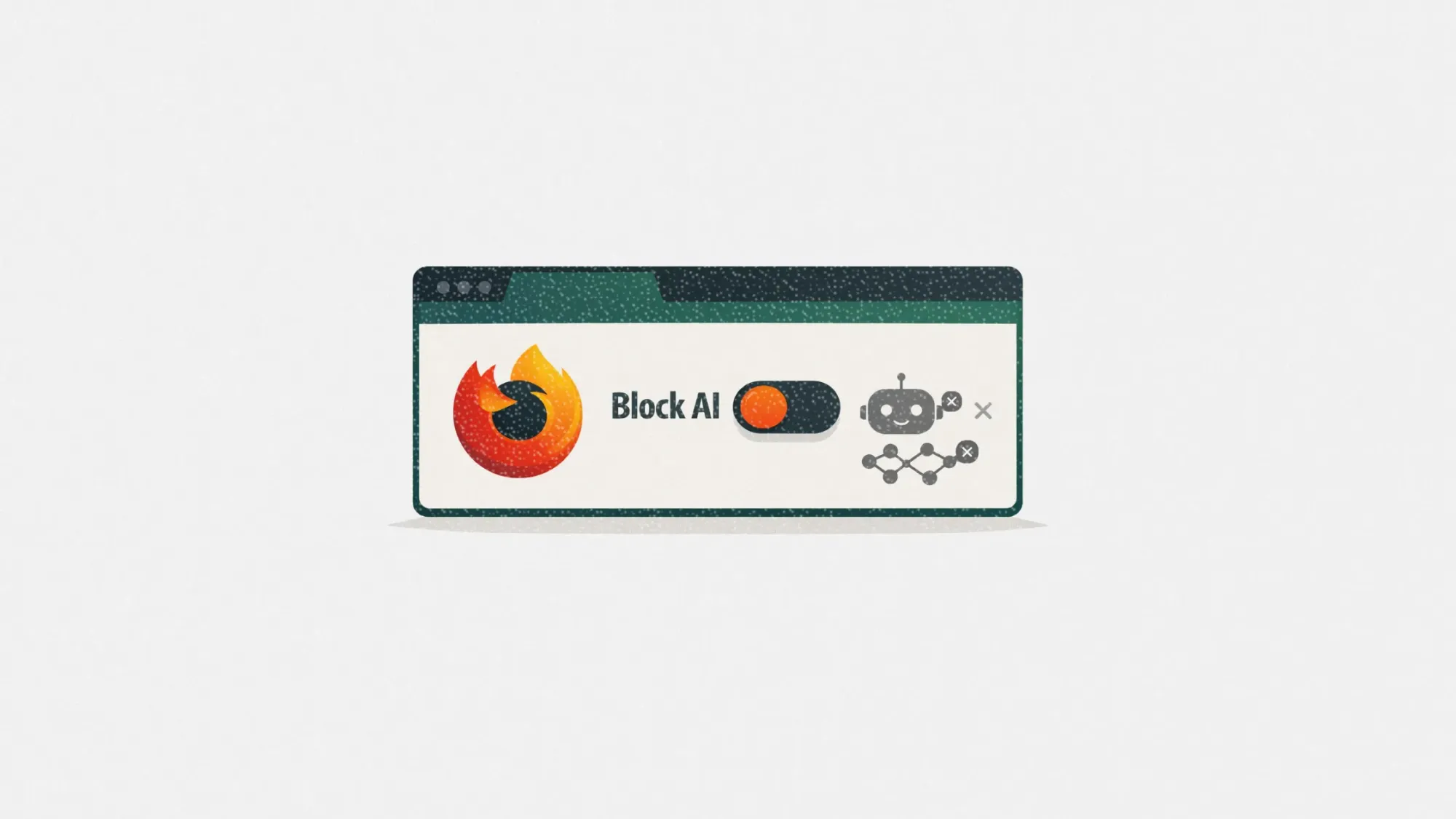
Firefox’s next big browser update isn’t just about performance or design — it’s about user control. Starting February 24, Firefox 148 will introduce a built-in toggle to block all generative AI features, current and future.
For marketers and digital teams, this marks a significant fork in the browser landscape: one that reflects a growing divide in how audiences want to interact with AI.
This article explores Mozilla’s new AI controls, why they matter now, and what it means for brand safety, content UX, and audience segmentation in an AI-first web.
Short on time?
Here’s a table of contents for quick access:
- What Firefox’s AI controls actually do
- Why Mozilla is offering a full opt-out
- What marketers should know
 Patrecia Meliana
What Firefox's AI controls actually do
Starting with Firefox version 148, rolling out February 24, users will find a new AI controls section in their desktop settings. The most notable addition: a “Block AI enhancements” toggle that disables all current and future generative AI features across the browser.

This includes:
- AI-powered translations to help users browse in different languages
- Alt text generation for accessibility in PDFs
- Tab grouping powered by AI
- Link previews with summaries before clicking
- The sidebar chatbot feature, which lets users interact with large language models like ChatGPT, Claude, Copilot, Gemini, or Le Chat Mistral
Importantly, users can block everything or selectively enable individual features. Once preferences are set, they remain consistent across browser updates unless changed manually.
Why Mozilla is offering a full opt-out
Mozilla’s move isn’t just technical — it’s ideological. The company has publicly committed to choice, transparency, and control when it comes to AI. The browser maker says it’s heard from users across the spectrum: some who want nothing to do with AI, and others who want AI tools that are genuinely helpful.
The company’s new CEO, Anthony Enzor-DeMeo, appointed in December, previously emphasized that AI should always be a choice, not a default. “People should know why a feature works the way it does and what value they get from it,” he said in a blog post.
This AI control update reflects Mozilla’s broader positioning in a rapidly evolving browser market, where newcomers like Arc, Perplexity, and even OpenAI are challenging incumbents with AI-heavy experiences. Mozilla appears to be betting on trust and transparency as its core differentiators.
Alongside product updates, Mozilla is also making strategic investments. According to CNBC, the company plans to deploy up to US$1.4 billion from its reserves to support startups and nonprofits building “trustworthy AI.” Mozilla President Mark Surman described this effort as building a “rebel alliance” against Big AI players.
What marketers should know
For brand and marketing teams, Firefox’s AI controls represent more than just a browser feature — they’re a signal of shifting user expectations and regulatory undercurrents. Here’s what to take away:
- Audience segmentation will get more nuanced
As AI-powered UX features become toggleable, marketers may face fragmentation in how content is delivered, previewed, or enhanced. Accessibility features like alt text, for instance, may not show up for all users.
- Trust-first messaging may carry new weight
Firefox users opting out of AI could be signaling distrust of automated personalization or opaque algorithms. Messaging strategies for this segment may need to emphasize privacy, control, and human-first storytelling.
- Chatbot optimization needs cross-browser context
With Firefox allowing users to block the chatbot sidebar entirely, not all users will engage with AI co-pilots during browsing. Brands building search or support integrations into tools like ChatGPT or Gemini should account for audience skews across browsers.
- Browser-level feature adoption will influence discoverability
Link previews and tab grouping — features that can boost content visibility — may not be uniformly enabled. This reinforces the need for strong metadata, clear headlines, and accessible design from the start.
Mozilla’s stance also hints at future regulatory developments. If opt-out-by-default becomes a broader expectation, especially in jurisdictions with strong privacy laws, marketers may need to rethink how AI enhancements are positioned and disclosed.