
What marketers can learn from gamers about high-performance remote setups
Gamers have mastered portable power and flexible screens. Here’s how that mindset can level up your remote marketing workflow.

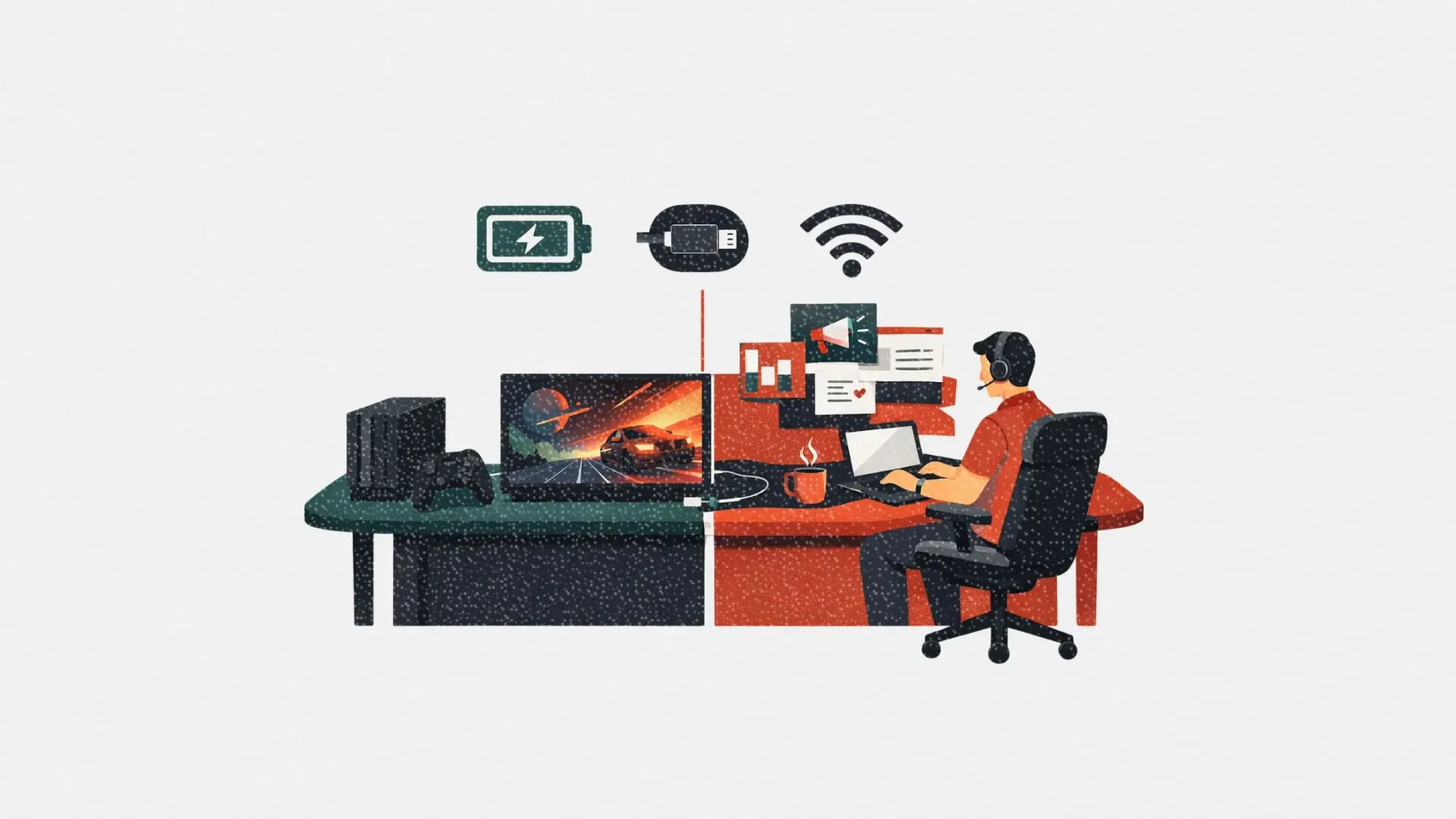
Let’s be honest — marketers don’t spend much time thinking about hardware beyond laptops and ring lights. But maybe we should. Because when it comes to building powerful, portable setups that actually work in the real world, no one’s innovating faster than gamers.
Why should marketers care? Because modern marketing work is visual, collaborative, and mobile. Whether you're running a hybrid team, editing a last-minute video asset, or presenting a pitch deck on the road, your screen is your battlefield. And the standard laptop display isn’t cutting it anymore.
Enter flexible OLED displays and portable monitors with battery power. Originally built for console and PC gamers, these screens offer marketers a smarter way to work across locations, devices, and workflows — without dragging around clunky gear or sacrificing performance.
In this article, we explore how display tech from the gaming world is reshaping mobile productivity, why it matters for marketers, and what to look for in your next monitor upgrade.
Short on time?
Here’s a table of contents for quick access:
- Why gamers are ahead on flexible, high-performance setups
- The role of the flexible OLED display in mobile productivity
- Portable monitor with battery: a must-have for marketers on the move
- How external monitors for laptops boost creative performance
- What marketers should know: gear picks and setup strategies
Why gamers are ahead on flexible, high-performance setups
Gamers are known for chasing performance, and they’ve found a winning combo in flexible OLED monitors. These displays roll up, bend, or curve to fit different setups, whether you’re in a cramped dorm room or playing from a hotel. That same flexibility applies perfectly to marketers who jump between workspaces, client meetings, and content shoots.
Pair that with built-in batteries, high refresh rates, and USB-C connectivity, and you’ve got an ultra-portable, no-compromise display that’s ideal for hybrid work too. Where traditional marketers might carry a clunky laptop and squint at small screens all day, these displays offer freedom and full-screen performance.
The role of the flexible OLED display in mobile productivity
Marketers often toggle between spreadsheets, pitch decks, video calls, and design tools. A flexible OLED display makes multitasking more fluid, especially if you’re working on visual content or campaigns that require rich color accuracy.
These displays are not just thinner and lighter. They deliver deeper blacks, sharper contrast, and more accurate color. Whether you're editing a video, designing a social ad, or walking a client through a campaign preview, this kind of display clarity matters.
Gamers might use them to dodge bullets in Halo, but marketers can benefit just as much from that immersive, adaptable visual quality.
Portable monitor with battery: a must-have for marketers on the move
One key upgrade gamers swear by is the portable monitor with battery. Instead of needing an outlet to power up, these screens run independently for up to 6 hours. That’s plenty for a client meeting, coworking session, or in-transit content sprint.
No more hunting for power outlets at conferences or cafés. With a portable display, you can expand your screen real estate instantly and work more comfortably from anywhere. They’re lightweight (often under 1.5kg) and packable, making them perfect for marketers who travel often or work out of bags.
How external monitors for laptops boost creative performance
Creative marketers, from video editors to brand designers, already know the pain of working on a single small screen. An external monitor for laptop setups isn’t new, but a flexible or portable version that works across consoles and laptops is a next-level upgrade.
With HDMI 2.1 and USB-C Power Delivery support, these monitors connect easily to laptops, tablets, and even phones. No adapters or dongles required. Whether you’re on a MacBook or a gaming PC, they offer higher refresh rates, faster response times, and better visuals than traditional monitors in the same price bracket.
What marketers should know: gear picks and setup strategies
If you’re ready to take a page from the gaming world, here are a few things to look for in a flexible or portable monitor:
- Resolution: 1080p is the baseline, but 4K OLED brings sharper presentations and better visuals for design tasks
- Refresh rate: Higher refresh rates (like 120Hz) aren’t just for gaming. They make scrolling and UI transitions smoother
- Connectivity: USB-C with Power Delivery is a game changer. One cable to power your monitor and feed your laptop display
- Battery life: Look for at least 4 to 6 hours if you’re going to use it unplugged during workdays
- Durability: A sturdy build with scratch-resistant coatings means you can toss it in your bag without worry
If your remote setup still relies on a basic second screen or, worse, none at all, these new displays offer a serious productivity boost. They're fast, flexible, and built for high performance. These are the same qualities marketers need when moving between meetings, client presentations, or content creation sessions.
While gamers may have led the charge on flexible OLED displays and portable monitors with battery, marketers are catching up fast. In a world where performance, portability, and flexibility define success, adopting tools built for gaming can help marketers build more adaptable, efficient work setups.
By integrating a flexible external monitor for laptop setups or investing in portable display tech, marketers can create high-performing hybrid workstations that travel as well as they perform. And in today’s always-on marketing world, that edge matters.