
Glico and SM Cinema bring Pocky’s 60th anniversary moment to Cebu
Glico and SM Cinema renew for a third year, keep Pocky exclusive, and use Cebu to signal a broader push beyond Metro Manila.


Glico Philippines has learned something simple about movie culture: snacks are part of the ritual, and people get weirdly loyal about what they buy at the counter. That is especially true when the product comes with a familiar “how you eat it” habit that friends can copy in real time.
Now that Pocky is in its 60th anniversary year, the brand is leaning into that shared-behaviour energy, using cinemas as a place where groups naturally try things together. The details were outlined in the company’s official announcement.
Table of contents
Jump to each section:
- What changed in Glico and SM Cinema’s third-year partnership
- Why Cebu matters for brand moments built on community
- How “Tap, Snap, Nibble” turns a snack into a shareable ritual
- What marketers should know about cinema retail partnerships
 ContentGrip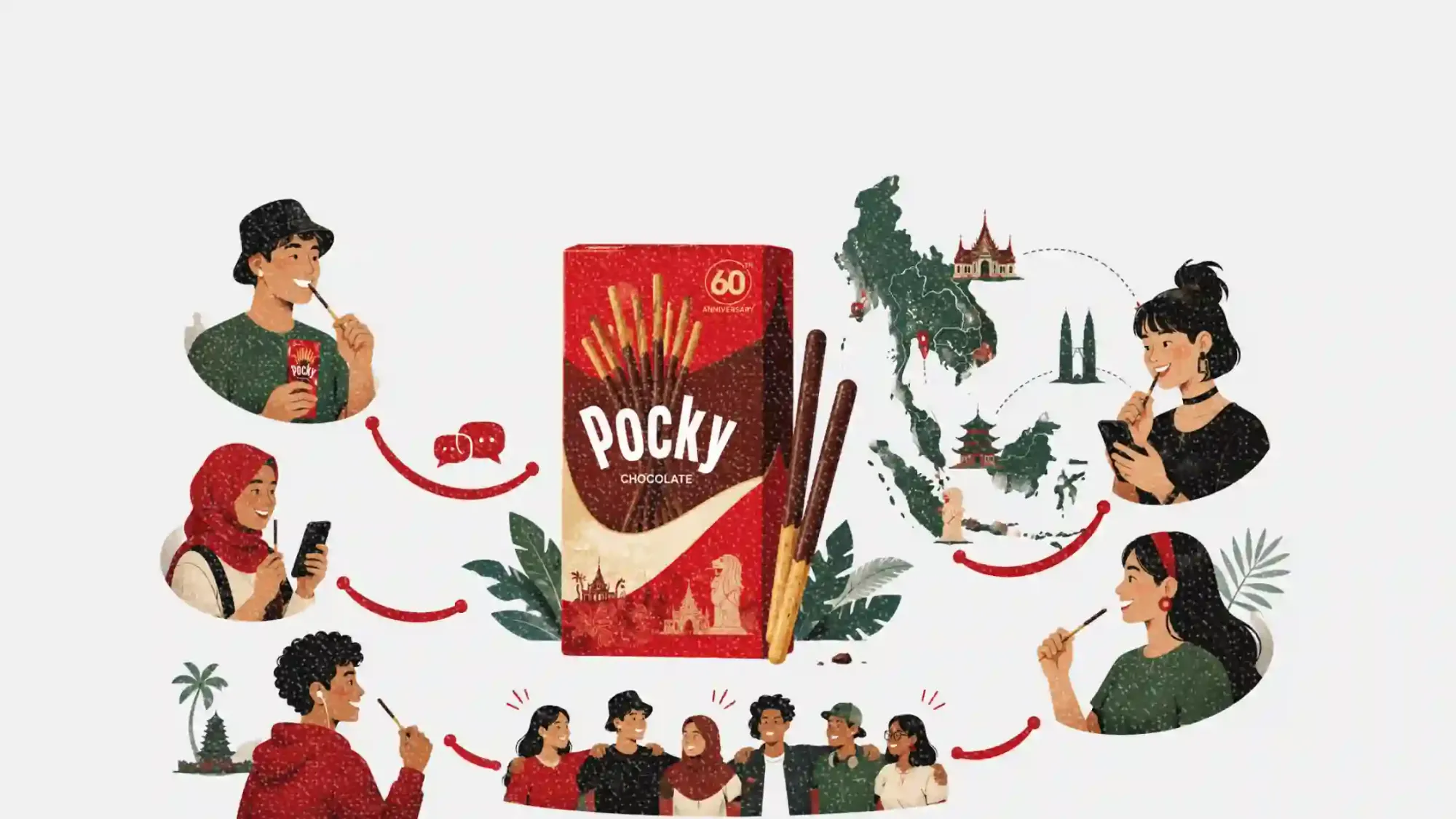
What changed in Glico and SM Cinema’s third-year partnership
Glico Philippines and SM Cinema renewed their partnership for a third consecutive year, keeping Pocky as the exclusive biscuit brand at SM Cinema Snack Time counters nationwide.
The latest renewal was marked with an exclusive screening at SM City Cebu on 4 August, which also signalled a shift in how the partnership is being celebrated: outside Metro Manila for the first time.
Operationally, the partnership places Pocky across SM Cinema’s network, with availability at 103 Snack Time counters across 79 cinemas.
Why Cebu matters for brand moments built on community
For consumer brands, “national” partnerships can still end up feeling Metro Manila centric in how they show up through events, attention, and storytelling. Moving a milestone moment to Cebu is a straightforward way to communicate that the campaign is meant for regional communities too, not just as distribution points.
Glico framed Cebu as a starting point for widening its audience circle, while also describing the city’s warmth and community identity as a fit for the brand’s “Connect with a smile” campaign.
SM Cinema also tied the decision to its own experience-led positioning, saying its goal is to create moments that bring people together. The location choice is backed by footprint: SM Cinema operates 17 cinemas across 12 cities in the Visayas and Mindanao, while Cebu is a commercial hub for the Visayas.
How “Tap, Snap, Nibble” turns a snack into a shareable ritual
At the Cebu event, regional audiences got an early look at Pocky’s refreshed product range and a new “Tap, Snap, Nibble” ritual, designed to add playful interaction to an established snacking habit. The ritual encourages consumers to tap, snap the biscuit stick, and nibble its coating.
This matters because rituals travel faster than product claims. If you can describe how to eat something in three verbs, you have basically created a micro-script that friends can copy in a cinema seat, and that can be repeated anywhere the product is sold.
The refreshed range includes updated packaging across Chocolate, Strawberry, Cookies & Cream, Milky Matcha, Milk Chocolate and Milk, with brighter graphics designed to feel more contemporary. Pocky Chocolate also received an improved recipe, which Glico said delivers a crispier and more chocolatey product.
The brand context is also doing work here: Pocky was introduced by Ezaki Glico in 1966 and is known for its chocolate-coated biscuit stick format, including an uncoated section meant to keep consumers from getting chocolate on their fingers. In cinema settings, that “clean hand” design is not a small detail. It fits the environment.
What marketers should know about cinema retail partnerships
Cinema partnerships are not just about placement. They are about attaching your product to a behaviour people already do in groups.
- Treat the venue like a social ritual, not a billboard
The strongest part of the cinema setting is that people arrive already primed to share reactions, snacks, and little in-jokes. A product that encourages a small group behaviour (like “Tap, Snap, Nibble”) fits that social pacing. - Regional moments can do more than extra reach
Taking the celebration to Cebu reframes the partnership as genuinely nationwide, especially when the distribution network already spans many cities. Events become a signal of who is being included, not just where the product is sold. - Package refreshes land better when people can try it together
Updated packaging and recipe improvements are easy to ignore in isolation. In a shared setting like a cinema, “try this” becomes a friend-to-friend prompt, which can make small product changes feel more noticeable. - Exclusive counter presence is only valuable if it stays culturally natural
Exclusivity at Snack Time counters creates a dependable purchase path, but the brand still has to feel like it belongs in that moment. Pocky’s format (including the uncoated handle) aligns with moviegoing behaviour, which helps it avoid feeling forced.
Cinema partnerships like this show how offline distribution can still feel “community-led” when the brand builds an experience people can repeat, describe, and share with the group they came with. It is less about a one-night event and more about turning a familiar product into part of a recurring habit.
For marketers, the bigger signal is that consumer brands are increasingly competing on rituals and shareability, not just flavour variants. When the product experience can be explained quickly and copied instantly, venues with built-in group behaviour, like cinemas, become powerful places to scale that habit.