Alphabet sidesteps questions on rumored Apple AI deal
Google won’t explain its role in Siri’s future, and that silence is strategic

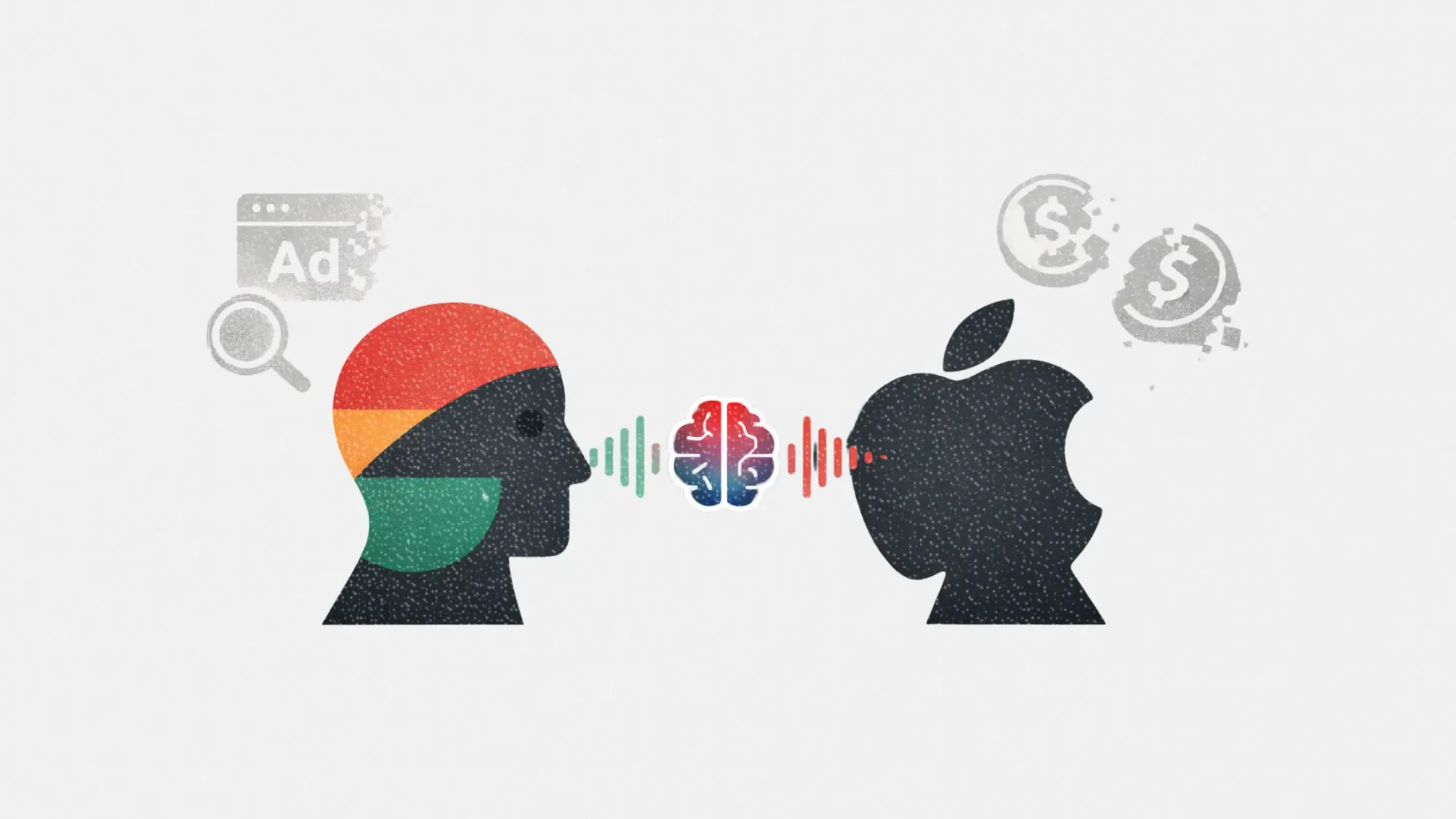
Google parent Alphabet is keeping quiet on its latest AI partnership with Apple — even when pressed by investors during its Q4 2025 earnings call.
An analyst asked directly about how Alphabet is thinking about high-stakes AI partnerships like the rumored deal to power Siri using Google’s Gemini models. The company ignored the question entirely. Not even a placeholder answer.
This article explores what that silence tells us, how the Apple-Google dynamic is shifting in the AI era, and why marketers should care about the long-term implications for search, ads, and audience access.
Short on time?
Here’s a table of contents for quick access:
- What happened during Alphabet’s Q4 earnings call
- Why the Google-Apple partnership matters in AI
- What marketers should know about the shift to AI-first search
 Patrecia Meliana
What happened during Alphabet's Q4 earnings call
On Alphabet’s Q4 2025 earnings call, executives gave no real insight into Google’s rumored AI partnership with Apple — a deal speculated to be worth US$1 billion annually. The analyst question about AI partnerships was simply ignored.
Sundar Pichai’s only mention of Apple came in the form of a vague remark: Google is Apple’s “preferred cloud provider” and will help develop “next-generation Apple foundation models based on Gemini technology.” Chief Business Officer Philipp Schindler repeated the same phrasing verbatim.
For a partnership that could reshape Siri’s core functionality and potentially shift AI interface dominance, the lack of commentary wasn’t just evasive — it was strategic.
Why the Google-Apple partnership matters in AI
Historically, Apple and Google’s relationship has been defined by search: Google reportedly pays Apple around US$20 billion to remain the default search engine across Apple devices. That exchange gave Google access to Apple’s massive installed base — now 2.5 billion active devices globally.
This new AI arrangement, though, doesn’t follow the same playbook. If Google powers AI for Siri, it’s not just about keeping users inside Search. It’s about embedding Gemini deeper into Apple’s voice assistant and user experience — potentially bypassing traditional ad formats.
For Google, that’s both a threat and an experiment. In Google’s own Search Generative Experience (SGE), ads are currently being tested inside AI-mode answers, but it’s unclear how scalable or effective they’ll be. The revenue model for AI-first search is still a work in progress.
Meanwhile, rival Anthropic is directly challenging the ad-driven approach. Its Super Bowl campaign is expected to position its Claude AI as a more privacy-first alternative to ad-supported assistants like Google’s.
What marketers should know about the shift to AI-first search
The silence from Alphabet isn’t just corporate posturing. It signals that the future of AI search — and monetization — is still in flux. For marketers and brand strategists, that opens up several key implications:
- Ad visibility in AI experiences is unproven
Unlike traditional search results, AI responses often summarize rather than direct. That limits opportunities for link-based ads or even branded content exposure.
- Owned content may matter more than paid
As AI assistants like Siri or Gemini summarize answers from across the web, high-quality owned content could become a key driver of discoverability.
- Platform dependency is rising
If Gemini becomes deeply embedded in Apple devices, marketers may be dealing with yet another AI gatekeeper — this time mediated by Apple’s UX and Google’s models.
Ultimately, if Google’s Gemini becomes the brain behind Siri, brands may need to rethink how their content, commerce, and customer support shows up in AI-native environments.
Alphabet’s refusal to discuss the Apple AI deal isn’t just a missed PR moment — it’s a calculated move. The company knows this partnership could redefine not just Siri, but how search, advertising, and AI interact across platforms.
Marketers should keep a close eye on how Google integrates Gemini into third-party ecosystems. Silence from the top doesn’t mean nothing’s happening — it usually means something big is.