Google’s AI fashion app Doppl gets a TikTok-style shopping feed
Google’s AI try-on app now includes a scrollable, shoppable feed. Here’s what this means for marketers


Google has introduced a new shoppable discovery feed in Doppl, the company’s experimental AI-powered fashion app. Designed to help users explore new styles and virtually try on clothes, the feature combines short-form video content with personalized outfit suggestions, all generated entirely by AI.
The move signals Google’s latest push into visual commerce and AI-driven retail experiences. While it’s still a test via Google Labs, this update reflects a broader shift in how users discover and buy fashion online. For marketers, the question is no longer if AI will impact retail, but how platforms will shape the customer journey next.
This article explores what Doppl’s new feed does, why it matters now, and what marketers should pay attention to as AI-generated content enters the fashion e-commerce mix.
Short on time?
Here is a table of content for quick access:
- What is Doppl’s new AI shopping feed?
- Why now? Visual feeds and AI shopping are converging
- What marketers should know
 Patrecia Meliana
What is Doppl's new AI shopping feed?
Google Doppl now features a vertically scrolling discovery feed, similar in format to TikTok or Instagram Reels. However, there’s one major difference: every video is generated by AI. No influencers. No selfies. Just your digital twin modeling outfits.
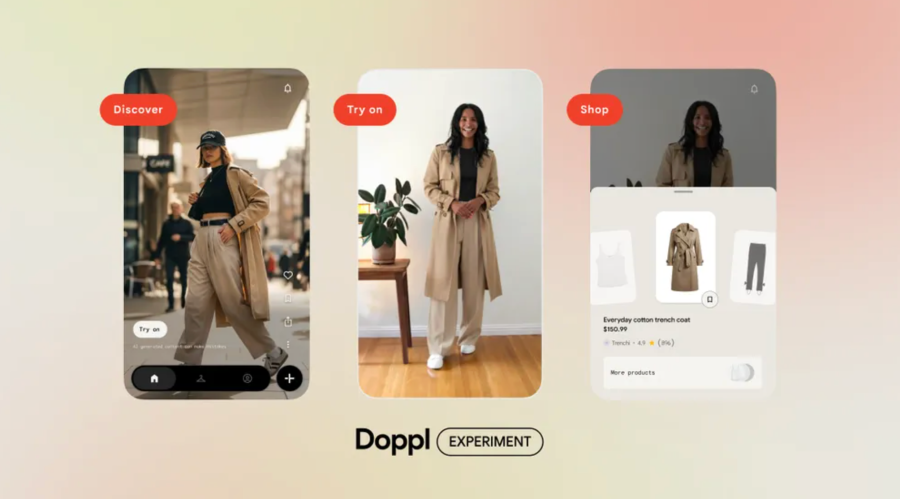
Here’s how it works:
- The feed showcases AI-generated videos of clothing based on real products from retail partners
- Users can tap on these videos to virtually try on items using a 3D avatar of themselves
- Nearly every product shown is shoppable, with direct merchant links embedded
Google builds your style profile using the preferences you input and the items you interact with inside Doppl. Based on that data, the app suggests outfits and visuals tailored to your taste.
This feature is currently live on iOS and Android in the U.S., available to users 18 and older.
Why now? Visual feeds and AI shopping are converging
The Doppl update reflects a growing trend: merging AI personalization with mobile-native shopping. Platforms like TikTok and Instagram have already proven how powerful short-form video is in driving impulse purchases. But while those platforms rely on influencers and user-generated content, Google is experimenting with a fully AI-generated format.
That’s a big shift. Doppl replaces influencers with algorithms, and static product pages with interactive, personalized visuals. It’s part of a broader e-commerce play where:
- Discovery starts with a feed (like TikTok)
- Try-on happens in-app (like Snap’s AR)
- Checkout goes directly to merchants (like Amazon or Instagram Shops)
And Google isn’t alone. Meta is testing a feed of AI-generated videos called “Vibes” inside the Meta AI app. OpenAI launched Sora, a platform dedicated entirely to AI video content.
What used to feel uncanny, like AI avatars and synthetic try-ons, is quickly becoming standard. The question is whether consumers will adopt it at scale.
What marketers should know
For brands navigating retail, AI, and influencer marketing, Doppl’s new feed is worth watching closely. Here are the key strategic takeaways:
1. AI-led discovery is now part of the shopping funnel
Marketers have spent the last decade optimizing for influencer posts, SEO, and product pages. Doppl introduces a new entry point: personalized AI video. If platforms like this gain traction, content strategy will need to adapt from briefing creators to briefing algorithms.
2. Google is skipping creators for now
Unlike TikTok or Instagram, where UGC drives visibility, Doppl’s feed runs entirely on AI. That means less reliance (for now) on influencer campaigns. It also opens the door for first-party brand assets to be used as training inputs for AI styling.
3. Visual format, minus the production costs
Short-form video has high ROI, but it’s expensive to scale. Doppl automates this process, letting brands theoretically reach users with personalized outfit videos without the studio shoot. If Google opens this feed to brands directly, it could lower the barrier for small fashion labels or DTC startups to participate.
4. It’s a signal of Google’s ecomm intent
This isn’t just a Labs experiment. It’s a testbed for how Google might integrate AI and shopping across Search, YouTube, and more. As Google continues to compete with Amazon for product discovery, Doppl might preview features we’ll see elsewhere soon.
Doppl’s new AI shopping feed is less about fashion and more about testing what AI-driven retail could look like. It’s not trying to replace TikTok, but it is learning from it and skipping the messy parts of creator partnerships and manual content creation.
For marketers, the key isn’t to chase every new platform but to understand the mechanics behind them. If synthetic content becomes normal, your brand strategy should plan for how, when, and where to show up in these algorithmic discovery feeds.