Google tests merging AI Overviews and AI Mode
Google combines AI Overviews and AI Mode in Search. Marketers should watch this shift closely

Google has begun testing a new search feature that blends its AI Overviews with AI Mode, creating a single, fluid experience for users to explore topics more deeply using conversational follow-ups.
(1/2) Today we’re starting to test a new way to seamlessly go deeper in AI Mode directly from the Search results page on mobile, globally.
— Robby Stein (@rmstein) December 1, 2025
This brings us closer to our vision for Search: just ask whatever’s on your mind – no matter how long or complex – and find exactly what you… pic.twitter.com/mcCS7oT2FI
In this article, we explore what this new test involves, why it matters for marketers, and how it could impact SEO and content visibility strategies moving forward.
Short on time?
Here’s a table of contents for quick access:
 Patrecia Meliana
What's changing in Google Search?
Google’s AI Overviews — the summary cards that now frequently top search results — have been a major shift in how users interact with Search. But until now, diving deeper into a topic meant manually switching to the separate AI Mode tab.
With this latest test, Google is allowing users to transition seamlessly from a passive AI Overview to an active, Gemini-powered conversation. The update, currently rolling out on mobile devices globally, enables users to ask follow-up questions within the same search interface.
This evolution builds on Google’s broader Gemini strategy. Robby Stein, VP of Product for Google Search, said in an X post that the goal is to eliminate friction: “You shouldn’t have to think about where or how to ask your question.” In short, search is shifting from static input to dynamic dialogue.
This test also arrives at a pivotal time. OpenAI is reportedly in “Code Red” mode, reprioritizing product timelines in response to Google’s recent moves. With AI Overviews reportedly reaching 2 billion users monthly and Gemini now boasting over 650 million users, the overlap could mark a turning point in AI adoption across the consumer web.
 Patrecia Meliana
Why this matters for marketers
This new Gemini-infused Search model isn't just a product tweak. It could signal a deeper shift in how users engage with information online. That brings up several critical implications for marketers and SEO professionals.
Most notably, Google is nudging users toward longer, more exploratory sessions within its own ecosystem. Instead of clicking through to publisher or brand websites, users may find answers — and now deeper insights — directly inside Search.
This creates tension between user convenience and content visibility. If your audience doesn’t need to leave Google to find what they’re looking for, your site traffic could take a hit.
What marketers should do next
To stay ahead of these AI-driven changes, here are three strategic moves marketers should consider:
1. Audit your SEO for AI Overviews readiness
AI Overviews summarize content pulled from across the web. That makes it critical for your site to be structured in a way that supports snippet-ready answers. Focus on clear, concise content that directly answers common user questions. Use structured data markup and FAQ formats where appropriate.
 Atikah Amalia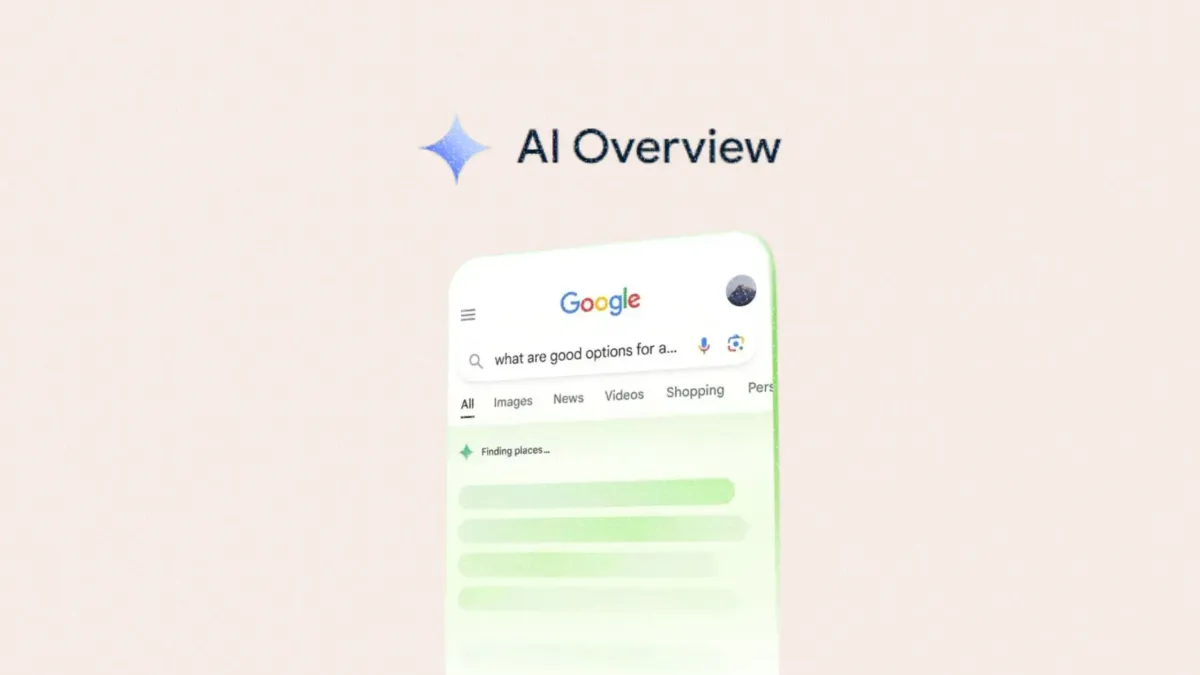
2. Optimize for deeper intent, not just keywords
As Gemini enables follow-up queries, the focus of SEO may shift from single-query targeting to query chains. That means your content strategy should support depth. Anticipate related questions your audience may have and address them within the same page or via smart internal linking.
3. Consider Gemini-friendly content formats
If Search becomes more conversational, formats that lend themselves to natural language (like how-tos, explainer articles, and user-focused FAQs) could see stronger performance. Pair this with well-tagged visual content to increase the chance of being cited in AI Overviews.
Google’s experiment shows that the search journey is becoming more fluid and less linear. Marketers will need to go beyond chasing keywords and start designing content that fits into multi-turn, AI-guided discovery.
Staying visible means aligning with how Gemini thinks, not just how users type.