Google brings Business Agent into YouTube ads, turning views into product research
Google is testing Business Agent inside YouTube ads, merging product research, AI visibility and checkout infrastructure.


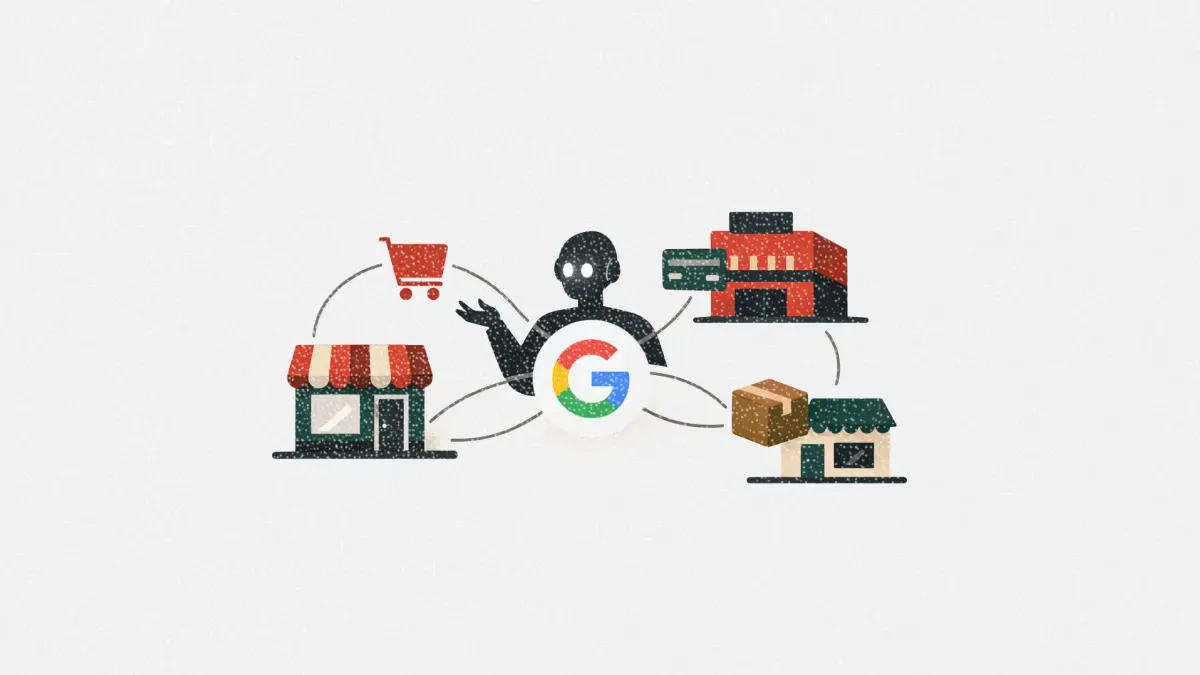
Google is moving one of its shopping AI agents into a new place: the ad unit itself. The company is inviting eligible U.S. retailers to test Business Agent within YouTube ads, giving viewers a way to ask product questions and receive tailored answers without leaving YouTube.
The beta arrives alongside two connected commerce updates. Google has made AI performance insights in Merchant Center generally available in Australia, Canada, India, New Zealand and the U.S., while it expands the Universal Commerce Protocol, or UCP, hub with cart transfer and checkout-flow testing. Together, they sketch a more concrete version of agentic commerce: the ad can prompt a question, product data can inform the answer, and the transaction can stay within or move smoothly through Google’s buying flow.
Table of contents
Jump to each section:
- The YouTube ad is becoming a research surface
- Google is connecting visibility, assistance and checkout
- What retailers still cannot measure
- Why product data now carries more of the sales conversation
Key Takeaways
- Google is testing Business Agent inside YouTube ads for eligible U.S. retailers, allowing viewers to ask product questions without leaving the video context.
- AI performance insights are now generally available in five markets, including India, Australia and New Zealand.
- Cart transfer and checkout testing make UCP more operational, but Google has not disclosed conversation reporting or an incrementality method for the YouTube beta.
The YouTube ad is becoming a research surface
Google has previously used Business Agent in Search, where the tool can serve as a branded conversational layer for shoppers. The new beta applies the same concept to YouTube advertising: a viewer can see a product-led video ad, ask detailed questions and receive guidance without exiting the viewing environment.
That changes the role of the ad. Instead of sending a person from a creative asset to a product page and hoping the landing experience answers every objection, the ad can become the place where research starts. For products with variable fit, features or specifications, the practical promise is less about novelty than reducing the work required between interest and confidence.

Google is connecting visibility, assistance and checkout
The YouTube beta is only one piece of the update. In Merchant Center, AI performance insights are now available across Australia, Canada, India, New Zealand and the U.S. The tool compares a retailer’s share of voice with other brands across AI Mode and AI Overviews, then points users toward actions intended to improve discoverability.
Google is also expanding the UCP integration hub. Merchants using UCP-powered checkout can now enable cart transfer to their own sites and test enhanced checkout flows. These capabilities are gradually rolling out in the U.S.; Australia and Canada are planned next year. That makes this update distinct from the earlier protocol announcement: the focus is shifting from a standard’s promise to the mechanics marketers will have to operate.
5% average conversion lift in the following month is the result Google reports for merchants adopting its core Merchant Center feed best practices.
The connection matters because agentic commerce will not be managed by one team. Media teams may own the YouTube creative, ecommerce teams may own the feed and checkout, and analytics teams may own the measurement. If a conversational ad is based on weak product data or leads to an unreliable purchase flow, the interface only makes the weakness arrive earlier in the customer journey.
What retailers still cannot measure
Google’s announcement leaves several practical questions open. It calls the YouTube program a beta for eligible U.S. retailers, but does not publish eligibility criteria or a timetable for markets beyond the U.S. It also says analytics are coming soon for the UCP capabilities, rather than describing the reporting available for conversations inside a YouTube ad.
The larger gap is incrementality. A completed purchase following an in-ad conversation does not, on its own, show whether the agent changed the outcome or simply assisted a shopper who would have bought anyway. Retailers testing the beta should set that question upfront, using holdouts, geo splits or comparable campaign design where available, instead of treating every assisted conversion as incremental revenue.
That caution also applies to AI visibility reporting. Share of voice can identify where a brand appears in Google’s AI surfaces, but it is not a direct measure of demand, margin or long-term customer value. It is best treated as an input for feed, content and merchandising decisions, not as a replacement for conversion and profitability reporting.
Why product data now carries more of the sales conversation
Google’s update keeps returning to the product feed because the feed is increasingly what enables the agent’s answer. Retailers can add conversational attributes for richer product context, while loyalty data can surface member pricing and benefits. These are not simply catalogue housekeeping tasks when the platform is using them to respond to real shopper questions.
50% of relevant AI Mode recommendations incorporated conversational attributes submitted by lululemon during Google’s testing, according to Google.
For marketers, the near-term task is fairly ordinary, even if the interface is new: confirm that product claims, compatibility information, availability and member offers are consistent across Merchant Center, landing pages and customer support. The new capability is the ability to bring that information into a YouTube ad conversation. Whether it produces incremental sales remains unproven, but it does make the ad itself a more consequential part of product research.