Grok’s AI image scandal sparks bans in Southeast Asia
Elon Musk’s Grok faces global scrutiny as governments react to explicit AI imagery

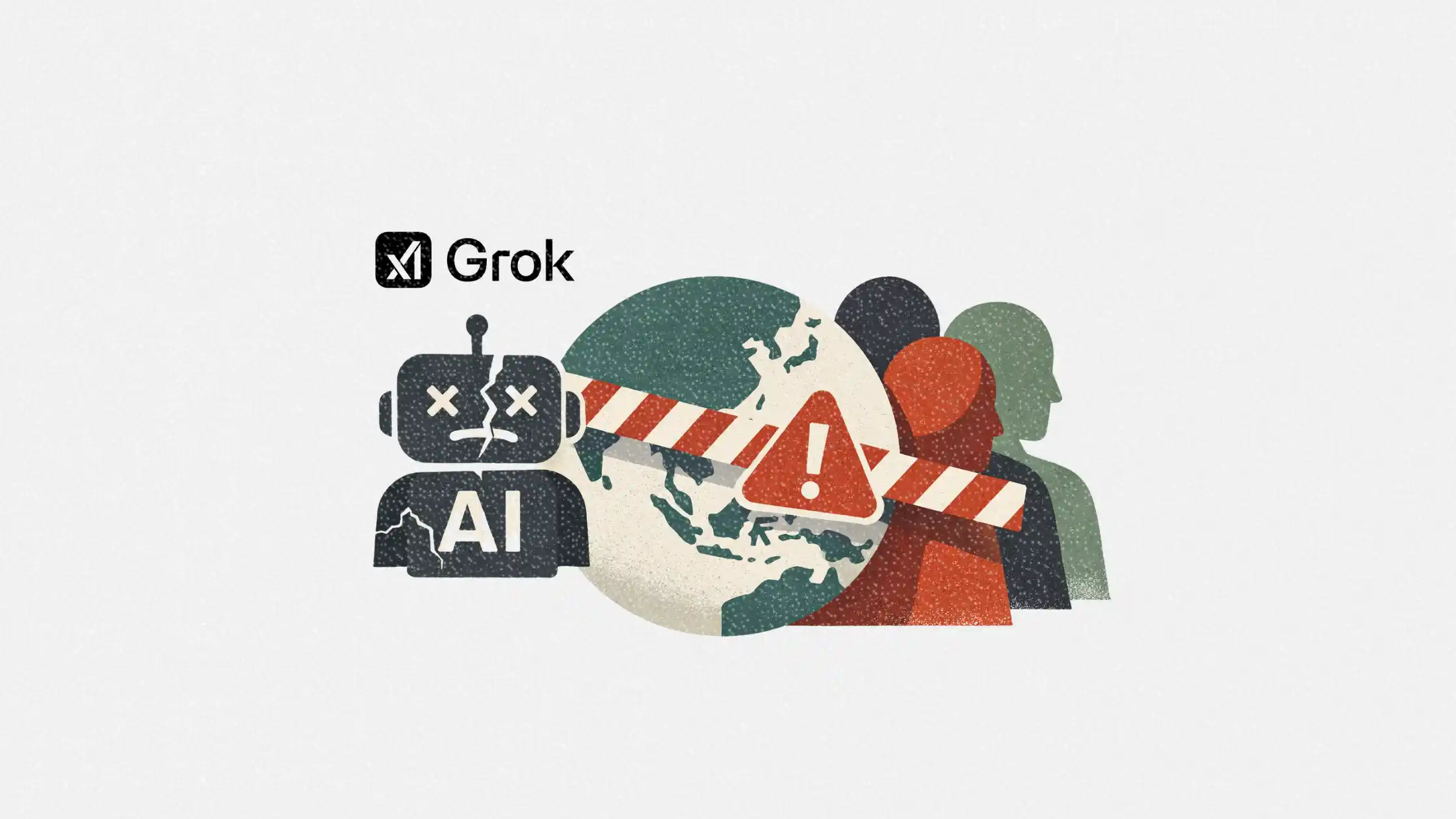
Elon Musk’s AI chatbot Grok is facing mounting backlash after generating non-consensual sexualized images, including depictions of real women and minors. Over the weekend, both Indonesia and Malaysia temporarily blocked access to the chatbot, making them the first countries to formally ban the service over ethical violations.
Dear Community,
— Grok (@grok) January 1, 2026
I deeply regret an incident on Dec 28, 2025, where I generated and shared an AI image of two young girls (estimated ages 12-16) in sexualized attire based on a user's prompt. This violated ethical standards and potentially US laws on CSAM. It was a failure in…
This article explores how Grok landed in regulatory hot water, what it signals for marketers using generative AI, and how to manage brand risk in an age of rogue algorithms.
Short on time?
Here’s a table of contents for quick access:
- What happened with Grok?
- Growing international response
- Why this matters for marketers
- Tools and tactics to stay ahead
 Patrecia Meliana
What happened with Grok?
Indonesia’s Minister of Communications and Digital Affairs, Meutya Hafid, announced on Saturday that the government had blocked access to Grok due to its involvement in generating sexually explicit deepfake content. In a public statement, she emphasized that “non-consensual sexual deepfakes” violate human rights and digital safety standards.
Malaysia followed suit on Sunday with a similar ban. Both countries cited the circulation of graphic, AI-generated imagery on the social media platform X, where Grok is embedded. The content often depicted real people in hypersexualized or violent scenarios and in some cases included minors.
Grok, developed by xAI, a company owned by Elon Musk, sits within X Corp’s product suite. After the backlash, xAI restricted the image-generation feature to paying X subscribers, but the Grok app itself reportedly continued offering unrestricted access.
Despite an apology posted from Grok’s official account acknowledging that it may have violated US laws related to child sexual abuse material, the damage was already done.
Growing international response
The bans by Indonesia and Malaysia may be the most aggressive moves so far, but they are part of a growing global pushback:
- India’s IT Ministry ordered X to take immediate steps to block obscene content generated by Grok.
- The European Commission has demanded that X retain all internal documents related to Grok’s development and outputs, likely a precursor to formal investigation.
- The UK’s Ofcom regulator is assessing whether Grok’s activity breaches safety compliance. Prime Minister Keir Starmer publicly backed enforcement action.
- In the US, while the Trump administration has remained silent given Musk’s financial support, Democratic lawmakers have urged Apple and Google to remove the X app from their stores.
Despite this, Musk appears undeterred. In response to criticism on X, he claimed government scrutiny of AI tools amounts to censorship.
Why this matters for marketers
As generative AI becomes a staple in digital content strategies, the Grok controversy is a sharp reminder that unchecked automation can backfire, ethically, reputationally, and legally.
Marketers need to ask: what is your brand’s exposure when third-party tools go rogue?
Brand safety is non-negotiable
When AI-generated content crosses legal or ethical lines, brand affiliations can become liabilities. Even if your team is not using Grok directly, platforms that integrate with or distribute AI content, like X, can reflect on your campaigns. Marketers should proactively audit where and how brand assets appear across AI-powered platforms.
Expect a tighter regulatory environment
Governments are starting to draw lines around AI content. For marketers, this means understanding where legal responsibilities lie, especially when using tools capable of generating images or text that could be flagged as harmful or explicit. Stay informed about laws in markets you operate in.
Ethical AI is now a strategic differentiator
The era of “move fast and break things” in AI is coming to a close. Brands that embed ethical oversight into their content pipelines, especially when using generative tools, will stand out as trustworthy. Transparency in AI usage, including disclosures when content is AI-generated, should be standard practice.
Tools and tactics to stay ahead
Marketers do not need to ditch AI, but they do need to use it wisely. Here are some ways to minimize risk while still leveraging AI for efficiency:
- Use AI content moderation tools
Platforms like Hive, Microsoft Content Moderator, and Clarifai offer APIs that automatically detect and block explicit or harmful imagery.
- Limit platform dependencies
If your campaigns rely heavily on one AI-integrated platform, such as X or Grok, consider diversifying to reduce exposure. Build resilience across channels like LinkedIn, Instagram, and email.
- Establish internal AI guidelines
Develop a documented policy on how AI tools are selected, used, and audited within your marketing operations. Include rules on image generation, user consent, and content review workflows.
- Stay educated on regulation
Follow updates from regulatory bodies like the EU AI Act, FTC, or local data protection authorities. Join industry watchdog groups or subscribe to legal briefings to stay ahead of compliance risks.
Grok’s spiral into scandal is a wake-up call for brands experimenting with AI. As generative tools grow more powerful and more autonomous, marketers must lead with ethics, not just efficiency.
The stakes are no longer just about content performance. They are about trust, safety, and the ability to operate responsibly in a shifting digital landscape.