
Gretchen Moore: Hilton's Stay strategy is really about memory
Hilton's Gretchen Moore explains how the Deepika Padukone campaign links cultural relevance, loyalty, and the hotel stay.

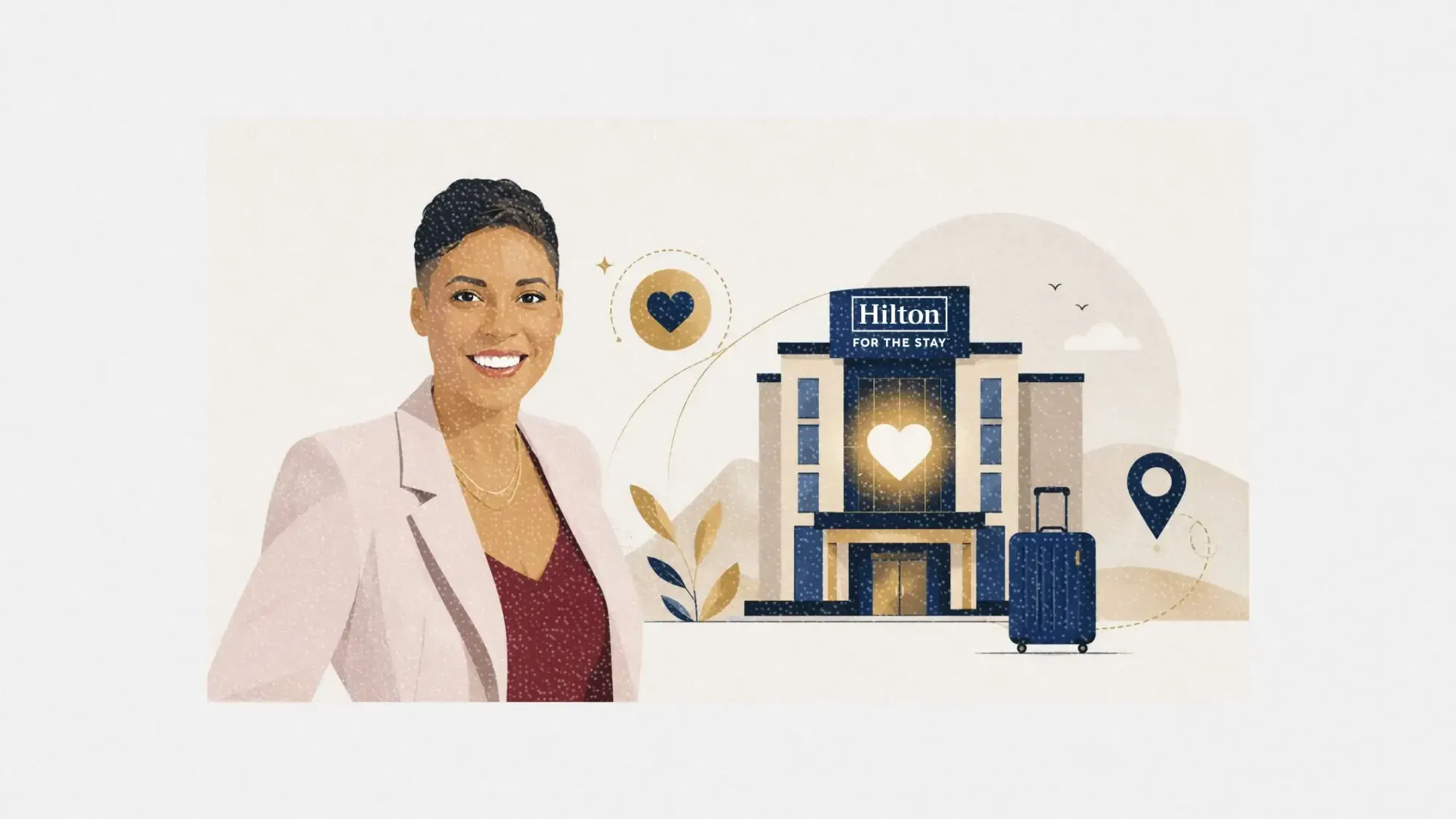
As travel brands increasingly compete on emotion rather than destination alone, Hilton's latest campaign with Deepika Padukone, one of India's most internationally recognized actors and a global brand ambassador, aims to remind travelers that the hotel stay itself can be the most memorable part of the journey.
Launched as part of Hilton's broader brand strategy in Asia Pacific, The Stay highlights the transformative power of hospitality while reinforcing Hilton's growing presence in key markets, including India.
Following the launch of the campaign, ContentGrip spoke with Gretchen Moore, Vice President of Marketing and Loyalty, Asia Pacific at Hilton, about the strategy behind the campaign, why Deepika Padukone was the right partner, and how The Stay reflects Hilton's broader growth ambitions across the region.
In this interview, Gretchen discusses the campaign's creative vision, the role of loyalty in modern hospitality marketing, and why memorable stays remain at the heart of Hilton's brand promise.
Table of contents
Jump to each section:
- The stay becomes the product
- Reach is only the first proof point
- Local culture needs a global spine
- Loyalty has to feel less like accounting
- The strategic lesson for APAC marketers
The stay becomes the product
Hilton's campaign is built around a subtle reframing. It does not ignore the destination, but it refuses to let the destination own the whole story. Gretchen says the campaign starts from the idea that "the Stay is what defines how a journey feels."
That matters because travel marketing often treats the hotel as infrastructure. The destination creates desire, while the hotel becomes a booking decision. Hilton is trying to reverse that hierarchy. In Gretchen's words, the power of hospitality is about making people feel "cared for, supported, happy, and free to be themselves."
For Indian travelers, she describes a modern life that is full, fast, and constantly moving. At home, people have familiar support systems. When they travel, those systems disappear. Hilton's role, as Gretchen frames it, is to become part of that missing support system through people, service, space, technology, and loyalty.
Deepika Padukone gives that idea a human face. Gretchen says the campaign shows a lighter and more personal side of Deepika so audiences can see what happens when a person feels genuinely cared for: "You can let go, be present, and simply be yourself."
 Patrecia Meliana
Reach is only the first proof point
The campaign's 11 billion-view benchmark is an obvious headline. Gretchen does not dismiss it. She says Hilton was "genuinely blown away by the scale of the audience that resonated with the work." But she also argues that "reach is only the starting point."
That distinction is important. View counts can prove distribution, but they do not prove preference. Gretchen says Hilton looks at both traditional performance metrics and longer-term indicators such as brand salience, brand consideration, brand equity, relevance, and loyalty. She says the work with Deepika has delivered measurable lifts in India, including branded search, website traffic, and brand consideration.
The more interesting part of her answer is what she refuses to reduce to a dashboard. "Numbers alone don't tell the full story," she says. The campaign is meant to enter existing cultural conversations in India, not create a separate fan base around the brand.
Her formulation is useful for marketers chasing culture-led campaigns: "A brand job isn't to create a new fandom - it's to show up authentically within the fandoms that already exist and demonstrate that you're the brand for them."
That is a high bar. It means the celebrity is not the strategy by itself. The celebrity is a way into a cultural context where the brand still has to behave credibly. If the hotel stay does not connect naturally to the feeling the campaign dramatizes, the attention collapses back into paid reach.
Local culture needs a global spine

India is not just a media market in this story. It is part of Hilton's growth plan. Gretchen says Hilton sees India as one of the world's most dynamic and important growth markets, and she connects that opportunity to Hilton's long history of growing alongside communities and countries.
Her answer avoids the usual language of simply adapting a global campaign for local use. She says the goal is to build a brand that feels genuinely relevant to Indian travelers while bringing an Indian perspective to the world. Deepika's role is central to that logic because Gretchen sees her as both deeply rooted in India and globally recognizable.
That is the balancing act for any APAC marketer working across countries with different languages, media habits, creator ecosystems, and cultural references. Too much global consistency can feel imported. Too much localization can fragment the brand.
Gretchen's solution is to keep the strategic center stable and let the expression change. "Global consistency and local relevance aren't competing priorities - they strengthen each other," she says. The power of the Stay remains the anchor, while the stories, creators, channels, and cultural cues shift by market.
This aligns with a broader ContentGrip observation about APAC influencer and creator strategies: regional campaigns work better when they feel native to each market instead of applying a single template everywhere. Hilton's campaign adds a useful nuance. Localization does not have to mean changing the brand. It can mean expressing the same brand idea through the cultural signals that already carry meaning locally.
Loyalty has to feel less like accounting
Hilton Honors sits inside the campaign narrative, but Gretchen is careful not to describe loyalty as a points machine. "At Hilton, we see loyalty as an outcome of consistently delivering memorable stays," she says.
That answer matters because loyalty programs can become abstract. Points accumulate somewhere in the background. Benefits are explained in charts. The program becomes a ledger rather than an experience.
Gretchen says younger travelers across Asia Pacific are increasingly driven by meaningful experiences rather than only points or perks. Hilton Honors reflects that shift through experiences such as VIP access to major music events, behind-the-scenes access at Formula 1 races with the McLaren Formula 1 Team, and culinary weekends with celebrity chefs.
 Stories From Hilton
The logic fits the campaign. If the Stay is meant to feel like care, then loyalty cannot be purely transactional. It has to reinforce the feeling of recognition and support before, during, and after the booking.
The strategic lesson for APAC marketers
The campaign's complexity is easy to underestimate. It brings together celebrity, music, movement, loyalty, hotel operations, outdoor media, social media, and local hotel team participation. Many integrated campaigns lose their center under that weight.
Gretchen says Hilton kept the work coherent by anchoring it in one idea: when people feel genuinely cared for, the Stay can create a sense of freedom that lets them be fully themselves. That became the campaign's north star, giving different teams enough room to adapt without losing the core message.
She also points to a detail that marketers sometimes miss. The campaign did not live only in media placements. Hilton team members at hotel level embraced it and amplified the story through their own hotel social channels. That internal enthusiasm matters because hospitality is delivered by people, not just by brand assets.
The closing lesson is not that every brand needs a global celebrity or an 11 billion-view campaign. It is that scale only works when the underlying brand idea can survive contact with local culture, operational reality, and customer memory.
Gretchen's personal answer brings the point back to travel itself. She says she has long made time to step away and explore the world because new places create perspective and connection. Travel, for her, is a reminder of "how much we share and the importance of human connection."
That is also the campaign's strongest argument. The destination may start the trip, but the stay is where the memory either becomes warmer or breaks apart. Hilton's bet is that marketers should treat that feeling not as a service detail, but as the brand.