
Hydralyte turns 9 Sydney lookalikes into a fake horror movie
Nine matching figures, cinema-style ads and a Halloween reveal helped Hydralyte promote its new electrolyte sachets in Sydney.


A film trailer with no actual movie behind it is a strange way to sell hydration. Yet for Halloween, Hydralyte built exactly that kind of mystery in Sydney, dressing a familiar everyday product in the language of a horror release.
People walking through the city could encounter matching figures in striped shirts, sinister outdoor posters and a trailer about a presence known only as The Dryness. It looked like the beginning of a supernatural story. The twist, disclosed after the Halloween build-up, was that the fictional film was a Hydralyte campaign for electrolyte powder stick sachets.
Table of contents
Jump to each section:
- How a fake movie stepped into Sydney streets
- The clues hiding a hydration product
- Why Halloween was the perfect disguise
- How horror campaigns compete for attention
- What marketers can learn from a staged horror reveal
How a fake movie stepped into Sydney streets
Movie marketing often works by withholding the answer. A trailer shows enough to establish a threat, then leaves the audience to fill in what comes next. Hydralyte borrowed that rhythm before showing any obvious connection to hydration.
The invented title was Don't Let the Dryness Get You. Its trailer placed a woman in a deserted underground train station, stalked by an unseen presence that could wait indefinitely. The campaign did not immediately tell viewers that the threat was also the punch line to a product story.
Then the fiction left the screen. A group of identically dressed women appeared across Sydney in outfits matching the trailer's central character. The visual trick relied on repetition: one matching figure might be an ordinary passer-by, but several together look like a scene leaking into everyday life.
9 matching women appeared around Sydney as part of the mystery, as documented in the Halloween campaign reveal.
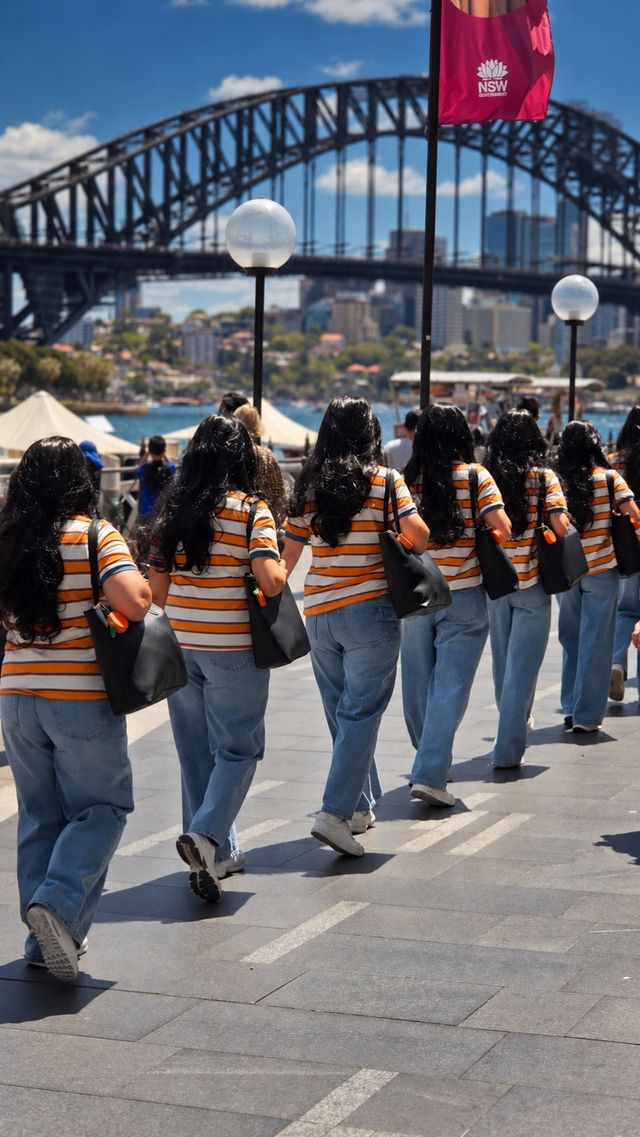
A staged street appearance makes a different demand on attention than a sponsored post. Someone can scroll past a horror trailer, but seeing its character on the waterfront creates a second part of the same story. The campaign tied those encounters to film-style outdoor ads, social content and a dedicated movie website rather than presenting each sighting as a separate promotion.
The important distinction is between an event designed to invite curiosity and evidence that curiosity became viral. The production team built the former. There is not enough disclosed campaign-performance data to claim the latter.

The clues hiding a hydration product
The campaign's most playful clue was hiding in plain hearing. Alongside the trailer, a song called All It Has To Do Is Wait appeared under the artist name Emmie Noll, an anagram of Lemon Lime. That sounds like a piece of horror-film world-building until the flavour connection becomes clear.
This was not simply a product pack shown at the end of an ad. The team had scattered ordinary beverage cues through a fictional entertainment property, inviting people to read the same details differently after the reveal. Even the villain's name, The Dryness, shifted from supernatural menace to product problem.
The broader creative team included FbF, formerly Five by Five Global, with Qube Productions involved in the film work. This Is Flow handled media strategy and M&Co managed public relations. Cinema-style posters and outdoor placements helped the fiction look like an actual movie release during its teaser phase.
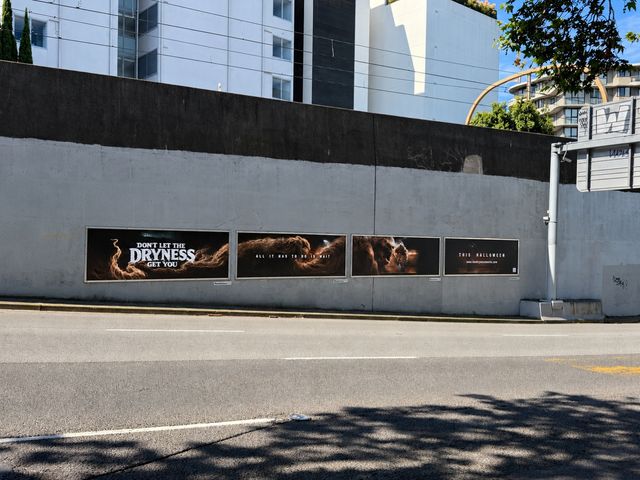
The final brand reveal took place around Halloween at Maple Social Club's event at Sydney's Old Clare Hotel, combining a rooftop party, a secret cinema and Hydralyte sampling. That ending moved the experience from suspense into an actual product encounter.
Mark Anderson, managing director of FbF Australia, described the creative ambition as wanting to make something people would "choose to watch, talk about and share." The quote is an intention, not a reported outcome. Neither the campaign announcement nor the available supporting reporting provided independently verifiable sales lift or conversion figures.
Why Halloween was the perfect disguise
Halloween gave the stunt an unusually generous setting. Fake movie trailers, creepy characters and mysterious appearances are easier to read as playful entertainment in late October than they might be in an ordinary promotional week.
That timing also created a deadline for the story. The mystery could build before October 31, then resolve at a themed event where attendees could discover the product behind it. The brand did not have to keep the fiction going indefinitely.
For Hydralyte, the connection was more than a seasonal joke. The brand sells oral-rehydration products, including compact electrolyte powder stick sachets intended for use on the go. Its official product range is practical and functional, while the horror campaign aimed to give a routine hydration purchase a social and entertainment context.
The company used that reveal to introduce the broader Here For It positioning, described as a way of speaking to younger, more lifestyle-oriented consumers. That is a stated marketing direction, not evidence that a new demographic adopted the brand.
A natural tension runs through the idea: a health-related product cannot rely only on a clever joke, yet product information alone may not be enough to stand out in a crowded consumer category. The film device supplied a reason to look; the reveal supplied the product context.
How horror campaigns compete for attention
Branded horror is hardly limited to a single campaign. Fanta built its 2026 Haunted Universe around original monsters and entertainment-inspired stories. PETA also created a fictional horror villain called Hamface to communicate a processed-meat message. Each example asks an audience to follow a character or story rather than start with a category benefit.
| Campaign | What the audience encounters | Where the brand fits |
|---|---|---|
| Hydralyte, Don't Let the Dryness Get You | A fake film trailer, matching street figures and Halloween event | The concealed sponsor revealed as a hydration product |
| Fanta's Haunted Universe | Recurring original horror characters and seasonal storytelling | The beverage brand openly owns the fictional universe |
| PETA's Hamface | A horror villain inspired by a food issue | The advocacy message is central to the fictional antagonist |
Hydralyte's twist is more dependent on delayed recognition. The first stage hides the advertiser, so the reveal itself must be satisfying enough to connect the tension of the film to a beverage product.
That also introduces risk. Mystery can create attention without telling people what is for sale, and audiences may enjoy the film idea without carrying its meaning into a product decision. The reporting does not establish whether those trade-offs paid off commercially here.
Still, the method shows why borrowed entertainment formats are appealing. A two-minute horror story can provide costumes, posters, music, physical appearances and an event with a common visual language. For a product that might otherwise be shown only as a sachet or bottle, that is a substantial change in how it enters a conversation.
What marketers can learn from a staged horror reveal
The memorable moment in this campaign was not a product shot. It was the second look that a matching group of strangers or an unfamiliar horror poster might invite. The brand reveal only made sense because the creative team first made the fictional world legible.
- Make the mystery understandable without knowing the brand. A recognizable trailer format, recurring character and ominous title gave the opening phase an identity. The audience did not need prior Hydralyte knowledge to understand that something strange was happening.
- Give the idea more than one place to exist. Sydney street appearances, posters, music and video carried the same story across different environments. That makes the campaign easier to recognize when someone encounters a second piece, even if it is not proof of earned reach.
- Plan the reveal as a meaningful scene. The Halloween party and secret cinema led to real Hydralyte sampling. A disguised campaign needs a reveal that feels connected to what people saw beforehand, not merely a logo at the end.
- Keep the cultural payoff distinct from business results. The idea can be evaluated as an ambitious creative stunt, but its actual effect on consideration, trial and revenue remains undisclosed. Creative visibility and commercial performance are different questions.
There is a reason movie trailers leave some things unresolved. The unanswered question is part of the entertainment. Hydralyte adapted that principle for a brand whose everyday function usually calls for clear explanations, then used Halloween to make the suspense feel appropriate.
The wider opportunity for consumer brands is not to hide their names as often as possible. It is to build an experience that feels worth following before asking for attention as an advertiser. For a few days in Sydney, hydration was disguised as horror, and the disguise was the story.
The more lasting question is whether that storytelling can travel beyond a seasonal moment into the Here For It platform. The campaign provides a visually distinctive introduction. What consumers do after the reveal remains the part of the story that needs evidence.
