IAB Tech Lab lays out roadmap for AI-driven ad systems
The digital ad industry is moving toward AI agents. Here's how IAB Tech Lab plans to make it work—without breaking what's already in place.

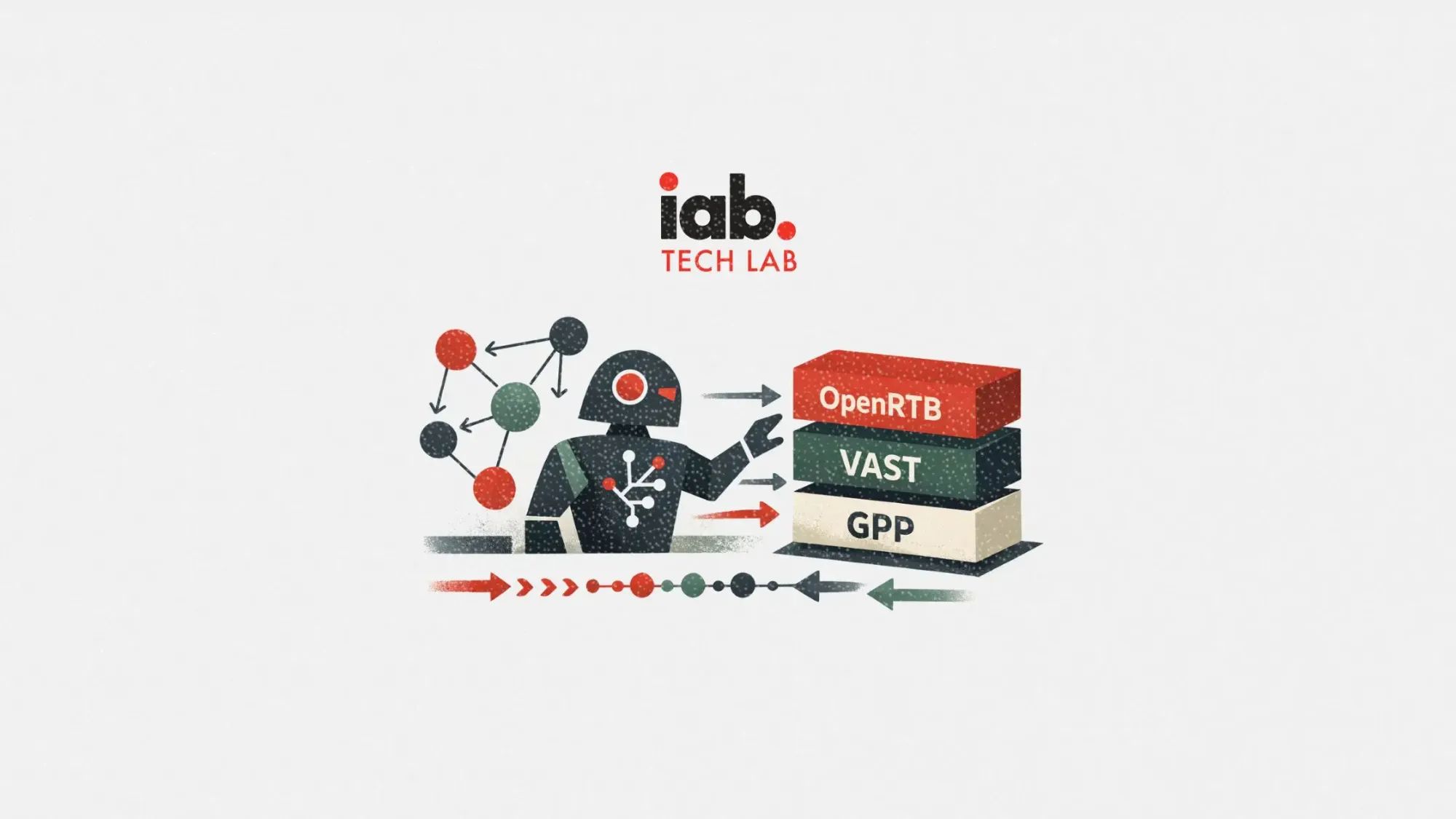
Autonomous AI agents are gaining ground in digital advertising, but industry-wide adoption has been limited by fragmentation and risk. A new Agentic Roadmap from IAB Tech Lab aims to change that—without upending the programmatic infrastructure marketers already rely on.
This article explores who IAB Tech Lab is, what their roadmap proposes, and why it matters to marketers navigating the next phase of automation in advertising.
Short on time?
Here’s a quick breakdown of the article:
- Who is IAB Tech Lab and why this roadmap matters
- What the Agentic Roadmap actually changes
- Key standards and protocols involved
- What marketers should prepare for in 2026
Who is IAB Tech Lab—and why does this matter?
The IAB Tech Lab is the technical standards arm of the Interactive Advertising Bureau (IAB), a global trade body that helps define how digital advertising works across platforms. While not a regulatory authority, the Tech Lab plays a key role in developing open standards used widely in adtech, including OpenRTB, VAST, and the Transparency & Consent Framework.
Their tools and specifications are used by publishers, ad platforms, DSPs, and measurement vendors to ensure interoperability and compliance across the programmatic ecosystem. When IAB Tech Lab makes a move—especially on emerging tech—it’s worth paying attention.
What’s in the Agentic Roadmap?
The Agentic Roadmap, released January 6, outlines how AI agents can be deployed in digital advertising without rebuilding the entire system from scratch.
Rather than introducing new standards, the roadmap extends existing ones like OpenRTB, AdCOM, and the Global Privacy Platform (GPP) with newer, high-performance protocols. These include:
- Model Context Protocol: Establishes how AI agents interpret and act on context during transactions
- Agent2Agent: Enables coordination between autonomous systems
- gRPC and Protocol Buffers: Modernize how data is exchanged at machine speed
These extensions aim to support secure, real-time decision-making by AI agents while maintaining existing governance and privacy safeguards.
What's actually changing?
Several initiatives are planned for 2026, including:
- Open-source reference implementations for AI buyer and seller agents
- A standardized agent profile system
- A shared server for managing AI context and logic
- Tools to monitor trust, measurement, and transaction integrity
By building on a known foundation rather than inventing a new one, IAB Tech Lab says adoption will be faster and less risky for everyone from agencies to publishers.
Industry voices from companies like NBCUniversal, PubMatic, Index Exchange, and Experian have publicly endorsed the roadmap for its practical balance of innovation and control .
What marketers should know
For marketers, this roadmap isn’t just technical housekeeping—it represents a structural shift toward more autonomous, scalable workflows in digital advertising. Here's how to prepare:
1. Programmatic automation is evolving—quietly
Agentic execution doesn’t mean handing over your media plan to AI tomorrow. But it does mean that real-time ad decisions are starting to include autonomous agents that can reason, adapt, and bid with minimal human intervention. Understanding the protocols guiding these agents will be critical for media and ad operations teams.
2. The stack stays intact—for now
Marketers and adtech vendors can integrate agentic capabilities using familiar tools. For example, VAST and OpenRTB are not going away—they’re just getting faster and more machine-friendly. That’s a win for continuity and reduces the cost of adopting new features.
3. Expect a wave of AI tooling in 2026
New open-source tools will be available to test and deploy agentic systems without vendor lock-in. If your company is considering AI in media buying, 2026 could offer the infrastructure needed to move from experimentation to execution.
4. Privacy and measurement still matter
Even as execution speeds up, the roadmap emphasizes ongoing support for privacy frameworks like GPP and TCF. Brands working in regulated markets or handling sensitive data won’t need to compromise compliance for performance.
Next steps: education and experimentation
To support adoption, IAB Tech Lab will host a public webinar on January 28, followed by a series of in-person boot camps starting February 12. These events are designed to help both technical and non-technical teams understand how to implement agentic workflows in production environments.
Whether you're a marketer managing agency relationships or a platform exec building AI capabilities, these sessions may help demystify the shift toward agentic systems.
Final thoughts
The Agentic Roadmap is not about chasing the next shiny thing—it’s about modernizing a system that already powers most of digital advertising. For marketers, the key takeaway is this: the future of programmatic will likely be agentic, but it doesn’t require starting over.
Instead, now’s the time to align with evolving standards, evaluate vendor readiness, and prepare for a future where intelligent systems don’t just assist execution—they are the execution.