Indian states consider Australia-style social media ban for children
As Indian states look at under-16 bans, global platforms and advertisers face a new regulatory variable

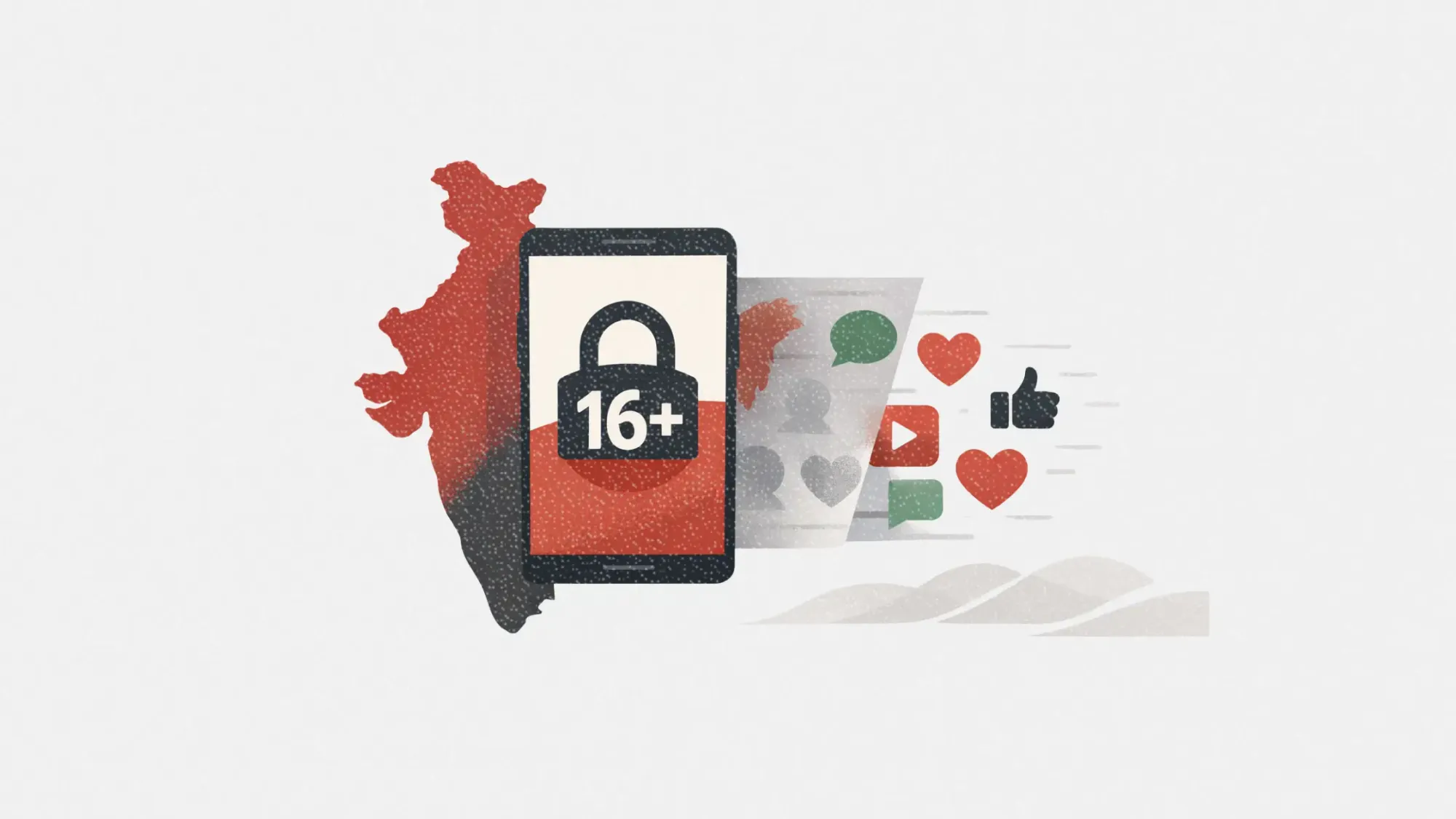
India may be heading toward its most serious debate yet on age-based access to social media. Several state governments are now openly studying whether to restrict children under 16 from using major platforms, taking cues from Australia’s recently passed ban.
For marketers and platform operators, this is not just another regulatory headline. India is one of the largest growth markets for global social platforms, with more than one billion internet users and a large share coming online at a young age.
This article explores how state-level moves in India could reshape platform strategy, advertising reach, and long-term market planning.
Short on time?
Here’s a table of contents for quick access:
- What is happening in India right now?
- Why Australia’s law is influencing Indian states
- Legal and enforcement challenges in India
- What marketers should pay attention to next
 Patrecia Meliana
What is happening in India right now?
The push is emerging at the state level. Goa has become the latest Indian state to examine whether it can bar children under 16 from accessing social media platforms. Goa’s IT Minister Rohan Khaunte said his department is reviewing Australia’s law and studying whether a similar ban could be implemented locally.
Andhra Pradesh is also considering the same approach. Earlier this month, the state’s IT and Education Minister, Nara Lokesh, said officials were studying Australia’s framework while speaking on the sidelines of the World Economic Forum in Switzerland. The state has already formed a group of ministers, chaired by Lokesh, to assess whether restrictions or a ban on minors’ access would be legally and practically feasible.
The issue has also reached the judiciary. In December, the Madras High Court urged India’s federal government to consider Australia-style restrictions, showing that concerns about children’s online safety are now extending beyond legislatures.
Why Australia's law is shaping the debate
Australia’s under-16 social media ban, passed under the Online Safety Amendment (Social Media Minimum Age) Act 2024, has become a reference point for policymakers worldwide. Approved in November 2024 and set to take effect in December 2025, the law has already highlighted how difficult enforcement can be.
Meta has begun notifying Australian teenagers that their accounts could be shut down, underscoring the challenge of accurately determining users’ ages when people are not always truthful at sign-up. The law applies to platforms such as Twitch while exempting others including Pinterest, Discord, GitHub, Roblox, and Steam.
It has also reignited concerns around digital age-verification systems, which require sensitive personal data and raise privacy and security risks. Beyond India, governments in Denmark, France, Spain, Indonesia, and Malaysia are studying similar restrictions, adding momentum to the global regulatory push.
Legal and enforcement challenges in India
India faces a more complex legal landscape. Internet governance falls under federal law, meaning individual states cannot amend national statutes such as the Information Technology Act or the Digital Personal Data Protection Act.
Policy experts note that states like Andhra Pradesh may need the central government’s backing to move forward. Whether that support will come remains uncertain.
Legal professionals have also warned of unintended consequences. Broad bans could push children away from regulated platforms toward unmonitored online spaces, potentially weakening the safety goals policymakers are trying to achieve.
India’s Digital Personal Data Protection Act, passed in August 2023, already includes protections for children’s data. It requires verifiable parental consent for processing personal data of users under 18 and prohibits tracking, behavioral monitoring, and targeted advertising aimed at minors. However, the operational rules are being rolled out gradually through 2027, giving platforms time to adjust.
What marketers should pay attention to next
For marketers and brand leaders, the bigger signal is not whether a ban happens immediately, but what this debate says about platform risk in India.
- India’s growth narrative may face new constraints
Any restriction on teen users affects future audience pipelines, creator ecosystems, and long-term ad inventory growth.
- Compliance and age verification requirements are likely to tighten
This could limit targeting options and complicate measurement for youth-adjacent campaigns.
- Regulatory fragmentation is a real possibility
If enforcement varies by state or relies heavily on platform-level controls, marketers may need more region-specific strategies rather than uniform India-wide plans.
India is not yet banning social media for children, but the policy conversation has clearly shifted. With states studying Australia’s model and courts urging federal consideration, age-based access restrictions are now firmly on the agenda.
For marketers, this reinforces the need to plan for regulatory volatility in high-growth markets. Diversifying channels, staying close to policy developments, and building flexibility into media strategies will be critical as India weighs its next move.