inDrive bets on ads and groceries to scale in emerging markets
inDrive is going multi-vertical with ads and groceries to offset tight margins. Marketers should take note of the emerging market playbook

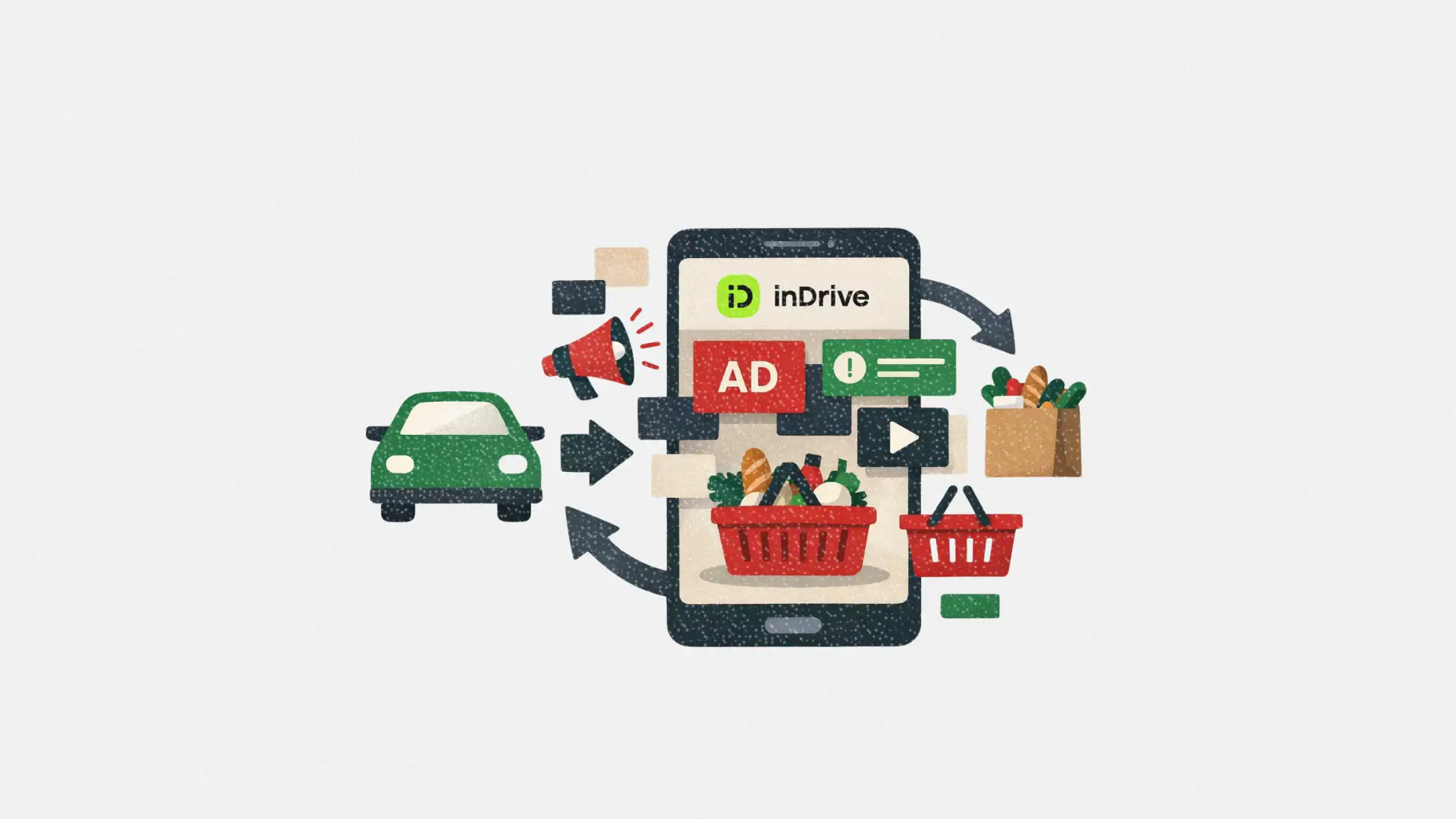
Known for letting riders and drivers haggle over fares, inDrive is shifting gears by adding in-app advertising and grocery delivery to its platform. The goal is to diversify revenue, boost engagement, and build a super app identity.
Backed by a growing presence in over 1,000 cities, inDrive is leaning on its installed user base and emerging market experience to roll out these new services, starting with Pakistan. The country offers both growth potential and operational leverage.
This article explores inDrive’s expansion into high-frequency services like digital ads and groceries, and what it means for marketers tracking platform plays in price-sensitive, high-growth regions.
Short on time?
Here’s a table of contents for quick access:
- Why inDrive is moving beyond rides
- Inside the ad rollout: in-app first, then on-car
- Pakistan’s grocery test: fast delivery and local playbooks
- What marketers should know
 Patrecia Meliana
Why inDrive is moving beyond rides
inDrive has long positioned itself around affordability, using a peer-to-peer bidding model to disrupt traditional ride-hailing pricing. But that pricing model alone isn't enough to sustain growth in competitive and low-margin markets. Uber and local transport options still dominate, and the race to the bottom in ride commissions is real.
To stay relevant and profitable, inDrive is going broader. It’s now leaning into services that users open more often and brands are eager to monetize. Grocery delivery and in-app advertising are the first big steps. Together, these two verticals help drive daily engagement while reducing reliance on ride commissions.
The shift aligns with inDrive’s previously announced super app roadmap. The company aims to bundle transportation, commerce, and digital services into a single platform for emerging market users.
Inside the ad rollout
inDrive’s new advertising business is now live in markets including Mexico, Colombia, Pakistan, Egypt, and Morocco. The initial focus is on in-app placements, especially during high-attention windows like ride booking and in-trip screens.
Why start with in-app? According to Andries Smit, Chief Growth Business Officer at inDrive, early tests in 2025 generated hundreds of millions of impressions. That traction drew interest from global brands and financial institutions. In-app formats are also easier to scale than on-car formats, which require more infrastructure and local partnerships.
This mirrors how other super apps like Grab and Gojek started their ad businesses. Digital ads are low-lift, measurable, and contextually rich. For marketers, that means a new media channel with high dwell time and relatively low competition.
Fast delivery and local playbooks
Beyond ads, inDrive is doubling down on grocery delivery. The company is scaling operations in Pakistan through a partnership with dark-store operator Krave Mart, which received investment from inDrive in late 2024.
The grocery rollout begins in Karachi and will expand to cities like Lahore and Islamabad later this year. Users will be able to order over 7,500 products with delivery times around 20 to 30 minutes. inDrive is offering free delivery for orders above PKR 499 (roughly US$2), with no service fees.
This expansion plays to inDrive’s strengths. Pakistan has a fragmented retail system and growing demand for quick commerce. At the same time, inDrive already has an active user base from its ride-hailing business, giving it a cheaper customer acquisition model than most e-grocery startups.
While venture capital interest in Pakistan has slowed, inDrive is ramping up investment. Smit said the country has received the largest share of its US$100 million deployment plan so far, though he declined to provide exact figures. With ride volumes up nearly 40 percent and courier deliveries up 67 percent in 2025, Pakistan is one of inDrive’s fastest-growing markets globally.
What marketers should know
This is more than a product expansion story. It’s a glimpse into how mobility platforms are evolving into commerce and media ecosystems. Here’s what marketers should watch:
1. New media surfaces in overlooked markets
inDrive’s in-app inventory offers high dwell time and daily visibility in cities marketers often overlook. Early entrants could benefit from low CPMs and strong engagement.
2. Grocery means more frequency and context
Food and daily essentials create regular touchpoints, which translate into more ad impressions and contextual targeting opportunities. For FMCG and household brands, this is a fresh entry point.
3. Super app models are back
After a wave of pullbacks, super apps are returning in more focused formats. inDrive’s expansion shows how mobility platforms can grow horizontally by layering in services that drive engagement.
4. Pakistan deserves a second look
The market may look risky on the surface, but consumer behavior is shifting fast. With the right local partnerships and product-market fit, brands and platforms can find scale without VC dependence.