
How to Rob a Bank uses up to 20 Insta360 cameras for its heists
Insta360's X5 appears in How to Rob a Bank and captures actual scenes, offering a case study in product-led film integration.


A heist movie about criminals filming themselves for online fame needs the kind of camera that can catch everything, even when the person holding it does not know exactly where the action will go. In How to Rob a Bank, that camera becomes a piece of the story as well as a way of shooting it. For Insta360, the distinction matters: its product is not merely sitting in a scene waiting to be noticed. The brand's November 13 announcement details how director David Leitch's action film uses Insta360 X5 cameras in front of and behind the lens. Characters use the devices as part of a plot involving heists and video-making, while the actual production team uses X5 footage to build parts of the finished movie. For anyone accustomed to the language of creator videos, this is a familiar idea taken into a Hollywood setting. A camera can feel like an extension of the person filming: close to the action, informal and ready to capture an angle no one planned. The new film makes that way of seeing part of its fictional world, rather than treating the device as a background accessory.
Table of contents
Jump to each section:
- Why a bank heist movie needs a creator camera
- Inside the camera heavy heist scenes
- How real X5 footage reached the final edit
- What this means for entertainment marketers
Why a bank heist movie needs a creator camera
The film's premise gives the product an unusually direct job. The fictional criminals do not just commit robberies; they record their exploits for an audience. Insta360's 360-degree camera fits the behavior the characters are already supposed to have, allowing the production to show a different kind of perspective without introducing a conspicuous marketing detour. How to Rob a Bank is directed by David Leitch, with Nicholas Hoult, Zoë Kravitz, Anna Sawai, Rhenzy Feliz, Christian Slater, Pete Davidson and John C. Reilly among the cast named in the announcement. This is a mainstream action film rather than a branded short made solely for the camera company. The crossover is interesting precisely because the hardware can work inside a recognizable movie genre. The film also speaks to a recognizable grammar of internet video. In a conventional heist sequence, a cinematographer decides exactly which angles the audience sees. When a fictional character is filming, a camera can become part of that character's identity and choices. The audience gets a perspective that feels captured in the moment, even when the scene itself is carefully staged. That does not prove viewers will buy the device or even notice its name. It does explain why this particular film offers a more natural setting for 360-camera technology than a random appearance in a scene that has nothing to do with recording.

Inside the camera heavy heist scenes
The cameras were not confined to the actors' hands. Insta360 says the production used X5 devices across shooting days, adding more units during complicated heist sequences. Rather than rely on one single hero product shot, the film crew could position different cameras to collect alternative views of the same action.
7 to 8 Insta360 X5 cameras were used on a typical shooting day, rising to 12 to 20 in some heist sequences, according to Insta360.
The distinction is worth keeping clear. Those figures describe production equipment used while filming, not the number of devices visible in a particular finished scene or any subsequent consumer sales. Insta360 has not disclosed audience reach, brand lift or product conversion results associated with the film.
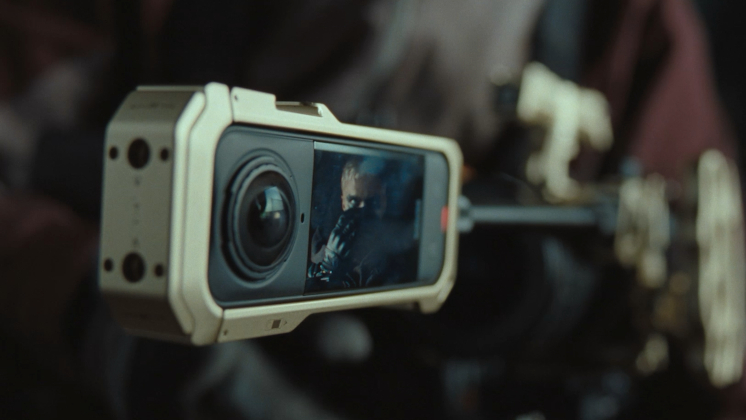
The company's behind-the-scenes account shows how the small-format cameras were used around performers and the set. The useful brand detail is the viewpoint they make possible, not simply their proximity to stars. A device that is compact enough to sit in unusual positions can capture movement from places that a conventional production rig might not occupy. This also gives the filmmaking partnership two different audiences. Moviegoers encounter the footage in an action sequence, while camera enthusiasts and creators can examine how it was made. The second audience is likely to care about the technical choices in a way a casual viewer may not, although no public response data has been provided.
How real X5 footage reached the final edit
Using a consumer-facing camera on set is only half the story. The raw images still need to work inside an action movie built with traditional production equipment. Insta360 describes a workflow in which its 360 footage was reframed in Insta360 Studio, turned into ProRes files and then taken into DaVinci Resolve and Avid for editing. That conversion matters because 360 capture is not the same thing as presenting a full spherical image to the movie audience. The filmmaker can choose a conventional rectangular angle after recording. It effectively allows a scene to be filmed with framing decisions still available later in post-production. Leitch describes the practical value succinctly: “When we needed a shot and we had a 360 running, we could literally create a shot.” The quote captures why a 360 camera can matter to an editor even when the audience never sees a 360-degree viewer.
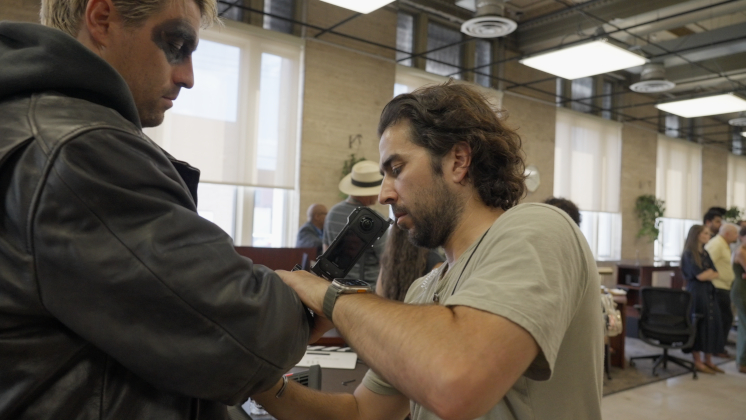
For the company, that behind-the-scenes capability is a form of demonstration. The movie can show what the footage looks like, while supplementary production material makes the workflow legible to someone considering a camera for their own work. It is a product-use argument embedded in the entertainment, not a separate tutorial. The official behind-the-scenes film offers a closer look at the production context:
What this means for entertainment marketers
The most useful part of this pairing is not that a camera brand ended up in a Hollywood movie. It is that the movie's premise supplies a plausible reason for the device to be there, while the filmmaking process produces a second story about how the movie was shot. 1. Give the product a role that belongs in the fiction. When characters are supposed to record their exploits, a recording device has narrative work to do. That offers a more coherent brand appearance than a product inserted into an unrelated scene solely for visibility. 2. Let the making of the entertainment carry additional value. The behind-the-scenes video, equipment images and editing discussion give creators material they can inspect after watching the film. For some specialist audiences, seeing how something was made may be more persuasive than hearing a claim about camera quality. 3. Keep the creative claim separate from the commercial result. Insta360 has shown how X5 cameras were incorporated and how many were used during production. That is evidence of production integration, not evidence that the collaboration improved awareness or sales. Brand teams evaluating similar opportunities need to distinguish the two. There are other ways brands connect products to entertainment worlds. A device can be represented through a franchise-inspired design, a themed giveaway or a cast endorsement. Here, the integration is more literal: the hardware is used to construct part of the viewing experience itself. It is not a model every brand can reproduce. Cameras have an obvious relationship to the act of filmmaking, and this particular plot provides a second link to creator behavior. A food brand, fashion label or software tool would need a different narrative reason to earn the same kind of presence. For audiences, the film may simply be an action story about people recording their own heists. For marketers, it is a reminder that the most convincing entertainment crossover can be the one where the product's function and the story's logic already point in the same direction.
