
Jeep drives Avengers: Doomsday through 3 Marvel universes
Jeep and Marvel use three superhero worlds to turn off-road identity into a yearlong tie-in ahead of Avengers: Doomsday.


For superhero fans, a crossover is more interesting when familiar characters enter a world they would not usually occupy. A famous vehicle parked beside a hero is one thing. Watching that vehicle travel through several fictional universes gives the collaboration an actual story to tell.
That is the premise behind Jeep's new partnership film with Marvel Studios. The automaker is sending its vehicles through the worlds of the Avengers, Fantastic Four and X-Men, turning off-road driving into a playful piece of superhero world-building ahead of Avengers: Doomsday.
Rather than selling viewers a specific vehicle trim, the latest creative makes Jeep's longstanding promise of going beyond familiar roads literal. The trip takes place somewhere no driver could visit, but the idea remains easy to recognize: put an adventurous vehicle in an impossible landscape and let the characters do the explaining.
Table of contents
Jump to each section:
- How Marvel worlds become an off-road route
- From a Captain America tire cover to a multiverse
- Why the crossover feels different from another film ad
- What marketers should know about the Jeep Marvel crossover
How Marvel worlds become an off-road route
In the film, a Jeep Wrangler has a particularly unexpected driver: The Thing, the Fantastic Four's rocky powerhouse. Other appearances include Captain America, Human Torch, H.E.R.B.I.E. and Nightcrawler, characters whose separate histories give the spot several different visual worlds to work with.
That mix is the point. The Avengers, Fantastic Four and X-Men are more than an assortment of famous costumes. They carry different settings, characters and expectations. Their worlds give Jeep different types of terrain and action without forcing the vehicle to perform an unrelated gag.
The creative also visits places associated with Avengers Tower, the X-Mansion and Doctor Doom's Latveria, as described in independent coverage by Motor1. The locations act as a recognizable map for viewers who know the franchise, while a newcomer can still follow the simple idea of a vehicle moving from one unfamiliar environment to another.
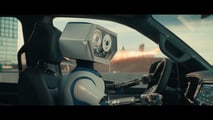
The official video makes the connection more clearly than a poster could. Each jump to another location gives the product another way to illustrate the same brand idea. It is recognizable entertainment material, but its action still makes sense in the context of driving.
The latest chapter, called A Jeep 4x4 for Any Universe, began on November 6 and is scheduled to run through December in the United States and select international markets. It will appear in broadcast, social media, website, dealer and experiential activity. Jeep's announcement identifies Chicago agency Highdive as the creative partner behind the wider collaboration.
For fans, the appeal is an unexpected arrangement of characters and vehicles within fictional settings they already recognize. That does not establish whether fans liked the ad or shared it. Those outcomes would need audience data that Jeep has not publicly provided.

From a Captain America tire cover to a multiverse
This is not the first time Jeep has borrowed Marvel's universe this year. What distinguishes the new film is the way the previous installments give it a beginning, a middle and a finale.
The partnership began in May with Origin Story, which used a real historical coincidence: Jeep and Captain America both trace their beginnings to 1941. It paired the character with the Wrangler America250 special edition and an exclusive Captain America shield tire cover. There was also a limited-edition Marvel comic book cover tied to the vehicle, as detailed in Jeep's May announcement.
The summer chapter, The Original Superheroes, shifted the focus away from fictional heroes to US military veterans who had served as captains. The campaign still drew on the idea of heroism, but changed the person being celebrated. That matters because the franchise connection did not require a superhero to appear in every advertisement.
Now the third chapter takes the opposite approach. It embraces the imaginary settings, puts Marvel characters directly in the action and uses the larger ensemble of Avengers: Doomsday. The film is scheduled for theatrical release on December 18, according to Marvel's official movie page.
Each piece of the yearlong sequence asks the characters to do a different job. The first uses Captain America to explain Jeep's heritage. The second reframes heroism through actual people. The third uses multiverse action to express where the vehicles might go, at least in fiction.
Jeep CEO Branden Coté provided a concise statement of the idea: "Jeep people have always looked at the unfamiliar as an invitation to explore."
The through-line is adventure, not simply borrowed fame. That gives the films a clearer reason to share the same license and agency even as the creative changes from chapter to chapter.
Why the crossover feels different from another film ad
A vehicle's appearance in a superhero story is already familiar territory for automotive advertising. But there is a difference between a character standing near a car and a collaboration that makes the car's role essential to the premise.
BMW's 2026 Spider-Man: Brand New Day partnership offered another version of the formula. BMW models appeared in the film, while related creative was carried into some vehicles' infotainment screens. As MediaPost reported in August, that in-car promotion also drew criticism from owners. It shows that placing entertainment branding directly inside a purchased product introduces questions beyond whether the characters are popular.
Jeep is taking a different creative route. Its new material is not presented as an in-vehicle experience or a special-edition merchandise drop. Instead, the film extends Jeep's off-road image into the visual geography of superhero storytelling. The fictional environment is the message.
The contrast is useful because not every entertainment tie-in needs to offer the same kind of benefit. A limited-edition object gives collectors something to own. A themed restaurant gives people somewhere to go. A vehicle campaign may be primarily about attention, recognition and a memorable demonstration of a brand promise.
That distinction is especially relevant as other companies attach products to the same December movie. ContentGrip has covered Avengers: Doomsday promotions built around KFC menu items, Dunkin' drinks and Jack in the Box collectibles. Jeep is not asking audiences to buy a Marvel meal or assemble a set. Its proposed connection is between the scale of the movie's worlds and the identity of a four-wheel-drive brand.
Yet none of that is proof of sales lift. The company has described channels, timing and creative material, not whether the collaboration generates incremental vehicle consideration or purchases. The campaign's cultural fit can be analyzed now; commercial effectiveness cannot be declared from the announcement alone.
What marketers should know about the Jeep Marvel crossover
The Jeep campaign shows how a familiar franchise can become more useful when a brand gives it a recurring creative role rather than treating the film title as a one-off badge. For marketers considering entertainment partnerships, its three chapters offer several specific questions.
- Does the franchise make the product's existing story clearer?Here, the different Marvel worlds make adventure and mobility unusually easy to visualize. A stronger fit begins with a believable connection between the brand's personality and the property's recognizable material, rather than a celebrity or character simply lending a face.
- Can the same license support more than one kind of story?Jeep found room for heritage, veterans and a fantasy road trip within one collaboration. The examples are not interchangeable. Their value lies in changing how the partnership feels while preserving a consistent brand idea.
- Which part is meant to change behavior?The new film may increase attention or association, but the launch material does not report those results. A marketer would still need to connect any audience response to measures such as consideration, dealer inquiries or appropriately controlled sales data.
- What happens after the entertainment moment passes?The December film release gives Jeep an obvious calendar event. The more durable question is whether people remember the off-road message when they are no longer looking at Marvel characters. That is a brand-memory question, not a fandom-count question.
The story also illustrates why crossover creative needs some knowledge of the audience's source material. The Thing in a Wrangler is not an arbitrary celebrity cameo. The character and the vehicle share an obvious visual language of weight, strength and difficult terrain. That match is something viewers can understand even without an explanation from a marketing executive.
The opposite risk is equally real. Once a major franchise attracts many consumer partners, a recognizable character may stop being enough to distinguish one campaign from another. A brand still has to find an action, object or setting that could not be copied as easily by any other advertiser.
Jeep's latest Marvel outing offers a straightforward answer: keep the vehicle's familiar purpose, then let a fantastical world make that purpose look new. Whether that approach produces commercial results remains to be seen. For now, it is a case study in extending an entertainment collaboration without losing the brand inside it.
