
Kana emerges from stealth with $15M seed funding to build flexible AI agents for marketers
Kana emerges from stealth with $15M to offer marketers flexible AI agents for campaign automation and data-driven workflows.

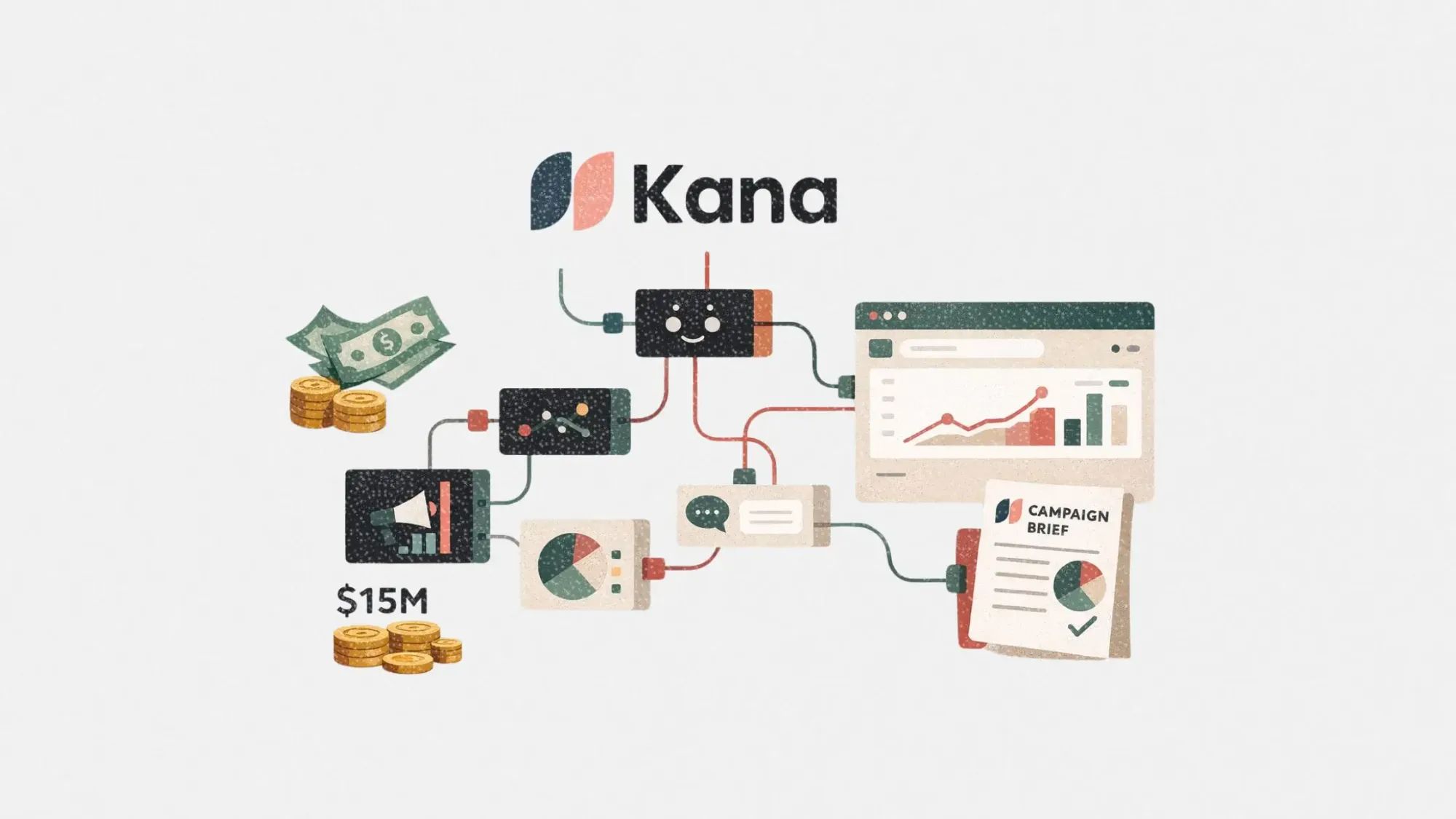
Kana, a San Francisco-based AI marketing startup founded by the team behind Rapt and Krux, has raised US$15 million in seed funding led by Mayfield. The company is building a platform of customizable AI agents designed to help marketers automate workflows, analyze data, and manage campaigns with greater flexibility.
Kana’s launch comes as the marketing automation space grows increasingly crowded, with both established players and new AI-native startups introducing agent-based solutions. The company aims to differentiate itself by offering “loosely coupled” AI agents that can be tailored in real time and integrated into existing marketing stacks.
Short on time?
Here’s a quick look at what’s inside:
- What is Kana, and who’s behind it?
- How Kana’s AI agents work for marketers
- Where Kana fits in the competitive landscape
- What marketers should know
What is Kana, and who’s behind it?
Kana is the latest venture from Tom Chavez and Vivek Vaidya, who previously co-founded Rapt (acquired by Microsoft) and Krux (acquired by Salesforce). After incubating Kana for nine months inside startup studio super{set}, the team has now secured US$15 million in seed funding, with Mayfield leading the round and managing partner Navin Chaddha joining the board.
The company is targeting enterprise and mid-market marketing teams, brands, and media companies looking to automate and optimize their marketing operations.
 Atikah Amalia
How Kana’s AI agents work for marketers
Kana’s platform centers on customizable AI agents that can be deployed across a range of marketing tasks, including data analysis, audience targeting, campaign management, customer engagement, and media planning. Marketers can upload a media brief, and Kana’s agents will analyze campaign goals, identify target audiences, and pull in data from inventory and market research to refine plans.
The platform also offers synthetic data generation to supplement third-party data sources, helping marketers fill data gaps, reduce costs, and run faster tests. Importantly, Kana keeps humans in the loop: marketers can approve agent actions, provide feedback, and adjust agent behavior as needs evolve.
Where Kana fits in the competitive landscape
Kana enters a highly competitive marketing automation category, facing established platforms like HubSpot, Marketo, Salesforce (Einstein), and Adobe (Experience Cloud), as well as a wave of AI-native startups. The company’s pitch is flexibility—its agents can be tailored and integrated into legacy systems, allowing marketers to see results faster than with traditional tools.
Kana’s founders argue that this ability to “build with” customers, rather than offering one-size-fits-all or fully bespoke solutions, is a key differentiator. The new funding will be used to expand hiring across engineering, product, and go-to-market teams.
What marketers should know
- Kana’s AI agents are designed to automate and optimize core marketing workflows, from campaign planning to audience targeting and reporting.
- The platform’s flexibility allows marketers to tailor agents to their specific needs and integrate them with existing tools.
- Synthetic data generation can help fill gaps in third-party data and accelerate testing and strategy development.
- Kana’s approach keeps marketers in control, with the ability to approve, customize, and iterate on agent-driven actions.