
Kate Spade brings Bretman Rock to its 4-creator holiday party
Kate Spade reunites with Bretman Rock and three creator acts for a holiday film, with New York store windows extending the story.


The best holiday party invitation can feel like an invitation from someone you already follow. An apartment full of familiar personalities offers a different kind of festive fantasy from a luxury campaign built around a silent model and a perfectly wrapped present.
Kate Spade New York is leaning into that feeling with a holiday film that brings beauty and lifestyle creator Bretman Rock into a New York apartment party, alongside a cast of online personalities. In its November 4 campaign announcement, the fashion brand describes a vlog-style celebration featuring Sally Carden, the collective 4inthe5 and Micky Gordon. It is selling a collection of handbags and gifts, but the people in the room are as central to the idea as the products.
For viewers who know these creators from beauty, humor, fashion or New York lifestyle content, the setting offers recognizable social energy. Someone who does not know the cast can still follow the scene as a group of friends getting ready for the holidays. That balance is the creative bet. Familiarity creates an entry point, while the party gives newcomers an easy story to understand.
Table of contents
Jump to each section:
- Why the holiday film feels like a creator hangout
- Bretman Rock gives the gift story a recognizable voice
- The party continues in New York store windows
- Why Kate Spade is bringing back its fall creator cast
- What marketers can learn from a holiday party campaign
Why the holiday film feels like a creator hangout
A handbag can look desirable in a product photograph. At a party, it can become something a character carries, gives or talks about while other things are happening. That is the difference Kate Spade is attempting to capture by placing the season's accessories in a bustling apartment rather than presenting them as a succession of isolated items.
The Holiday 2026 campaign follows four featured creator acts: Bretman Rock, Sally Carden, the New York-based group 4inthe5 and Micky Gordon. Kate Spade describes the video as having the spontaneity and intimacy of a livestream. That is a creative description, not evidence of an actual public livestream or measured audience interaction.
Each creator contributes a different kind of personality to the gathering. Carden is known for vlogs, 4inthe5 focuses on friendship and New York life, while Gordon brings comedy and lifestyle content. Together, their social-media identities provide a reason for the scene to feel like a gathering of recognizable people rather than an anonymous ensemble.
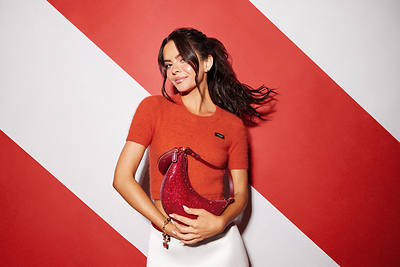
The brand has published a hero film as the centerpiece of the campaign, letting viewers see how the setting and products come together.
Allison Badea, Kate Spade New York's chief marketing officer, explained the invitation behind the casting: "We created this campaign to spark joy and invite everyone into the celebration." The useful distinction is between watching a celebration and feeling like there is room for another guest. The film is designed to suggest the latter, although the brand has not disclosed whether viewers responded that way.

Bretman Rock gives the gift story a recognizable voice
Bretman Rock is the most immediately recognizable face in a cast built around creator personalities. The Filipino-American beauty and lifestyle creator became known for makeup content and expanded into fashion, entertainment and humor. In this film, his familiar sense of play gives Kate Spade a character who can make a handbag part of a personal exchange.
"Some people say it with words. I say it with a Margot Shoulder Bag," Rock said in the campaign announcement. It is a short line, but it gives the product a clear job in the story: expressing affection rather than merely completing an outfit.
The Margot Shoulder Bag and Duo Mini Shoulder Bag are two highlighted styles in the holiday collection. The assortment also covers accessories, jewelry, ready-to-wear clothing and small gifts. Instead of asking the audience to remember a large seasonal catalog, the campaign repeatedly returns to a few recognizable products and a shared setting.
For a creator whose appeal is tied to the way they present themselves, the product also serves as a styling choice. That matters in fashion marketing because audiences often follow people for a point of view, not just for a list of brands they wear. The distinction does not guarantee a sale, but it offers more of a narrative than the conventional gift close-up.
The party continues in New York store windows
The apartment is not the only place Kate Spade has brought its holiday world to life. At its Rockefeller Center flagship and other stores, the brand has created seasonal windows that reinterpret New York symbols through candy-cane colors and oversized decorations.
A taxi, pretzel and pigeon are ordinary details of New York street life. Recasting them as playful holiday objects connects the city's everyday identity to the same slightly theatrical world as the video. The installations also place the Duo handbag into a recognizable retail setting, where shoppers can encounter the campaign without having watched its online film.
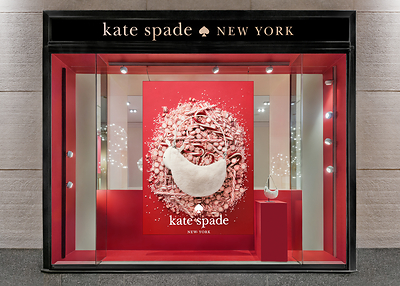
The store windows do something the creator video cannot do on its own. They give the story a physical location and a visual reason to stop and look. The footage and displays share an upbeat holiday tone, but they work at different speeds: a short film has to earn attention quickly, while a shop window can catch someone in the middle of another errand.
The brand says the holiday collection is available online and in stores. It has not published campaign-specific conversion, foot traffic or sell-through figures, so the window displays should be understood as part of the creative plan rather than proof of commercial success.
Why Kate Spade is bringing back its fall creator cast
Bretman Rock is not a new guest in Kate Spade's world. In the brand's August 2026 fall campaign, he appeared alongside singer Tyla and several other creators in a New York-themed search for joy. Sally Carden and 4inthe5 also appeared in that earlier campaign.
Bringing those three acts back for the holidays creates continuity between two campaigns with different stories. The fall creative used the city itself as a place of discovery. The holiday version moves into a more intimate space and turns the cast into party guests. Micky Gordon joins the group for this installment.
That shift is meaningful because it lets the brand retain familiar faces while changing the setting and the role they play. A partnership does not have to look identical every season to become recognizable. In fact, repetition with a new situation can give viewers something fresh to watch without asking them to learn an entirely new cast.
Other retailers have also used familiar entertainment personalities to make holiday gift decisions feel less abstract. Sephora's Seth Rogen campaign, for example, uses a comedian and a playful storefront concept. Kate Spade's approach is different: it puts multiple creators together in one social environment, treating the group dynamic as part of the gift narrative.
The comparison reveals two ways to make holiday retail advertising feel less like a product list. A single comic character can carry a joke, while a creator ensemble can suggest friendship, shared taste and different personalities choosing gifts. Neither approach is automatically better; each gives shoppers a different way to imagine the product in their lives.
What marketers can learn from a holiday party campaign
Kate Spade's holiday work illustrates the potential of creator casting when the characters and setting serve the same story. The most useful lesson is not that every retailer needs four influencers. It is that a campaign can give existing relationships a new context instead of treating each seasonal promotion as a reset.
- Start with a moment people recognize. A holiday gathering makes the products relevant without requiring a long explanation. Viewers already understand gifts, friends, hosts and the small rituals of getting dressed for a party.
- Give talent a reason to be there. Rock's personal line about the Margot bag connects gifting to his own playful voice. The other creators help the gathering feel populated by different personalities, not a lineup of interchangeable product endorsers.
- Build continuity without making a sequel. The repeat cast connects the holiday film to earlier fall work. The changed setting provides a fresh creative premise, while returning faces help the campaign retain a familiar identity.
- Extend the same world beyond the video. The candy-cane New York window displays work as physical expressions of the same festive mood. A passerby can understand the visual joke even without recognizing every creator in the online campaign.
There are also clear limits to what can be concluded from the announcement. Kate Spade has shared the creative, the cast and the retail displays, but not campaign performance or the commercial results of the creator partnerships. It would be premature to call the work viral or effective on sales.
What the campaign does make visible is a broader creative question for fashion brands: how do you move from simply showing a product to giving it a social role? Here, the handbag is not only something to buy. It is something a guest carries into a party, chooses as a gift or uses to say something personal.
That might be the more durable idea behind the holiday film. A recognizable creator can bring people to the party, but the story has to offer something beyond a familiar face once they arrive.
