Lego’s AI play puts kids in charge of the conversation
While adults panic about AI, Lego Education hands the conversation to kids

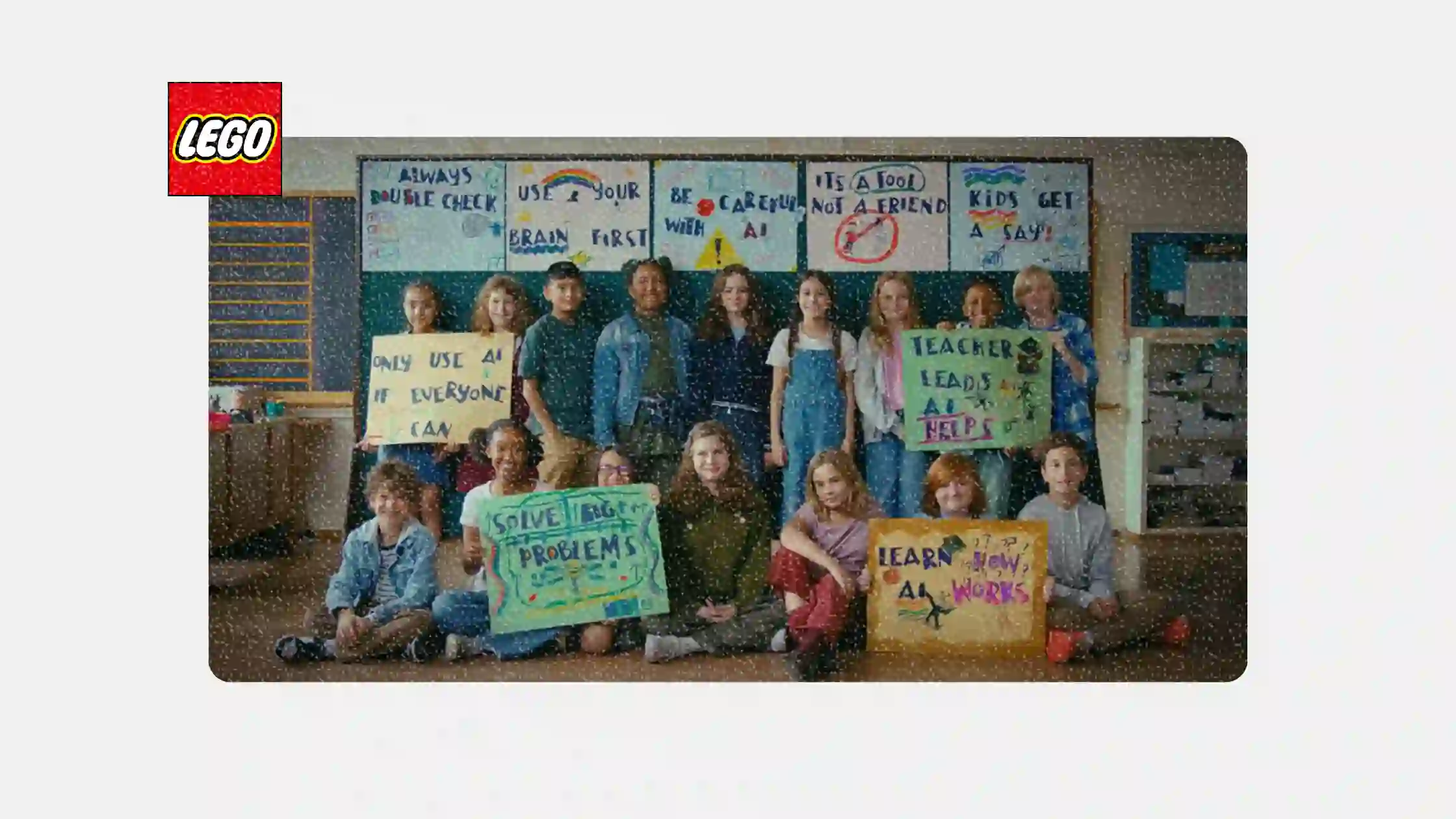
AI fear is having a moment. From job security to existential doom, adult anxieties are flooding the conversation, often without any input from the generation it will affect most. But while brands like Equinox lean into AI fear as a creative concept, Lego is flipping the script.
At the heart of the effort is a global study that revealed kids feel sidelined in AI discussions. In response, Lego launched a new campaign, curriculum, and classroom kits designed not just to teach AI, but to include kids in shaping how it’s taught.
This article explores how Lego Education is using research, storytelling, and hands-on tools to reframe AI as a topic of agency and curiosity for children while addressing the lack of readiness in today’s schools to teach it.
Short on time?
Here’s a table of contents for quick access:
 Patrecia Meliana
What Lego is launching
Lego Education has unveiled a new initiative called “We Trust in Kids”, alongside a hands-on AI and computer science curriculum for years 1 through 9.
The curriculum includes interactive kits organized into three grade bands (years 1–3, 4–6, and 7–9), each with LEGO bricks, hardware, and physical-digital lesson plans designed for collaborative learning. The accompanying software, LEGO Education Coding Canvas, offers a block-based coding interface with no logins required and full data privacy baked in.
The new kits start shipping in April 2026, replacing the LEGO SPIKE line as the company leans deeper into AI-focused learning tools.
To support the campaign, Lego also released a short film directed by documentarian Lauren Greenfield. The video shows 15 kids engaging in a classroom debate and co-creating their own AI policy, positioning them not just as learners but as digital citizens.
Why this matters now
For schools, AI readiness is still lagging. According to Lego's “Building the Future” report, 69% of teachers agree AI literacy is critical, yet 40% say their schools are not equipped to teach it responsibly. Many current tools leave students disengaged, with over half of teachers calling existing materials “boring” and unrelatable.
That’s the gap Lego is targeting. The company’s longstanding brand equity, built on decades of creative, collaborative play, gives it credibility to reframe AI as something kids can explore safely and meaningfully.
Lego has also been investing in digital safety for years. It previously partnered with Epic Games to build safer online spaces for children and recently revealed its first line of smart bricks at CES 2026, designed to bring sets to life through sound, light, and motion.
By centering kids’ perspectives and grounding AI education in trusted materials, Lego is effectively turning anxiety into action while giving schools a much-needed on-ramp into the AI era.
What marketers and educators should know
Here’s what this moment signals for brands, education partners, and B2B marketers in the edtech or family space:
1. Brand trust is a launchpad
Lego's reputation as one of the world's most trusted brands gives it a unique edge in entering the AI education conversation. Brands in adjacent categories, whether gaming, tech, or edtech, can study how Lego leverages its emotional capital to shift public perception.
2. Co-creation with kids isn’t a gimmick
Involving children in shaping research and creative outputs may seem like a PR stunt, but in Lego’s case, it’s strategy. The 12 American children who co-wrote the AI survey helped surface authentic insights that resonate with global peers. For marketers, this is a reminder that user research doesn't need to be top-down, and voices from the audience often hold the key to smarter storytelling.
3. Curriculum-aligned means market-ready
Lego’s kits aren’t just educational tools; they’re market solutions. They come with lesson plans, facilitation notes, and access to a Teacher Portal, making them plug-and-play for overburdened educators. For B2B marketers, the takeaway is clear: if you're selling to schools, your product needs to be frictionless, supported, and curriculum-ready from day one.
4. Digital doesn’t mean screen-only
Lego’s hybrid learning approach, combining tactile bricks with screen-free and digital exercises, resonates with educators who want more balanced digital exposure for students. Marketers should think beyond devices and apps when developing or positioning educational tech.
Lego’s move into AI education isn’t just a product launch. It’s a positioning play. By listening to kids, addressing educator concerns, and crafting age-appropriate tools, Lego is reshaping how classrooms can approach AI with care, clarity, and confidence.
For marketers, it’s a signal that trust, hands-on learning, and thoughtful storytelling still matter in a world saturated with AI hype. Whether you're in edtech or building your own AI-driven product, Lego’s strategy is a masterclass in meeting fear with function while giving the next generation the voice they deserve.