Lightfield debuts a one-hour agent to migrate CRM data from HubSpot
Lightfield automates CRM switching via CSV mapping and relationship preservation, as data access policies become a new battleground for AI agents.

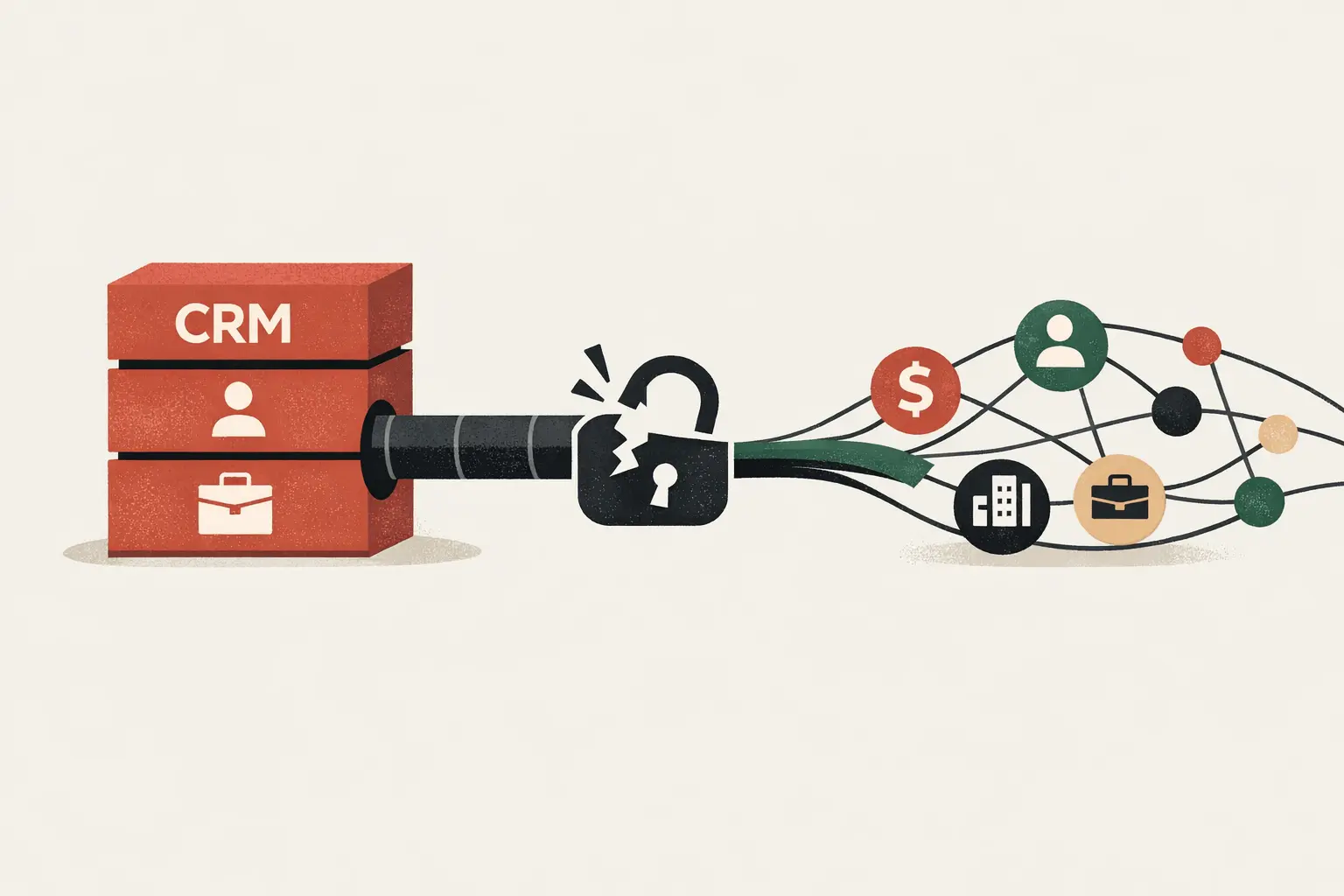
Lightfield has launched a “One-Hour CRM Migration Agent” designed to move startup teams from HubSpot and other CRMs by importing CSV exports and automatically mapping objects, custom fields, pipeline stages, and relationships.
The company says more than 2,500 organizations have created a Lightfield workspace since November 2025, with hundreds migrating directly from HubSpot. It is also positioning API access and data portability as a differentiator as CRMs rethink how third-party AI agents access customer data.
Short on time?
Here’s a quick look at what’s inside:
- What the One-Hour CRM Migration Agent actually does
- Why CRM data access is becoming a competitive wedge
- Competitive landscape: Lightfield vs HubSpot, Attio, and Salesforce
- What startups should validate before switching CRMs
- The broader trend: AI-native CRMs are optimizing for less admin
What the One-Hour CRM Migration Agent actually does
Lightfield’s migration workflow is built around a common reality: most CRMs still export to CSV, and most migrations fail in the messy parts, field mapping, relationship integrity, and time-consuming cleanup.
The company says the agent can:
- ingest CSV exports (including from HubSpot)
- map contacts, companies, deals, custom fields, and pipeline stages
- preserve cross-record relationships (a typical pain point)
- process up to 90,000 records per hour
After data import, Lightfield can connect email and calendar to build additional context, and optionally associate call transcripts with contacts and deals.
For a startup team, the promise is not only speed. It is reducing the “migration tax” that keeps teams on incumbents even when day-to-day usage is painful.
 Patrecia Meliana
Why CRM data access is becoming a competitive wedge
Lightfield is tying the migration launch to a broader platform-policy issue: who controls access to customer data as AI agents become normal in sales and marketing workflows.
HubSpot’s CEO has said the company intends to “monitor, meter, and monetize” third-party agent access to customer data, signaling that agent-driven usage may come with new constraints or costs. Lightfield is taking the opposite stance, arguing that CRM data should be accessible via API without egress fees.
For marketers, this matters because AI agents and automation are increasingly built outside the CRM UI. If access becomes constrained, teams risk building workflows that are brittle or expensive to run at scale. CRM selection starts to look like an infrastructure decision about permissions, portability, and integration economics, not just features.
Competitive landscape: Lightfield vs HubSpot, Attio, and Salesforce
Lightfield is competing on an “AI-native” operating model: automatically capture calls, emails, and meetings, then turn them into searchable context, summaries, and follow-ups without relying on manual updates.
That puts it in tension with:
- HubSpot, which has strong distribution and a broad suite, but is also a mature platform where policy decisions about data access can materially shape ecosystem behavior.
- Attio, which also targets modern teams with flexible data models and workflow automation, and has been part of the newer wave of CRM design for startups.
- Salesforce, which dominates enterprise CRM and has extensive AI and platform capabilities, but often comes with heavier implementation overhead than early-stage startups want.
Lightfield’s wedge is migration speed plus a positioning around data ownership. The question is whether that wedge sustains beyond early adopters, where requirements expand to include permissions, multi-team reporting, and deeper admin controls.
What startups should validate before switching CRMs
A fast migration is helpful, but it is not the whole risk profile. Before switching, startups should validate:
- Data model fit: Does the CRM handle your deal stages, product lines, and custom objects without workarounds?
- Source-of-truth behavior: If Lightfield auto-captures interactions, what happens when the AI is wrong, and how do you correct it?
- Integrations: Are your core tools (billing, product analytics, support, outbound) supported in a durable way?
- API and governance: If you plan to use agents, what rate limits, audit logs, and permissioning exist?
- Reporting reliability: Do pipeline and forecasting outputs match how your business actually measures conversion?
If the “less admin” promise holds, it can free selling time. But if controls are weak, teams can end up with a different kind of hygiene problem: cleaning up auto-generated fields and summaries.
The broader trend: AI-native CRMs are optimizing for less admin
Lightfield’s launch fits a wider shift in sales tech: CRMs are moving from “systems of record you must maintain” to “systems that maintain themselves.”
This trend also overlaps with marketing automation. Cleaner, more current CRM data tends to improve downstream segmentation, attribution, and lifecycle messaging, because fewer workflows depend on reps remembering to log activities.
The competitive tension is that incumbents can add AI features, but newer entrants can redesign the workflow around automation-first assumptions. Migration tooling becomes strategic because it lowers the switching barrier, and switching barriers have historically protected CRM incumbents.