LinkedIn gets real about work with “The network that works for you”
Humor, awkward moments and a unified brand push for career and business growth

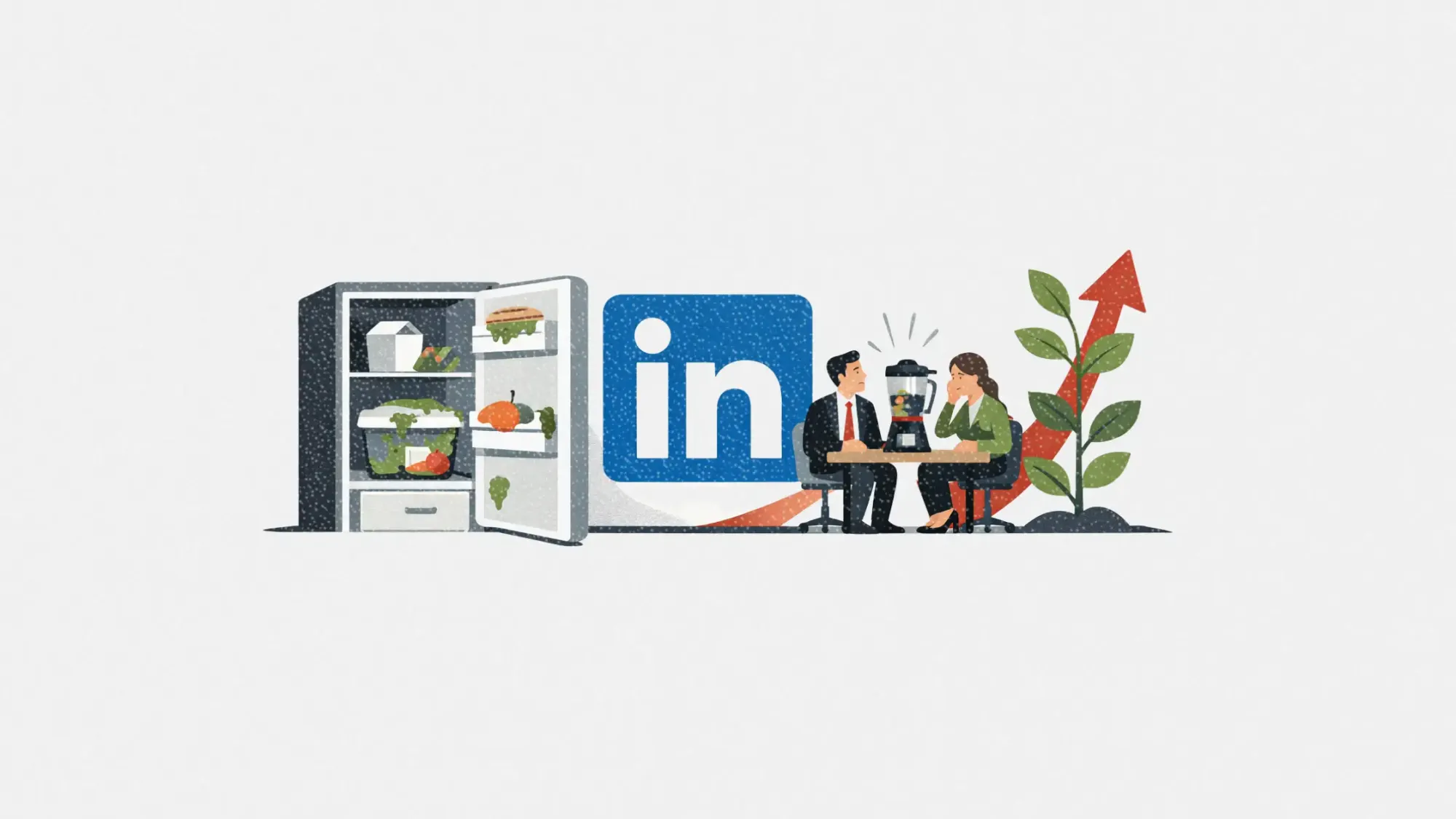
Work is messy. It is layered, political, sometimes inspiring and often awkward. LinkedIn’s new global brand campaign, “The network that works for you,” leans directly into that reality.
Created with McCann New York, the campaign uses workplace humor to position LinkedIn as a steady growth partner for professionals and businesses.
This article explores what the campaign signals about LinkedIn’s evolving brand strategy, why humor is a calculated move in B2B marketing, and what marketers should take away from this shift.
Short on time?
Here’s a table of contents for quick access:
- What is LinkedIn’s “The network that works for you” campaign about?
- Why LinkedIn is leaning into workplace awkwardness now
- What marketers should know about LinkedIn’s brand shift
 Patrecia Meliana
What is LinkedIn's "The network that works for you" campaign about?
LinkedIn’s new campaign is structured around two core pillars: “Grow in your career” and “Grow in your business.” Together, they present a unified narrative that the platform supports both individuals and companies when it matters most.
In one 30-second “Grow your career” spot, viewers see a string of uncomfortable yet familiar moments. A man politely listens to his brother-in-law pitch a business idea while swimming. A nurse scrolls LinkedIn for new opportunities while dealing with a patient wearing his robe the wrong way.
Office colleagues discover mouldy leftovers in the pantry fridge. The punchline lands clearly: LinkedIn cannot stop what is growing in the office fridge, but it can help you grow in your career.
The “Grow your business” creative follows a similar pattern. A cramped conference room celebration and a loudly blended juice interrupting a job interview highlight the absurdities of office life. The contrast is sharp. LinkedIn may not fix workplace chaos, but tools like LinkedIn Hiring Pro can help businesses find the right candidate.
Jessica Jensen, Chief Marketing Officer at LinkedIn, described it as a more unified brand story that reinforces LinkedIn as “the network that works for you.” Heather Hopkins Freeland, Chief Brand Officer, emphasized the decision to use humor to reflect real work moments. Britt Nolan, Chief Creative Officer at McCann NA, noted that acknowledging what brands cannot fix can actually build trust.
Importantly, this marks McCann’s first creative work for LinkedIn.
 Patrecia Meliana
Why LinkedIn is leaning into workplace awkwardness now
This campaign lands at a time when work culture is under scrutiny. Hybrid setups, economic uncertainty, AI disruption and shifting expectations have changed how professionals relate to their jobs.
Rather than overpromise transformation, LinkedIn positions itself as realistic and grounded. The creative openly admits what it cannot control. It cannot make your boss easier. It cannot prevent awkward lunch choices. But it can connect you to your next opportunity or help you hire smarter.
For a platform that sits at the center of professional identity, the brand move signals confidence. LinkedIn is no longer just a networking site. It is framing itself as infrastructure for career mobility and business growth.
This approach also builds on LinkedIn’s previous work addressing real workplace issues. Last October, the company partnered with Love, Bonito on “What we don’t ask: Career questions women should start asking,” tackling the confidence gap many women face at work across Singapore, Malaysia, Hong Kong, the Philippines and Indonesia. The series combined practical advice, leadership insights and discussions around using AI tools to build confidence.
Together, these efforts show a consistent theme: LinkedIn wants to own the narrative around modern work, not just facilitate connections.
What marketers should know about LinkedIn's brand shift
For B2B marketers and brand leaders, there are several practical takeaways.
- Humor can build credibility in serious categories
B2B brands often avoid negativity or awkwardness. LinkedIn is proving that acknowledging friction can increase relatability and trust. If your audience lives in complex environments, sanitized messaging may underperform.
- Unified narratives beat fragmented campaigns
By consolidating messaging under “Grow in your career” and “Grow in your business,” LinkedIn is simplifying its value proposition. Instead of promoting isolated features, it reinforces a bigger brand promise.
- Platform marketing is becoming culture marketing
LinkedIn explicitly positions itself as a place where culture shows up and the world of work is shaped in real time. That is a shift from utility to influence. Marketers using LinkedIn should think beyond lead generation and consider thought leadership, community building and brand positioning.
- Emotional truth drives performance
The spots do not focus on product demos. They focus on feelings. Awkwardness. Frustration. Quiet ambition. For marketers, this reinforces that even in performance-driven ecosystems, emotional resonance remains powerful.
If you are evaluating your LinkedIn marketing strategy, consider aligning messaging with real workplace tensions instead of generic productivity claims.
By leaning into humor and everyday awkwardness, LinkedIn signals that it understands the layered reality of modern work. For marketers, the lesson is clear. Acknowledge the chaos. Speak to lived experience. And position your product as the part that actually works when it counts.