Can a fan-designed AI kit become Manchester City’s next collector classic?
Manchester City and PUMA used AI prompts, ratings, and voting to select a third kit design, showing how co-creation can reshape product launches.


Football shirts are not just matchday uniforms anymore. They are streetwear, identity signals, and collector objects, especially when a design taps nostalgia or looks clean enough to wear outside the stadium.
That is the context behind Manchester City’s 2026/27 third kit, created through an AI-led fan design process with PUMA. The club outlined the details in its official announcement, framing it as the first time a fan-designed AI kit will be worn by players on the pitch.
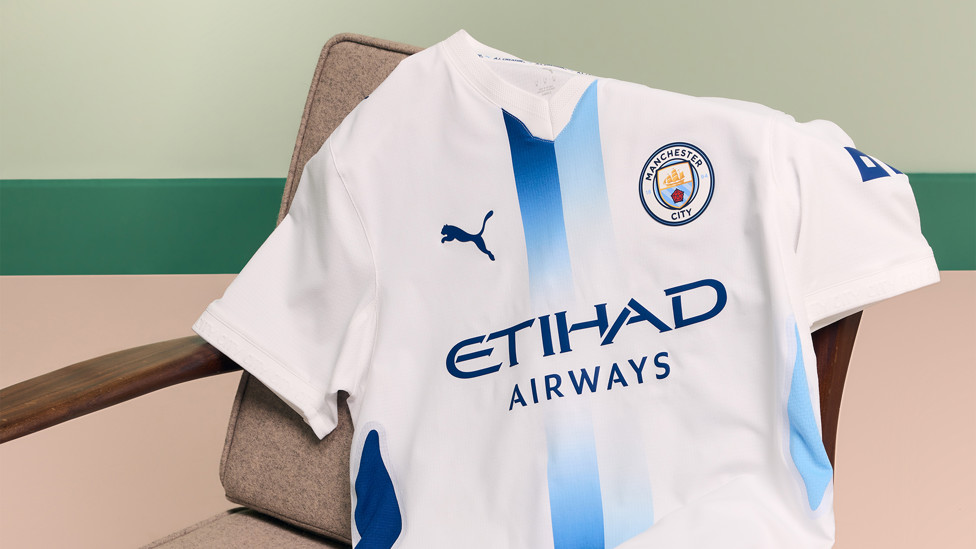
Table of contents
Jump to each section:
- Why fans want a say in kit design
- How PUMA AI Creator turned prompts into a real third kit
- What the kit details signal about performance and sustainability
- What this means for marketers
Why fans want a say in kit design
For supporters, kits carry memory. A sash, a shade of blue, or a retro reference can instantly bring back a specific era, a favourite player, or even a family ritual around matchday.
Manchester City and PUMA leaned into that emotional ownership by opening the club’s third kit concepting to the global fanbase. Using PUMA AI Creator, fans from more than 200 countries generated over 180,000 shirt designs and left 1.7 million ratings on the platform. The process narrowed to a shortlist of 10, with the final selection decided by a fan vote in January 2025.
This matters because it treats kit design less like a seasonal product drop and more like community participation. People are more likely to care about an item when they have watched it evolve, rated it, debated it, and helped choose it.
 ContentGrip
How PUMA AI Creator turned prompts into a real third kit
PUMA AI Creator, launched in December 2024, is positioned as a generative AI tool that turns written prompts into football shirt designs, then lets users edit results without prior design experience.
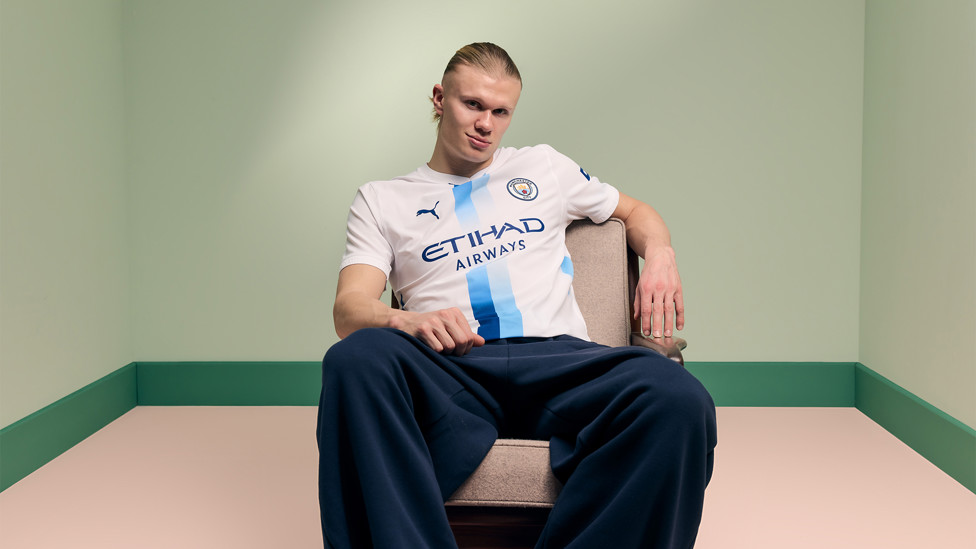
In this case, the winning design came from a lifelong City supporter, Elliott, who created it during his lunch break. The final kit features a white base with a central two-tone sash in sky blue and navy, plus a subtle gradient effect that changes with the light.
From a behaviour standpoint, the platform mechanics are doing more than “letting people design.” They create a repeatable loop: prompt, generate, tweak, publish, get rated, and keep iterating. That loop is essentially the product experience, and it turns a kit reveal into months of fan activity.
It also builds a clean narrative for why this specific shirt matters. It is not “the third kit.” It is “the one the community picked,” with a named supporter behind it.
What the kit details signal about performance and sustainability
The on-pitch, authentic version uses PUMA’s ULTRAWEAVE fabric, along with dryCELL and ThermoAdapt technologies, and is made with at least 50% recycled material.
The replica version is positioned for everyday wear, built with PUMA’s RE technology and made with 95% recycled polyester sourced from textile waste.
Those details matter because fan-designed does not automatically mean “serious” to performance-focused audiences. By keeping the technical material story visible, City and PUMA protect the credibility of the product even as the creative origin shifts to the community.
What this means for marketers
Fan participation is easy to pitch and hard to execute, because audiences can tell when they are being asked to “engage” without any real influence. This project is notable because the influence was tangible: a fan-designed kit is actually being worn on the pitch.
- Let communities shape outcomes, not just content
The key signal here is not that fans made designs, it is that the club committed to wearing the winner. That turns participation into stakes, which changes how seriously people take the ask. - Design platforms create longer cultural runways than product reveals
A traditional kit launch is a moment. A prompt-to-design-to-rating journey becomes a season-long storyline, with multiple points where fans can jump in. - Voting and ratings make “taste” measurable, but still human
1.7 million ratings is a lot of feedback, but it is also a social experience. People are not only choosing a shirt, they are signalling what “looks right” for their club identity. - AI works best here as an accessibility layer
The strongest use of generative AI in this story is lowering the skill barrier. Fans without design tools or training could still participate, iterate, and submit work that could plausibly become real merchandise. - Product credibility still needs traditional proof points
Performance fabrics and recycled-material claims anchor the kit in familiar sportswear expectations. Community-led creativity does not replace the need to reassure buyers on quality.
What City and PUMA are really testing is whether fandom can move from being an audience to being part of production, without losing quality control or brand coherence. If that balance holds, kit culture starts to look less like seasonal merchandising and more like participatory world-building.
It also hints at a broader shift: when communities can co-create something that shows up in real life, digital participation stops feeling like “content.” It starts feeling like authorship, and that is the kind of emotional ownership brands spend years trying to earn.