
Marvel and Hasbro preview Avengers: Doomsday figures ahead of December drop
Marvel and Hasbro’s Doomsday Marvel Legends lineup uses accessories and team mix to fuel fan speculation and pre-order demand.


Comic-Con season always does this thing where fans start treating collectibles like spoilers. A new suit detail, a character combo that feels too specific, even a weird accessory choice can read like a tiny hint about what the next movie is about to pull off.
That is the energy around Marvel and Hasbro right now, as they roll out a Marvel Legends Series line tied to Avengers: Doomsday, with figures designed to reflect what characters will look like in the upcoming film. The company shared the update in an announcement.
For fans, the pull is obvious: Marvel Legends is a collector-friendly format, and Doomsday is positioned as a big “who shows up” moment, with Avengers, Fantastic Four, and X-Men names all in the mix. Even if you are not deep in figure culture, the lineup functions like a roll call of which characters Marvel wants people thinking about right now.
Table of contents
Jump to each section:
- Why fans treat Marvel Legends drops like canon-adjacent content
- What’s in the Avengers: Doomsday Marvel Legends lineup
- How the toy details double as storytelling and merchandising
- What this means for marketers watching fandom-driven retail
 Patrecia Meliana
Why fans treat Marvel Legends drops like canon-adjacent content
In superhero fandom, “new look” reveals are rarely just fashion. Costume updates signal tone, alliances, and sometimes timeline resets. So when a collectible line is explicitly tied to a future film and the designs are positioned as reflecting what appears on screen, fans naturally read it as a clue trail, not just merch.
Marvel Legends also sits in that sweet spot of being display-worthy but still playable, which makes it social-content friendly. A six-inch figure with swap-out heads, hands, and effects is basically built for short-form videos and shelfie culture, where collectors show off poses, compare sculpts, and line up teams the way they want the story to go.
 ContentGrip
What’s in the Avengers: Doomsday Marvel Legends lineup
Marvel and Hasbro’s Avengers: Doomsday Marvel Legends figures are set for a December debut, with many available for pre-order starting July 27.
The lineup includes a mix of heroes and villains across Marvel’s biggest teams, including:
- Sam Wilson as Captain America, with the shield and a backpack
- Thor, with Mjolnir and Stormbreaker
- Shang-Chi, with alternate hands and Ten Rings power effects
- Fantastic Four characters, including:
- Invisible Woman and Human Torch sold together with multiple accessories (including a force shield and flame effects)
- Mister Fantastic and H.E.R.B.I.E. sold together with alternate parts
- The Thing sold separately with alternate hands and an alternate head
- X-Men characters Gambit and Cyclops
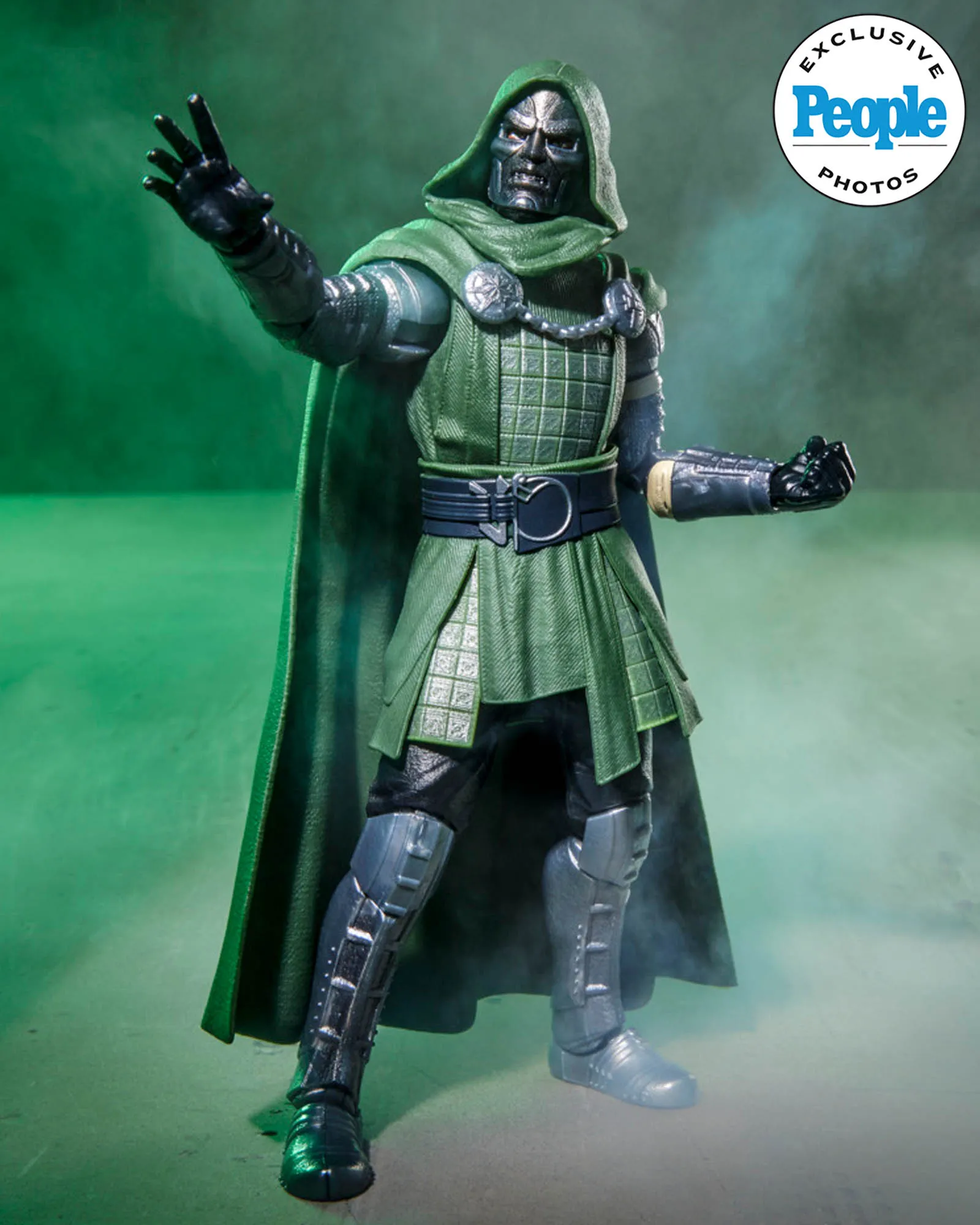
- Villains Doctor Doom and Magneto
The key detail is that the figures are framed as reflecting each character’s Doomsday appearance, which quietly turns product design into narrative anticipation.
 Zoe Park
How the toy details double as storytelling and merchandising
The most interesting part of this drop is how physical specifics do marketing work that trailers cannot always do.
A trailer gives you seconds. A figure gives you time. Fans can zoom in on textures, stare at suit choices, and pose characters next to each other in combinations that feel like predictions. The accessories matter here too, because they are “proof points” for the fantasy: Thor without Mjolnir is incomplete, and Shang-Chi’s Ten Rings effects are the difference between “character likeness” and “scene-ready.”
Bundling choices also communicate hierarchy and relationships. Selling Invisible Woman and Human Torch together reads like “this is a unit,” while pairing Mister Fantastic with H.E.R.B.I.E. nods to deeper Fantastic Four lore and the kind of detail that makes collectors feel seen rather than sold to.
What this means for marketers watching fandom-driven retail
This kind of drop works because it respects how fans actually behave: they speculate, they collect, and they share proof.
- Treat merchandise as content, not just product
When designs are tied to an upcoming story, the product becomes part of the conversation loop. Fans do the distribution by discussing what details might mean. - Build for collector rituals (accessories, alternates, sets)
Alternate heads, hands, and effects are not “extras” to a collector. They are the difference between owning a character and owning a moment. - Use lineup composition to guide attention
Including Avengers alongside Fantastic Four and X-Men characters signals what the audience should be emotionally preparing for. Even without plot details, the roster sets expectations. - Make pre-orders feel like participation, not checkout
A pre-order window gives fans a clear action to take while hype is high. It also turns fandom energy into a measurable signal without needing to over-message. - Let specificity replace hype
You do not need big claims when the details are doing the convincing. A shield, a hammer, a force field accessory, these are tangible cues that feel honest in a space where fans are allergic to overpromising.
Zooming out, this is what entertainment marketing looks like when fandom is the distribution channel. The story travels because people want to compare notes, not because a brand tells them to care.
And as more entertainment brands push into retail, the baseline expectation keeps rising: fans want merch that feels like it came from inside the world, not a logo slapped on top of it.