Did McDonald’s CEO just stage the Big Arch bite? Here’s why brands jumped in
After McDonald’s CEO Chris Kempczinski’s Big Arch tasting video drew criticism, Burger King, Wendy’s and A&W responded with their own social-first burger moments.

McDonald’s CEO Chris Kempczinski probably didn’t expect his burger bite to spark a mini social media showdown among rival fast-food chains. But after a carefully staged video of him tasting the new Big Arch burger drew criticism online, competitors quickly stepped in with their own CEO-led responses.
In a social feed dominated by creators, even a simple burger bite can become a brand strategy lesson.
This article explores why Kempczinski’s video felt “off” to viewers, how Burger King and Wendy’s turned the moment into social-first marketing, and what the episode reveals about authenticity in executive content on modern platforms.
Short on time?
Here’s a table of contents for quick access:
- Why McDonald’s CEO’s Big Arch tasting video felt staged
- How Burger King and Wendy’s turned the moment into social content
- What marketers should learn from the CEO burger moment
- Why authenticity matters more than executive visibility
 Patrecia Meliana
Why McDonald's CEO's Big Arch tasting video felt staged
When McDonald’s CEO Chris Kempczinski appeared on camera to taste the brand’s new Big Arch burger, the intention seemed simple: show leadership confidence in the product.
Filmed at an office desk with a burger, fries, and a drink neatly arranged in front of him, Kempczinski walked viewers through each ingredient layer while taking careful bites. At one point he repeatedly referred to the burger as a “product,” explaining the build rather than reacting to the taste.
The reaction online was swift. Social media users described the clip as stiff, overly rehearsed, and strangely corporate for a platform designed around casual, creator-style content. Some questioned whether the ceo genuinely eats McDonald’s this way, while others simply felt the moment lacked authenticity.
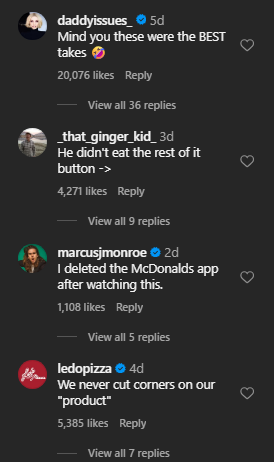
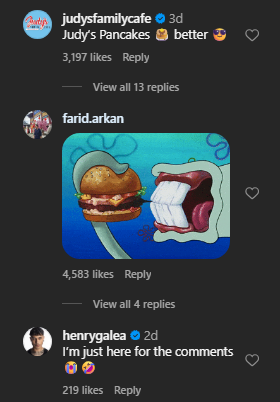
Industry observers spoke to MARKETING-INTERACTIVE that the issue was not necessarily the idea itself. The problem was believability.
Charlotte McEleny, former Senior Director of Marketing and PR at Monks, described the clip as performative. Marketing may always involve performance, she said, but audiences still expect leaders to look like real customers when demonstrating their own products.
Other communications experts pointed out that the language itself contributed to the disconnect. Referring to the burger as a “product,” combined with controlled body language, created distance between the ceo and the audience.
On social platforms built for personality and spontaneity, that distance can feel jarring.
How Burger King, Wendy's and A&W turned the moment into social content
Competitors were quick to seize the opportunity.
Just days after the Big Arch clip began circulating online, Burger King, Wendy’s and A&W Canada posted their own CEO-led burger moments. The difference was clear immediately: these clips leaned into a more casual, social-first tone.
@brandonspam_ here is how every ceo of a fast food restaurant has reacted to trying their own burgers…
♬ original sound - Brandon Conner
Burger King President Tom Curtis appeared in a short Instagram video filmed inside one of the chain’s outlets. Wearing a branded apron, Curtis takes a bite of a Whopper and casually says, “Only one thing missing, a napkin.” The video lasts only a few seconds and avoids any corporate framing. There is no ingredient walkthrough or product explanation. Instead, the in-store setting and quick reaction do most of the storytelling.
Wendy’s US CEO Pete Suerken took a slightly longer route with a LinkedIn video filmed in the kitchen. The clip shows Suerken grilling a patty while highlighting the chain’s “fresh never frozen beef.”
He then grabs a Frosty, jokes that “our machines are always working,” and sits down with a Baconator and fries. Rather than breaking down the burger like a product demo, the video focuses on tactile actions: grilling, assembling and dipping fries into the Frosty. The demonstration reinforces product claims without sounding overly scripted.
 Diego Chacon-Reina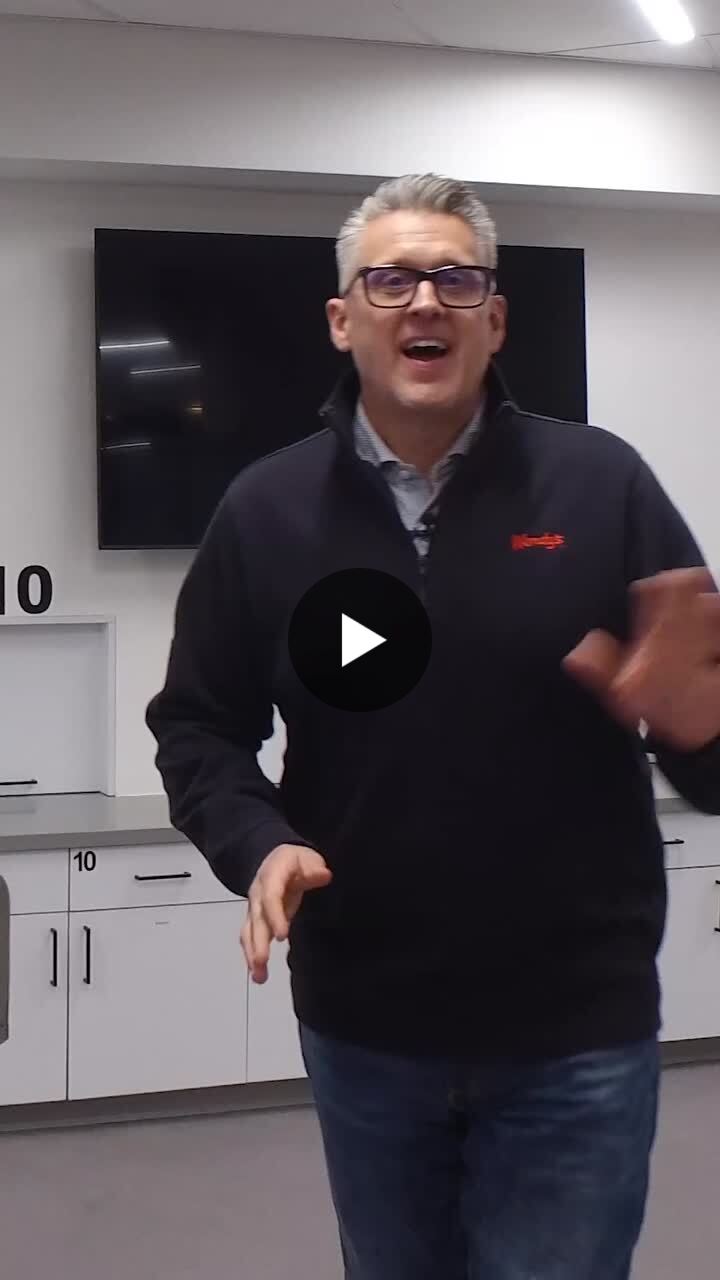
A&W Canada also joined the moment. Chief Executive Officer Allen Lulu appeared in a TikTok video reviewing the chain’s Teen Burger. The clip follows a similar playbook to the Burger King and Wendy’s responses: simple setup, minimal scripting and a focus on the eating experience. Instead of presenting the burger like a marketing walkthrough, Lulu takes a bite and reacts naturally, mirroring the creator-style food reviews that dominate platforms such as TikTok.
@awcanada @McDonald’s Corporate we loved your taste test video so we made our own. Who else is going to get an iconic Teen Burger for only $4.99?
♬ original sound - A&W Canada
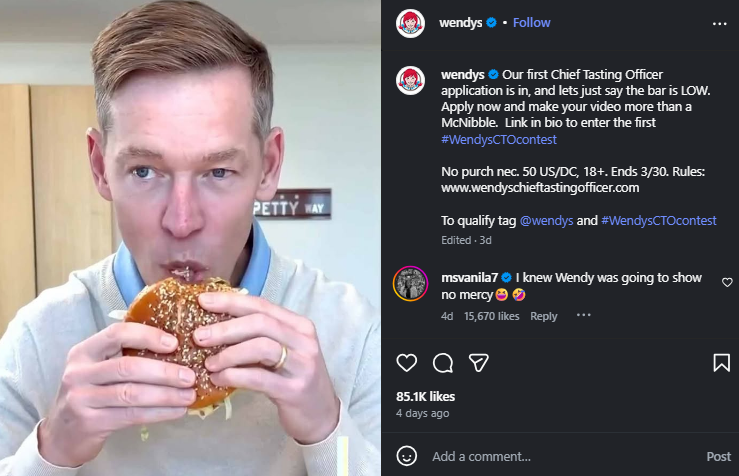
One widely shared Instagram post comes from Wendy’s, where the brand posted an image of McDonald’s CEO Chris Kempczinski biting into the burger from the viral tasting video. The caption reads: “Our first Chief Tasting Officer application is in, and let’s just say the bar is LOW. Apply now and make your video more than a McNibble.” The jab ties into Wendy’s campaign to recruit its first “Chief Tasting Officer,” turning the McDonald’s moment into playful social media fodder.
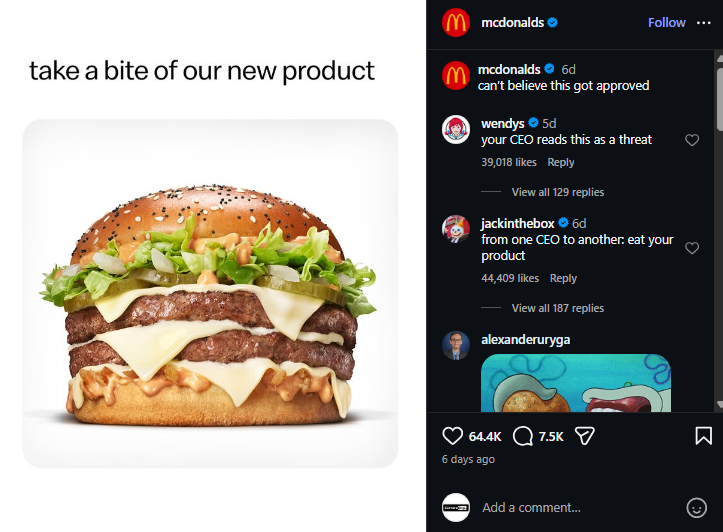
Another post from McDonald’s Instagram shows the brand posting a clean product shot with the caption, “take a bite of our new product.” Rival brands quickly jumped into the comment thread. Wendy’s replied, “your CEO reads this as a threat,” while Jack in the Box added, “from one CEO to another: eat your product.”
With Burger King, Wendy’s and A&W all responding in quick succession, the moment effectively turned into a mini fast-food social media exchange. What started as criticism of a corporate-looking CEO clip evolved into a broader demonstration of how different brands approach executive presence online.
What marketers should learn from the CEO burger moment
For marketers, the episode offers a practical reminder that executive visibility on social media is not automatically a win. If a brand wants to feature a CEO in content, the format has to match both the leader’s personality and the expectations of the platform.
A few lessons stand out:
1. Match the spokesperson to the format
CEOs often resonate most when discussing strategy, vision, or accountability. Product demonstrations or playful formats may feel more authentic when delivered by employees, chefs, or franchise owners.
2. Avoid corporate language in social-first content
Terms like “product,” “platform,” or “solution” can create distance in informal settings. Natural language helps executives sound like customers rather than spokespeople.
3. Let the environment tell the story
Filming in kitchens, restaurants, or production environments immediately signals authenticity. A corporate office desk, by contrast, reinforces a boardroom vibe.
4. Embrace imperfection
Social audiences often forgive awkward moments, but they are quick to reject content that feels overly controlled.
For comms teams, the goal is not perfection. It is believability.
Why authenticity matters more than executive visibility
The broader takeaway is that audiences scrutinize executive content more intensely than ever. When a CEO appears in someone’s social feed, viewers quickly assess whether the moment feels genuine. Body language, phrasing, and setting all influence that judgment.
In the McDonald’s case, the backlash was not really about the Big Arch burger itself. It was about trust and relatability.
Competitors understood this instinctively. By leaning into messier, hands-on moments, Burger King and Wendy’s reframed the conversation from corporate messaging to real-life enjoyment.
For brands experimenting with executive-led content, the lesson is simple. Just because a CEO can appear on camera does not mean they should. The question marketers should ask is whether the leader is adding genuine perspective or simply symbolic presence. On social platforms built for authenticity, the difference is obvious in a single bite.