
McKinsey cuts 200 tech roles as AI replaces support staff
McKinsey trims tech staff amid AI shift, what this means for marketers and ops teams

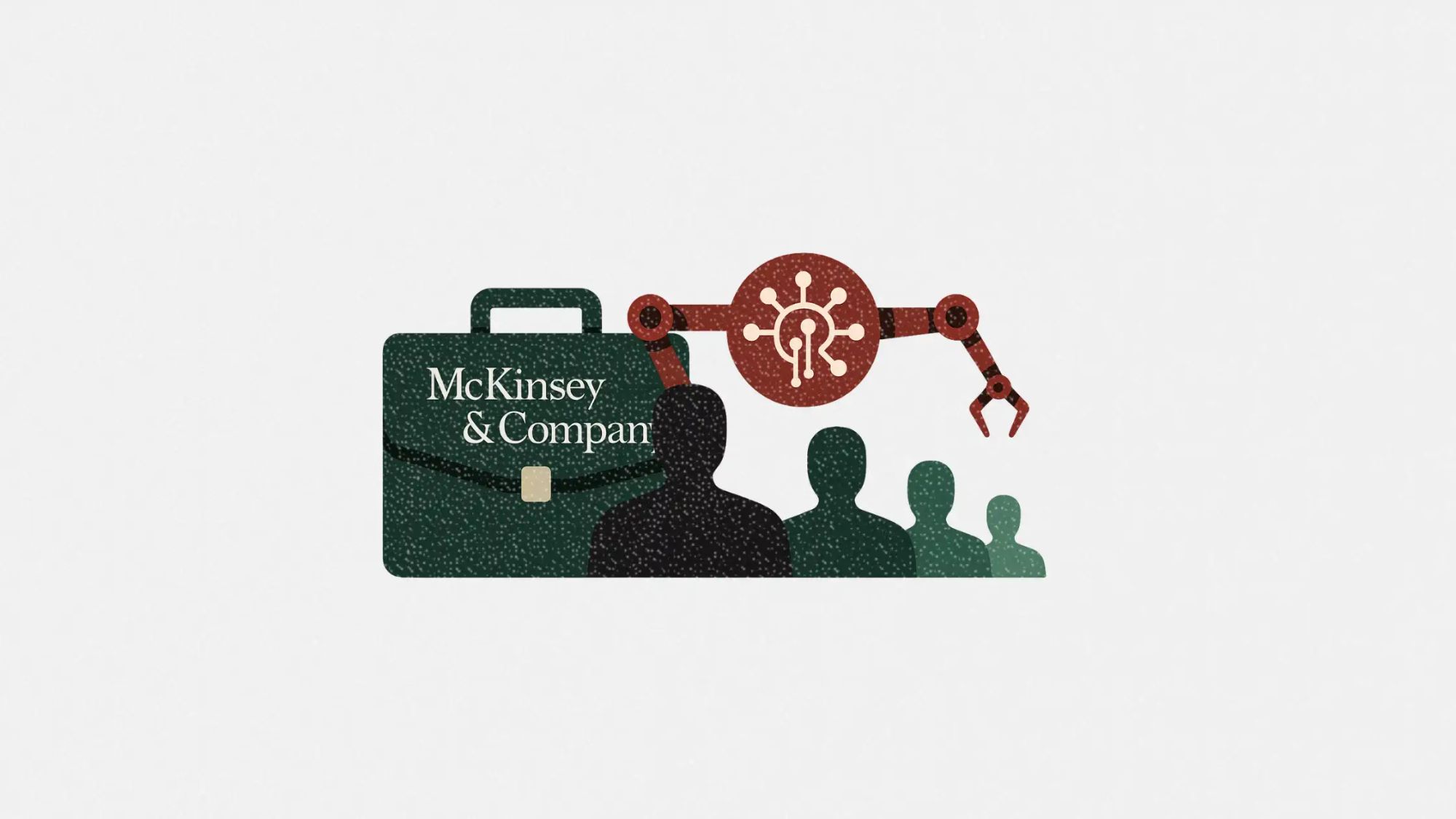
McKinsey & Co. is joining a growing list of firms reshaping their workforce around artificial intelligence. The global consulting giant has reportedly laid off about 200 technology-focused employees as it shifts internal tasks toward AI-powered systems.
While this represents just a fraction of McKinsey’s 40,000-strong workforce, the implications stretch far beyond headcount.
This article breaks down what the layoffs reveal about McKinsey’s AI strategy, how this might affect marketing and operations teams across the industry, and why service firms should pay close attention.
Short on time?
Here’s a table of contents for quick access:
- What happened at McKinsey
- Why internal roles are being automated
- What marketers should know
- Strategic takeaways for service firms
 Patrecia Meliana
What happened at McKinsey
According to Bloomberg, McKinsey has cut around 200 roles in its technology division. The decision is part of a broader internal overhaul that leans heavily on AI to automate support and back-office tasks. A spokesperson said the company is “continually working to make our professional support functions more efficient and effective, including by taking advantage of AI.”
Global Managing Partner Bob Sternfels reaffirmed the firm’s commitment to client-facing hires while acknowledging that non-client roles are under active review for potential reductions over the next two years.
This shift reflects a broader recalibration of the firm’s operational structure, prioritizing automation over headcount in functions that don’t directly generate client value.
 Patrecia Meliana
Why internal roles are being automated
Consulting firms, like many large organizations, are under pressure to optimize costs while boosting productivity. McKinsey’s internal AI push comes as companies across sectors embrace generative AI for everything from research and knowledge management to document processing and compliance.
The 200 job cuts, while small in percentage terms, point to a deeper intent: AI is no longer being treated as a pilot program. It is now embedded into workforce planning.
The banking sector is experiencing a parallel shift. Citigroup estimates that 54 percent of jobs in banking could be automated by 2028. JPMorgan Chase CEO Jamie Dimon has publicly stated that AI will both replace and create roles, with the balance depending on how fast firms adapt.
McKinsey’s layoffs suggest the consulting industry is following suit.
Patrecia Meliana
What marketers should know
If your business is in client services—whether consulting, agency, or B2B SaaS—this news carries real strategic weight. Here’s what to keep in mind:
1. Internal roles are the first to go
Expect AI to continue replacing roles in research, scheduling, compliance, reporting, and content support. If you haven’t already mapped out where automation can reduce operational drag, now is the time.
2. Client-facing value remains safe—for now
McKinsey is clear that it will continue hiring for roles that serve clients directly. But the bar is going up. Being "client-facing" isn’t enough anymore. Teams must show how AI enhances the value they deliver to clients.
3. Your clients will expect more with less
Enterprise clients may start asking vendors and agencies to do more with leaner teams. Showcasing how your team leverages AI for speed and accuracy will become part of the pitch.
4. Upskilling isn’t optional
McKinsey’s messaging emphasized upskilling existing staff. That signals an opportunity for marketing and ops leaders to invest in AI training that elevates both individual roles and team-wide efficiency.
Strategic takeaways for service firms
McKinsey’s internal restructuring reflects a broader shift that’s now touching white-collar jobs previously seen as safe from automation. Here’s how firms can respond:
- Review your own cost centers: Identify where AI tools can create immediate efficiency gains without cutting headcount. Tools like Claude, ChatGPT, or Perplexity AI can already handle everything from research to summarization and task planning.
- Align your org chart to client value: Teams that don't directly contribute to revenue or client outcomes should either be upskilled or streamlined. AI will pressure traditional organizational models to become leaner and more outcome-driven.
- Use AI as a selling point: Whether in agency decks or internal stakeholder updates, articulate how your team is embedding AI into workflows. Clients want to see proof that you are not just aware of the shift, but actively adapting to it.
McKinsey’s move signals that AI adoption is now strategy, not just experimentation. Firms that delay transformation risk falling behind as clients shift expectations and industry norms evolve.