Lionel Messi brings ChatGPT chess to 517 million Instagram followers
Messi's chess lesson turns ChatGPT into a celebrity product demo, while a misplaced chessboard highlights the need for accuracy.


For football fans, Lionel Messi has carried the GOAT nickname for years. Now OpenAI has turned that familiar joke into a chess lesson: the Argentine star is shown learning an opening named "Goat Horns" from ChatGPT.
In an Instagram Reel posted October 21, Messi asks ChatGPT in Spanish to teach him an opening that suits his style, one move at a time. His 517 million followers give the clip an enormous potential audience, while the pitch stays grounded in a small, playful moment that anyone with a chessboard could try.
Table of contents
Jump to each section:
- How the GOAT Horns lesson works
- Why the chessboard mistake matters
- What marketers should know about celebrity AI demos
How the GOAT Horns lesson works
Messi starts with a conversational request rather than a technical command: "Chat, you know my style. Show me a good chess opening, step by step." ChatGPT responds through an interactive board, letting him work through the moves as if he were following a quick coaching session.
The opening name is the punchline. GOAT is shorthand for "greatest of all time," a label often attached to Messi, and "Goat Horns" sounds like a personalized invention rather than something from a textbook. The clip lets viewers understand the joke before they need to understand chess notation.
The sequence shown is 1.e4 a6 2.d4 c6, according to Chess.com’s examination of the post. That is a legal sequence on a correctly arranged chessboard, though it is an unusual and strategically questionable setup for Black. "Goat Horns" is not an established opening name.
The lesson also gives a face to ChatGPT’s Intelligent UI, introduced October 7. Instead of explaining interactive interface technology in product jargon, the video shows Messi asking a question, watching a board change and immediately wanting to learn another opening.
Why the chessboard mistake matters
The campaign has a second chess story beyond its playful name. Decrypt’s examination of the ad reported that the visual board swapped the kings and queens from their standard starting squares. That makes the filmed position incorrect, even though the cited sequence is legal when played on a properly arranged board.
On the misplaced board, Decrypt found a quick forced checkmate against Black's suggested responses. That observation depends on the nonstandard starting setup and should not be mistaken for a claim that 1.e4 a6 2.d4 c6 loses by force in ordinary chess.
The error changes how the creative is read. A casual viewer can still understand a celebrity learning step by step. A chess player, however, can spot something wrong before the lesson really starts. That tension is especially relevant for a product advertising its ability to teach.
Messi has appeared in another famous chess-themed commercial before, alongside Cristiano Ronaldo in a 2022 Louis Vuitton campaign. Chess was a useful visual language there too: it made rivalry, concentration and status recognizable without a long explanation. This time, the board is also meant to demonstrate an AI product, so its accuracy carries more weight.
What marketers should know about celebrity AI demos
The clip has a repeatable structure that consumer AI brands can learn from: a well-known person asks a familiar question, the product produces something personal, and the viewer can imagine trying the same interaction.
- Use the celebrity's personality, not just their face. "Goat Horns" works because of Messi's long-running nickname. The name connects the output to the person using the product, making the demonstration easier to remember.
- Show an actual interaction. Messi does not simply endorse ChatGPT. The video lets viewers see a prompt, a board and a sequence of responses. The product's function becomes understandable through the activity.
- Make the demonstration accurate. When an ad is teaching something, knowledgeable viewers will notice mistakes. A charming concept cannot make a misplaced king disappear, and an unusual chess line deserves the same scrutiny as any other product claim.
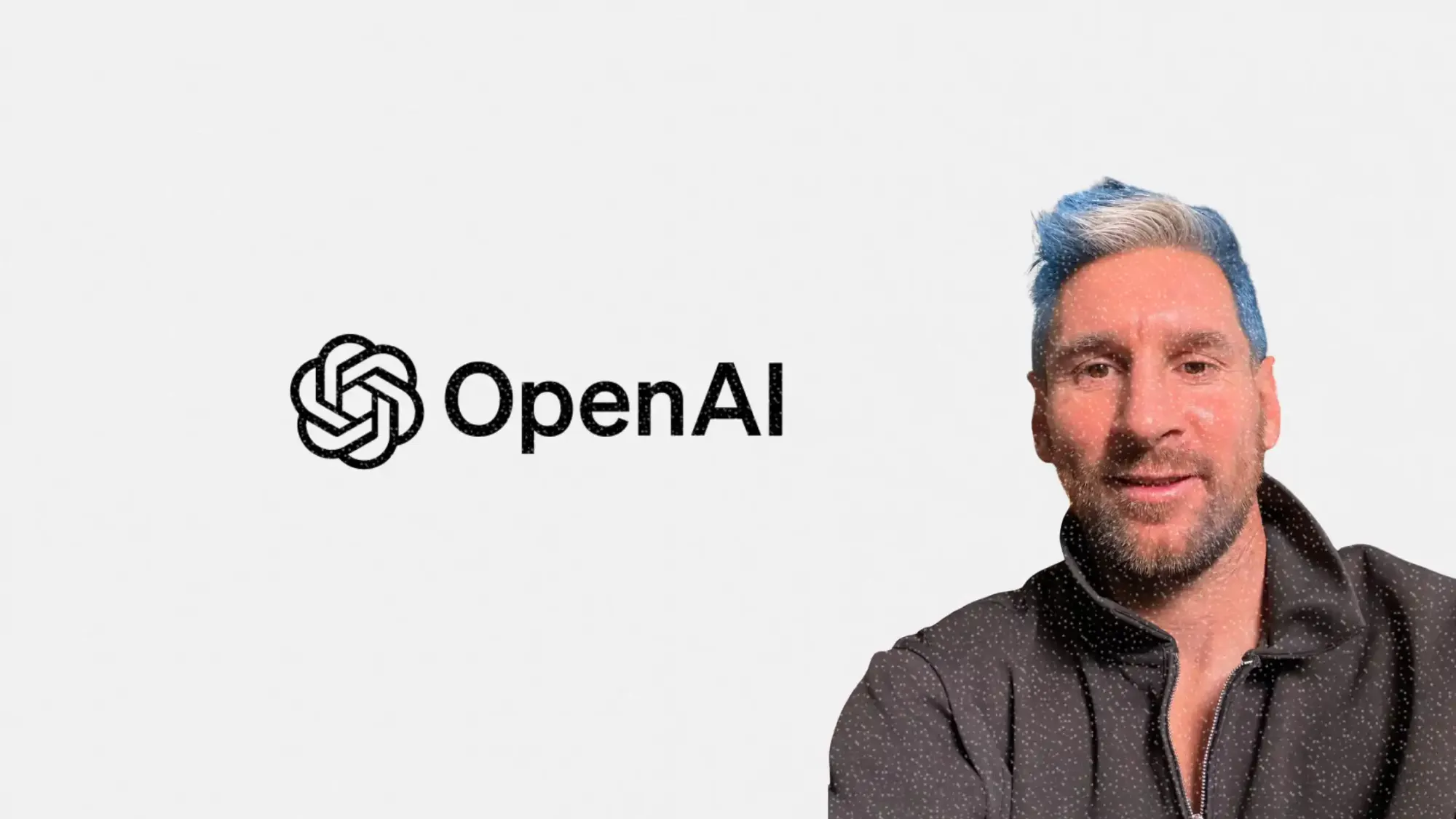
There is also a useful comparison within OpenAI's own Messi partnership. An earlier collaboration showed him experimenting with Argentina-inspired hair colors using ChatGPT Images. The new film moves from image creation to interactive instruction. Both use a celebrity's everyday curiosity to suggest a prompt followers could make their own.
The reported one million-plus likes and 13,000 comments within the first hours, as covered by Chess.com and DesignRush, indicate early attention, not how many people tried the feature or became new ChatGPT users. Similarly, 517 million followers is an account audience figure, not verified campaign reach.
The broader lesson is about participation. People may be more likely to remember what an AI tool can do when they watch someone familiar use it for a recognizable interest. The payoff depends on keeping the example both delightful and credible.